Trump hails "very good meetings" in Qatar as indirect negotiations resume
Follow updates on the war in the Middle East for Thursday, July 2, here. See earlier developments below.
What to know about the Iran war today:
- President Trump said there was progress Wednesday as U.S. and Iranian officials resumed talks in Qatar, via mediators, telling reporters "the denuclearization of Iran is moving along well."
- Steve Witkoff and Jared Kushner, President Trump's son-in-law, were in Doha amid the new round of indirect talks, and they met with Qatar's prime minister but were not expected to take part in technical negotiations.
- Qatar and Pakistan said Thursday that "positive progress was made" during the indirect talks between the U.S. and Iran in Doha, Qatar's capital "regarding issues related to the memorandum of understanding" that continued the Iran war ceasefire.
H.R. McMaster says Iran is "getting everything that they wanted"
As President Trump touts progress in indirect U.S.-Iran talks, former Trump national security adviser H.R. McMaster expressed skepticism on "The Takeout with Major Garrett," arguing the diplomatic push is giving Iran a chance to refill its coffers.
McMaster, a CBS News contributor, said "Iran is the one making the progress in these negotiations because they're receiving big paychecks."
He noted that the U.S. lifted sanctions on Iranian oil and has floated unfreezing Iranian assets, which McMaster said could help Iran rebuild its military and rearm its regional proxies.
"They're getting the infusion of cash they desperately needed to get themselves up off the mat," said McMaster, who believes Mr. Trump's initial decision to go to war with Iran was correct.
Earlier Wednesday, when asked about reports that he had mulled a return to war with Iran, the president said "I think they've come a long way" and expressed optimism about Iran's compliance with the 60-day U.S.-Iran memorandum of understanding.
McMaster argued, "The Iranians have come a long way because they're getting everything that they wanted."
Qatar, Pakistan say "positive progress" made on issues related to memorandum of understanding
Qatar and Pakistan said Tuesday that "positive progress was made" during indirect talks between the U.S. and Iran in Doha, Qatar's capital "regarding issues related to the memorandum of understanding" that continued the Iran war ceasefire.
Majed Al Ansari, spokesperson for the Qatari Ministry of Foreign Affairs, and Pakistan's foreign ministry said on social media that, "Qatar & Pakistan mediators concluded separate meetings with the US & Iranian negotiators in Doha today, with positive progress made on issues related to the Islamabad Memorandum of Understanding, building on the outcomes of the Lake Lucerne Summit. The parties agreed to continue discussions over the coming period, with the next meeting to be scheduled at the earliest possible time following the funeral processions of the former Iranian Supreme Leader."
Vance talks negotiations, won't commit to not returning to full-fledged war
Vice President JD Vance said talks are going well in Doha, but would not take a return to full-scale military action off the table, saying it lies in the hands of Iran.
"I can't commit to anything, because obviously it depends on what the Iranians are ultimately going to do," Vance told reporters after speaking to Marines at Naval Air Station Oceana in Virginia. "As I said up there, what I can commit to is the president's not going to send our military back in unless he has to, unless there's a clearly defined purpose for it."
"If we've got to do more, of course, that's kind of up to the Iranians," he added. "If they try to rebuild their nuclear program, if they try to start shooting at commercial vessels again, that's going to change our calculus. But right now, what the president has said is, 'Go and make a deal, go and negotiate in good faith,' and that's what he's empowered us to do."
Vance's comments also seemed to indicate conversations specific to the Iranian nuclear program had not yet begun.
"Obviously, we're worried about the nuclear issue, we're going to start talking about that," Vance said. "So right now the talks are going well, it's still pretty early, but talks are going well."
Vance also outlined a familiar list of conditions that could lead the U.S. to restart military action against Iran.
"If they try to rebuild that nuclear program, if they refuse to let inspections in, if they … resume shooting commercial vessels, which they have stopped for a few days, then obviously the president still has a lot of options on the table," Vance said.
U.S. airman missing, 3 stable after helicopter goes down in Arabian Sea, Navy says
Three members of a four-person MH-60S Sea Hawk helicopter crew were rescued at sea after an "emergency water landing" in the Arabian Sea early Wednesday morning, according to U.S. Naval Forces Central Command.
A search continues for the fourth and final crew member.
There is "no indication" the helicopter, which is assigned to the USS George H.W. Bush, was shot down by hostile action, the military said.
"Three of the helicopter's four crew members have been recovered and are in stable condition aboard George H. W. Bush," U.S. Naval Forces Central Command said. "U.S. Navy assets in the region are currently searching for [the] other aircrewman still missing."
Shipping employers and unions still consider Strait of Hormuz a war zone
Unions and shipping employers said in a statement Wednesday they will continue to designate the Strait of Hormuz as a war zone until at least July 9, maintaining double pay for seafarers in the area despite a fragile truce between the U.S. and Iran.
The status only covers ships whose companies are signatories of the International Bargaining Forum's labor agreements — around 15,000 vessels worldwide, according to the IBF.
Seafarers covered by the agreement working on ships in the Strait of Hormuz and its surrounding waters get paid double, and have the right to refuse to sail into the area and request repatriation at the company's expense, increasing costs for shipping companies.
"This decision recognises the continuing and significant risk to life and the rapidly evolving situation in the area," said the joint statement from the International Transport Workers' Federation and the Joint Negotiating Group, which represents maritime industry employers.
The Strait of Hormuz was first designated a "warlike operations area" by the IBF on March 5, four days after the first attack on vessels attempting to cross the strait.
At least 14 seafarers have been killed and more than 40 ships attacked during the conflict.
U.S. signs agreement to build permanent embassy in Jerusalem
The U.S. on Wednesday signed an agreement to build a new embassy compound in Jerusalem, a move that Israel said reflected the "unbreakable alliance" between the countries.
President Trump recognized Jerusalem as Israel's capital in December 2017, during his first term, and ordered the relocation of Washington's diplomatic mission from Tel Aviv.
But the services were spread across several locations in Jerusalem until a single permanent site could be found.
"The United States not only recognizes Jerusalem as the eternal, indigenous, and forever capital of the Jewish people, but also that the United States says that we're going to do something about it," U.S. Ambassador to Israel Mike Huckabee said during a signing ceremony at Israel's foreign ministry Wednesday.
"I would say God made that decision 3,800 years ago, and we finally got around to acknowledging what had been determined long before the United States of America came along," he added.
Huckabee said in February that Israel had a right to much of the Middle East, telling Tucker Carlson, "it would be fine if they took it all," prompting condemnation from the governments of numerous Arab and Muslim majority states.
The embassy will be built at the Allenby compound in southern Jerusalem.
Trump's 2017 decision broke with decades of U.S. policy, under which Jerusalem's final status was expected to be determined through negotiations between Israelis and Palestinians.
Jerusalem has long been one of the most contested cities in the Israeli-Palestinian conflict.
After Israel captured East Jerusalem during the 1967 Arab-Israeli war, it declared the city its undivided capital, a claim that has not been widely recognized internationally.
Palestinians seek East Jerusalem as the capital of a future Palestinian state.
Because of these competing claims, most countries established their embassies in Tel Aviv.
Iranian soccer team "defended the name of Iran" at the World Cup, says chief negotiator
Iran's chief negotiator has praised the national soccer team, saying it "defended the name of Iran" during the FIFA World Cup.
"In the great arena of the World Cup, you defended the name of Iran, sang our national anthem in the ears of the world, and displayed the proud flag of Iran," said Mohammed Bagher Qalibaf in a message to the team, who he called "the proud sons of Iran."
"In conditions where all-out pressure was on your shoulders, you fought with all your strength," he added. "Return home with pride."
Iran's foreign minister said Tuesday that the U.S. has shown it has "no business hosting an international tournament," after the head of the Homeland Security agency said he was "so happy" the Iranian soccer team had exited the World Cup.
The Iran team moved its training base to Tijuana, Mexico, in May, despite playing all their World Cup games on the U.S. West Coast. The team had been due to be based in Tucson, Arizona, but leaders complained that U.S. authorities had insisted they leave the country after every game.
Head coach Amir Ghalenoei said the team was the "most oppressed" at the tournament.
Ship Iran claimed was stranded in strait has been moored in Iranian waters since March
A container ship that Iran claimed was stranded when it attempted to transit the Strait of Hormuz outside the Iran-approved route is actually a U.S.-sanctioned vessel that has been moored off the island of Hormuz in Iranian territorial waters since March.
Iranian state media claimed on Wednesday that a "foreign container ship" ran around in "regional waters" after attempting to sail through the narrow waterway outside of the shipping lane designed by Iran.
The vessel in the video shared by state news networks is the Arista, a Comoros-flagged container ship that has been in Iranian waters since arriving from Egypt on March 14, according to tracking data from MarineTraffic.com. The ship was seen in footage from an Armenian news network on June 23, and its name appears to have been digitally removed in photos published by Iranian state media on Tuesday.
Last month, social media users claimed the same ship was an American vessel captured by Iran's Revolutionary Guard Corps.
Arista has been under U.S. sanctions since July 2025 in connection with its owner, Reel Shipping L.L.C, a UAE-based network with links to Iran's former supreme leader.
Netanyahu calls Lebanon "beautiful and miserable country" that is "being captured by a fanatical sect"
Lebanon is a "beautiful and miserable country" that is "being captured by a fanatical sect," Israeli Prime Minister Benjamin Netanyahu said Wednesday.
Speaking at a memorial ceremony to mark 20 years since the 2006 Lebanon war, he said Lebanon "has beautiful people, but it is a disaster that it is being captured by a fanatical sect and they want to destroy us by invading its territory," referring to Hezbollah.
"We will remain in the protective strip in southern Lebanon for as long as necessary," he added, referring to the so-called buffer zone beyond the Israeli border that Netanyahu has said troops will not leave until Hezbollah is no longer a threat. The Iranian-backed group has flatly refused to disarm though.
"I'm not saying that we don't expect conflicts, challenges, and bumps, but thanks to the chain of heroism, the door has opened to a different reality in Israeli-Lebanese relations," Netanyahu said. "We will do everything to eventually reach a peace agreement between the two countries."
Iranian state TV cuts short interview with Iran's top negotiator, drawing ire from his team
Iranian state television on Tuesday cut short the broadcast of an interview with Mohammad Bagher Ghalibaf, Iran's top negotiator in talks with the United States, drawing criticism from his team.
"This discussion was delivered to the Islamic Republic of Iran Broadcasting (IRIB) more than 2 hours before the broadcast time; but unfortunately, the broadcast of this discussion was stopped in the middle of it," the Iranian parliament's media center said in a statement Wednesday. Ghalibaf is also the speaker of the Iranian parliament.
"This is despite the fact that this discussion was recorded and the least duty of the IRIB officials was to coordinate it with the parliament's media center if they decided not to broadcast part of the discussion contrary to procedures," the statement chided.
The state broadcaster said the interview was cut into two parts and the second section would air Wednesday night.
The parliamentary media center noted that the parts cut out of the Tuesday night broadcast included discussion of United Nations nuclear inspections, the country's frozen financial assets, and a $300 billion reconstruction fund.
Many Iranian hardliners, including conservative lawmakers and media personalities, have criticized the memorandum of understanding signed between Tehran and Washington. Last month, one state TV presenter called for the closure of Tehran's Mehrabad Airport to prevent Iranian negotiators traveling to Switzerland for talks with the U.S. delegation.
Iranian critics of the MoU claim Tehran was too hasty in agreeing to reopen the Strait of Hormuz without gaining any tangible benefits from the agreement.
During the state TV interview, Ghalibaf said the MoU had enabled Iran to sell its oil as the U.S. removed its own blockade of the strait and waived long-standing sanctions, calling it a "document of America's defeat."
U.S. has "no business hosting an international tournament," Iran says after DHS secretary's World Cup jibe
The United States has shown it has "no business hosting an international tournament," Iran's foreign minister said Wednesday, after the head of the Homeland Security agency said he was "so happy" the Iranian soccer team had exited the FIFA World Cup.
Homeland Security Secretary Markwayne Mullin said during a security briefing for the tournament that he was "glad they're done, and they're not coming back," after Iran's national team was knocked out of the tournament.
"I was so happy when we were able to pull their visas and said they could leave the U.S. soil, and I might've sung a song or two or maybe even danced a happy dance," he said.
Responding to the comments on Tuesday, Iranian Foreign Minister Abbas Araghchi wrote on X: "'Mission Accomplished,' Mr. Mullin. You also accomplished something else: proving to the world that you have no business hosting an international tournament."
"Your conduct has been a masterclass for how to squander the dignity that comes with being a host," he added.
The Iran team moved its training base to Tijuana, Mexico, in May, despite playing all their World Cup games on the U.S. West Coast. The team had been due to be based in Tucson, Arizona, but leaders complained that U.S. authorities had insisted they leave the country after every game.
Head coach Amir Ghalenoei said the team was the "most oppressed" at the tournament.
Trump says U.S. and Iran have had "very good meetings" in Doha
President Trump suggested there was progress Wednesday in indirect talks between Iranian and U.S. officials held in Doha, Qatar - via Pakistani and Qatari mediators - calling it a day of "very good meetings."
"As far as things are going, the denuclearization of Iran is moving along well," Mr. Trump told reporters at Joint Base Andrews. "They've had very good meetings, and we'll see."
"We hit them very hard ... but we're getting along very well," he said.
The technical talks will not see U.S. and Iranian officials meet directly to negotiate, as called for under the memorandum of understanding signed by the two countries. Instead, the mediators will convey points from either side to the other, with the goal being to ease tension following another exchange of fire that erupted at the end of last week.
Before boarding his new Qatar-gifted Air Force One plane for a trip to North Dakota, the president said Iran had "come a long way."
"I think they're fine," he said.
CBS/AFP
EU reiterates warning to airlines to avoid Mideast airspace, citing uncertainty over U.S.-Iran ceasefire
The European Union Aviation Safety Agency has warned airlines to continue avoiding the airspace over Iran, Iraq and Lebanon, and to "exercise caution" when flying over the rest of the Middle East.
EASA warned that "the sustainability of the [U.S.-Iran] ceasefire remains uncertain in the longer term, with a possibility of rapid escalation."
In its bulletin, EASA said it was extending its recommendation to July 8, having previously extended it to July 1.
Israel defense minister says troops to stay "indefinitely" in Lebanon, Syria and Gaza
Israel's defense minister said Wednesday that forces would remain "indefinitely" in so-called security zones established in Lebanon, Syria and the Gaza Strip.
"The IDF will not withdraw and will remain in the security zones in Lebanon, Syria, and Gaza – indefinitely – to protect our residents and communities from jihadist elements," Israel Katz said.
"We are fighting to change reality and bring security to the residents of the north," he added, referring to communities along Israel's border with Lebanon from which thousands of people have been evacuated due to the threat posed by Iranian-backed Hezbollah.
Israel has said it won't withdraw from southern Lebanon until Hezbollah is disarmed, but the group has refused to accept disarmament.
Analysts say the standoff over Hezbollah's weapons could jeopardize the peace deal between the U.S. and Iran.
CBS/AFP
Iran shares details for funeral of slain Supreme Leader Ayatollah Ali Khamenei
Iranian state media outlets have published the schedule for the funeral of Ayatollah Ali Khamenei, the country's former supreme leader who was killed on Feb. 28, the first day of the war, in a U.S.-Israeli strike.
Ceremonies will take place across three major Iranian cities, Tehran, Qom and Mashhad, as well as two important Shiite Muslim cities in Iraq, Karbala and Najaf.
Iranian officials say they expect some 15-20 million mourners to join the events, which would make it the biggest state funeral in Iran's history.
Commemorations are expected to last for six days, beginning on July 4 with three days of events in Tehran culminating with the main funeral procession on July 6. The airspace above the city will be completely closed during the period, state media said.
On July 7, Khamenei's body will be transferred to the holy city of Qom, then onto Najaf and Karbala in Iraq before the final day of commemorations on July 9 in Mashhad, where he will be buried.
Even if negotiations aren't successful the U.S. has "accomplished the core mission," says JD Vance
The U.S. has "accomplished the core mission" of making sure Iran never has a nuclear weapon, Vice President JD Vance said Tuesday, even if ongoing negotiations fail.
In an interview with Fox News, he said that the U.S. has "all the cards" in the negotiations.
"I actually think the United States is in a great position however the negotiation ultimately shakes out," he said. "If the negotiation is successful, which obviously we want it to be successful, you have an Iran that is permanently transformed, that's not funding regional terrorism and instability, that has permanently given up on any nuclear weapons ambition, and that as a result is welcomed back into the world economy."
"If on the other hand the Iranians don't behave, if they don't make the concessions in the negotiations that we need to see, their nuclear program is still destroyed, their conventional military is still destroyed, and the United States is still in a much stronger position relative to the Iranians," he added.
"We have all the cards in the negotiation," said Vance. "We obviously want it to be successful, but even if it's not successful we've accomplished the core mission, which is to ensure that the Iranians never have a nuclear weapon."
Container ship runs around in the Strait of Hormuz, according to Iranian state broadcaster
A foreign-flagged container ship ran aground in the Strait of Hormuz after deviating from the designated shipping route, according to Iranian state broadcaster IRIB.
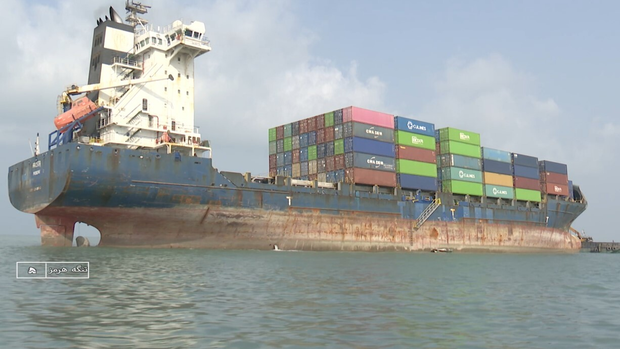
The vessel, which was not named, became stranded after entering shallow waters outside the Iranian-approved navigation corridor.
Iranian authorities say the country's designated entry and exit route for vessels transiting the strategic waterway passes south of Larak Island. The paramilitary Islamic Revolutionary Guard Corps has repeatedly warned ship captains, owners, and international shipping companies that navigating outside this route could make them a target.
Under Iran's navigation system, vessels that coordinate their transit with the IRGC Navy – which can mean paying tolls – are provided with scheduled passage and security escort from the time they enter the Persian Gulf until they exit, Iranian officials have said.
Last week Oman and the U.N.'s International Maritime Organization announced that a new route, closer to its coastline, was open for transit, which Iran swiftly denounced.
U.S. and Iran resume indirect talks through Qatari, Pakistani mediators in Doha
Iran and the United States resumed indirect technical talks in Doha on Wednesday, with the Qataris and Pakistanis acting as mediators, the AP, AFP and Reuters news agencies said, citing diplomats familiar with the negotiations.
U.S. envoys Steve Witkoff and Jared Kushner, President Trump's son-in-law, met with Qatar's prime minister on Tuesday but are not attending Wednesday's technical talks, according to the source.
A senior Iranian official told Reuters that the talks began Tuesday night and were focused on the release of Tehran's frozen assets and the Strait of Hormuz.
The officials will discuss "the memorandum of understanding building on the progress made at the Lake Lucerne Summit," a diplomat told the AFP news agency, referring to the first round of direct talks between the two countries last Sunday in Switzerland.
Both countries had said they would send officials to Qatar for the meetings, though Tehran denied a claim by Mr. Trump that direct talks would take place.
According to Qatari state media Al Jazeera, Tehran is demanding the release of the funds in two phases over a 60-day period, beginning with the unfreezing of $6 billion currently held in Qatari banks.
The report said a key point of disagreement remains Washington's reported proposal to establish an exclusive credit line allowing the funds to be used only to purchase U.S. agricultural products, including wheat, soybeans, and corn. Iran has reportedly rejected the proposal, insisting that its central bank retain full authority to determine how the released funds are spent, including on essential goods and medicines, without external restrictions.
Trump's envoys meet with Qatari prime minister
Steve Witkoff, President Trump's special envoy, and Jared Kushner, the president's son-in-law, met with Qatari Prime Minister Sheikh Mohammed bin Abdulrahman Al-Thani on Tuesday, Qatar's Foreign Affairs Ministry said in a statement.
The officials discussed the ongoing peace talks between the U.S. and Iran and the ceasefire in Lebanon, according to the statement.
A senior Trump administration official told CBS News that Witkoff and Kushner had very positive conversations with regional leaders and that good progress continues to be made as technical talks continue.
Iran has exported over 40 million barrels of oil since end of U.S. blockade, negotiator says
Iran's chief negotiator Mohammad Bagher Ghalibaf on Tuesday said Iran was unable to export any oil during the U.S. blockade on its ports, noting that exports have since surged.
"From the day the blockade was lifted until today, we have exported more than 40 million barrels of oil," he said in an interview on state television. "By contrast, during the previous 50 to nearly 60 days, we were genuinely unable to export even a single barrel of oil."
AFP