Serial killer Ted Bundy linked to another Utah teenager's cold case murder through DNA testing, prosecutor says
DNA connects serial killer Ted Bundy to the death of a Utah teenager, authorities announced Tuesday, more than 50 years after her body was discovered by a hunter.
Bundy has been dead since 1989, but the tally of his confirmed victims continues to grow due to advances in DNA testing. He killed at least 30 women and girls in multiple states in the 1970s, and many more escaped or survived with injuries.
Investigators are satisfied that Bundy was responsible for killing 17-year-old Melissa Ann Smith in 1974, a death that had long been listed as a cold case, Summit County Attorney Margaret Olson said at a news conference.
Besides DNA evidence, Smith's death had the hallmarks of Bundy's "pattern, motive, means and opportunity," Olson said.
Investigators were able to close the cold case by making crucial DNA connections between Smith and Laura Aime, another Bundy victim whose case was resolved last April in Utah County.
A highly similar DNA profile linked to Bundy was found in evidence obtained from Smith's autopsy, Utah County Sgt. Mike Reynolds said.
"This case demonstrates the importance of preserving evidence," said Salt Lake County Sheriff Rosie Rivera.
Officials have been in touch with Smith's next of kin, none of whom still live in the area.
"With every case closure, may we stomp the memory of Ted Bundy out," Reynolds said.
Bundy was executed in 1989 by electric chair in Florida for the 1978 murders of two women at the Chi Omega sorority house at Florida State University.
Bundy killed at least 30 women and girls in multiple states in the 1970s, and many more escaped or survived with injuries.
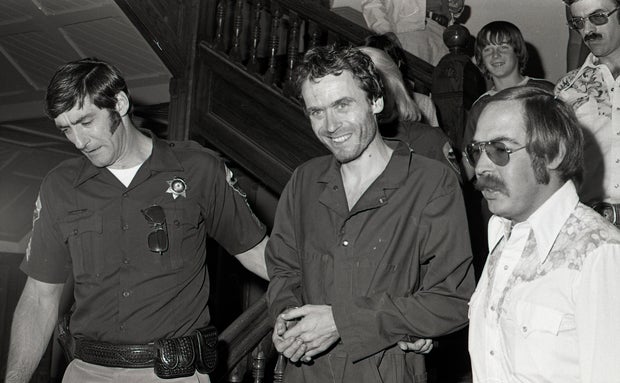
Bundy was one of the nation's most prolific serial killers, with at least 30 women and girls' deaths linked to him in several states in the 1970s. In 2011, a vial of Bundy's blood — drawn in 1978 when Bundy was arrested in the death of a 12-year-old girl — was found in Florida. The full DNA profile was entered into the FBI's national database, giving investigators a shot at solving potential cases linked to Bundy.
His murders — which occurred in sorority houses, parks and elsewhere — set the nation on edge. Bundy's arrest drew widespread fascination, in part because many considered him to be charming and handsome.
Bundy gave a series of confessions in his final days, including to some crimes that were previously unknown to police. Not all of those cases have been confirmed.
It's not known when Bundy first began his attacks, but by 1974, young women — many of them college students — began disappearing in Washington state. Authorities were still investigating those cases when Bundy moved to Salt Lake City in September and began killing people in Utah, Idaho and Colorado.
Nancy Wilcox, a 16-year-old cheerleader in Salt Lake County, was believed to be one of Bundy's first victims in Utah, according to historian Linda Sillitoe. Wilcox disappeared on Oct. 2. High school senior Melissa Smith disappeared near the end of the same month. Deer hunters found her bludgeoned body, Sillitoe said.


