Michigan State University to send seeds to space with NASA
EAST LANSING, Mich. (CBS DETROIT) - Scientists at Michigan State University are partnering with NASA to research how life can sustain itself outside of earth.
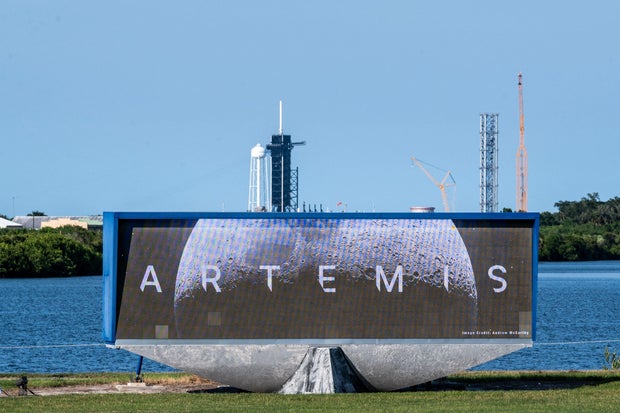
On Monday, Aug. 29, NASA is launching its Artemis I Mission, which is its first step toward establishing a long-term relationship on the moon.
In a news release, university officials say that while no humans will be aboard the mission, it will carry several research projects, including MSU's seeds.
MSU Foundation Professor Federica Brandizzi is leading the research with the seeds and is interested in solving how long-term human presence in space will feed itself.
Brandizzi said that travelers will need to grow their own food, but plants grow differently in space than they do on earth.
"In space, there are so many variables, so many things that plants have never experienced before," Brandizzi said. For example, without Earth's gravitational pull, plants are weightless in space. And without Earth's shielding atmosphere, plants encounter higher doses of cosmic rays."
They are sending up Arabidopsis thaliana seeds, which are team is sending up seeds of what's known as thale cress.
Researchers have found that that plants grown in space make lower levels of protein building blocks, or amino acids, so the seeds they are sending are enriched with amino acids.
In addition to this, they are sending regular seeds.
"This is really about understanding how we can establish and sustain life outside of this planet," Brandizzi said. "We need to have plants that can survive long-term space travel for generations."
According to the release, this is Brandizzi lab's third research project aboard a NASA mission.
The mission will launch on Aug. 29 and return on Oct. 10.