Michigan continues to be hardest-hit of 45 states facing a cyclosporiasis outbreak

Michigan continues to be among the hardest-hit of the 45 states reporting cyclosporiasis cases to the Centers for Disease Control, according to the latest state and national data reports on the outbreak.
The Michigan Department of Health and Human Services says it has counted 10,773 of cases as of July 31, up 387 from the 10,386 reports as of July 30. Tracking of an outbreak of the intestinal ailment began in Michigan on June 22, and the number has been increasing by the hundreds each day.
Health officials say 193 of those Michigan residents have been hospitalized as of July 30.
Cyclospora cayetanensis is a parasite that causes the diarrheal illness cyclosporiasis. The Centers for Disease Control and Prevention says the most common symptoms associated with the illness are frequent watery diarrhea, loss of appetite, bloating, nausea and fatigue. Some people may also experience body aches, headache or vomiting.
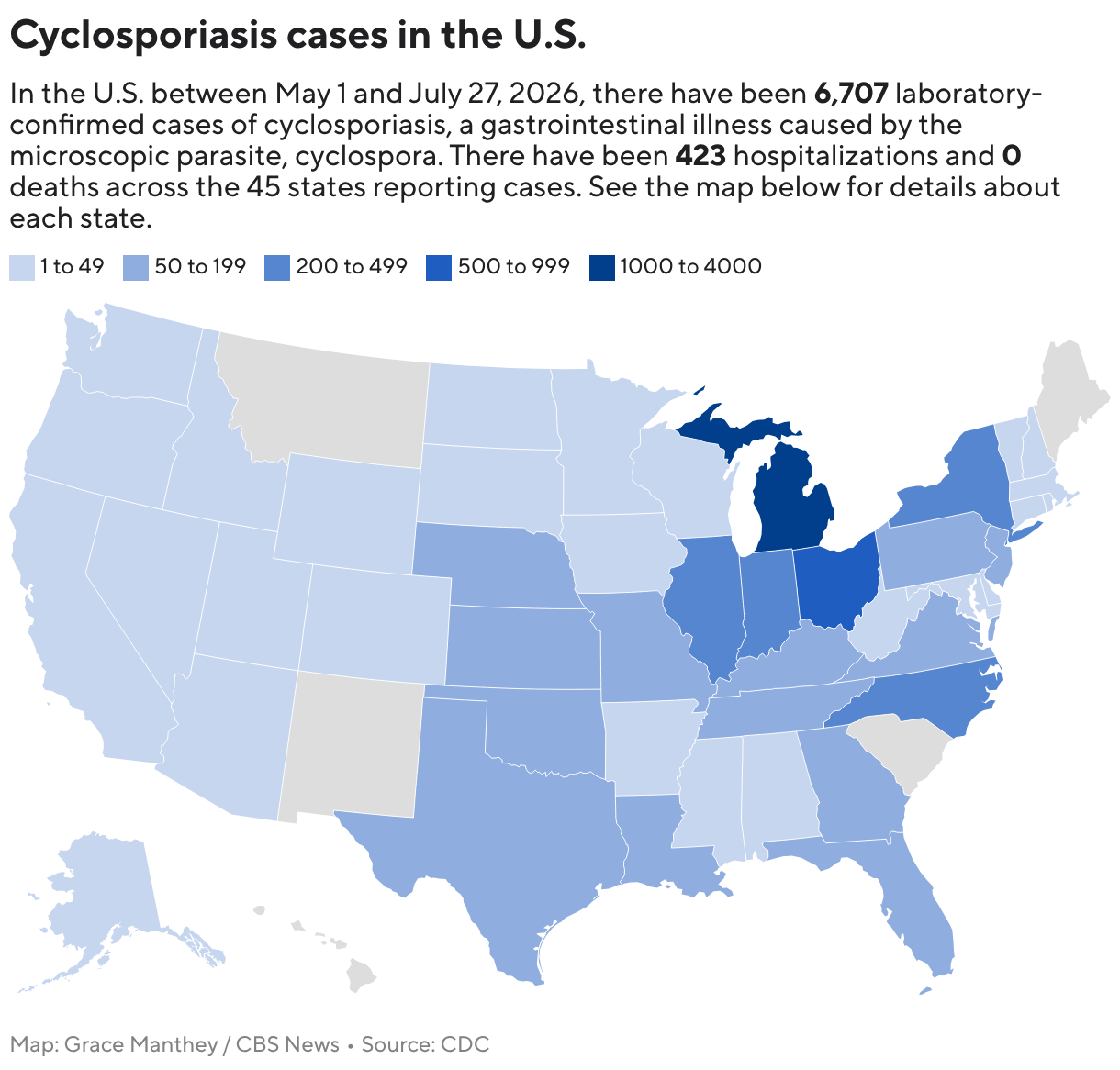
The Michigan numbers are different from the Centers for Disease Control numbers. The CDC says its surveillance updates do not include probable cases, only laboratory-confirmed cases. The CDC works with state officials to update the counts as additional information becomes available.
Michigan's outbreak was first detected in Monroe County in late June and has since spread to 70 counties, with Southeast Michigan bearing the heaviest burden. Oakland and Wayne counties each have reported more than 1,000 cases. Eaton, Genesee, Ingham, Lenawee, Monroe, Muskegon, Oakland, Shiawassee, Washtenaw and Wayne counties are all reporting more than 300 cases each.
Michigan sees around 50 cases of cyclosporiasis per year, according to MDHHS.
Michigan health officials report case numbers Monday through Friday. Hospital reports are updated once a week on Thursdays.
Symptoms of cyclosporiasis
Cyclosporiasis is caused by the parasite Cyclospora cayetanensis and spreads when infected feces contaminate food or water.
Health officials say symptoms typically begin about a week after infection and include frequent watery diarrhea, loss of appetite, bloating, nausea and fatigue, lasting from two days to two weeks or longer.
"Without treatment, illness can last for weeks and may come and go," Wayne County health officials said.
What's causing the cyclosporiasis outbreak?
Michigan officials said on July 13 that testing pointed to lettuce or salad greens as a potential source, though other foods hadn't been ruled out.
On July 24, the Centers for Disease Control said a lettuce supplier to fast-food giant Taco Bell has been linked to the outbreak. However, federal officials said there are multiple clusters of the ailment active in the United States.
At the local level, the Wayne County Public Health agency in Michigan said on July 30 that it is reaching out to community residents with a survey to gather more information about the outbreak. "If we contact you, please take a few minutes to answer our questions. Your response helps us identify possible sources of illness and protect the health of our community," Wayne County Public Health said.
Public reaction to the cyclosporiasis outbreak
A CBS News poll from July 26 that four in 10 Americans are buying or eating less produce because of the parasite.
Lettuce sales at supermarkets, along with visits to several food and restaurant chains where popular menu items include lettuce, have also declined since the outbreak began, CBS News found.
Tips to prevent cyclosporiasis
Michigan health officials shared the following tips for avoiding the illness:
- Wash all fruits and vegetables thoroughly, under running water, before cutting, cooking or eating.
- Scrub firm fruits and vegetables, such as melons and cucumbers, with a produce brush when cleaning.
- Cut away any damaged or bruised areas of produce before preparing and eating.
- Refrigerate any cut, peeled or cooked produce within two hours of preparing it.
The above video aired on July 30, 2026.


