How the freeze-thaw cycle produces Michigan's pothole problem
As Michiganders bundle up for another round of bitterly cold weather, drivers are asking the inevitable question about our roads.
How will this harsh winter affect potholes?
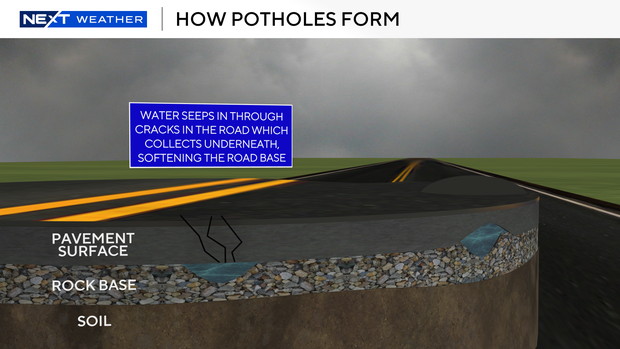
The answer doesn't depend on our cold, but on how often we bounce back and forth between freeze and thaw.
While many assume a "harsh" winter, or this bone-chilling, sustained cold, is the enemy of asphalt, the real culprit is temperature fluctuation.
A winter that stays frozen solid is actually kinder to our streets than a mild, wet season filled with temperature swings.
The science of the pothole
The primary driver of Michigan's notorious pothole season is the freeze-thaw cycle.
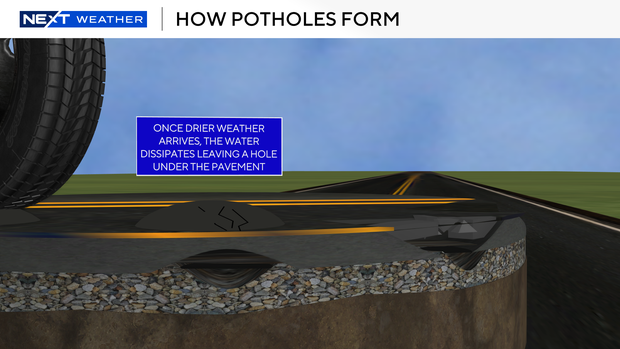
When we have some warmth, water gets into cracks in our pavement, then at night or during colder stretches, it freezes, expands, cracks the pavement, and leaves behind a gap.
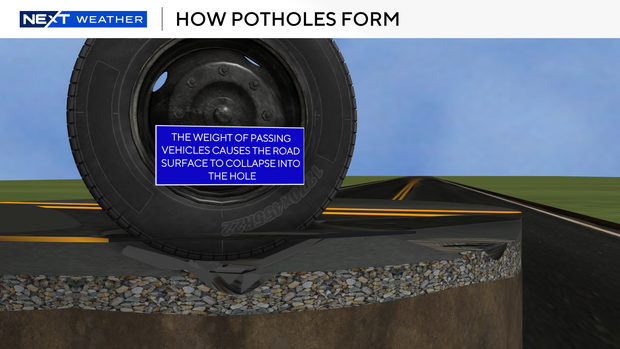
This gap is driven over, and a pothole is left behind.
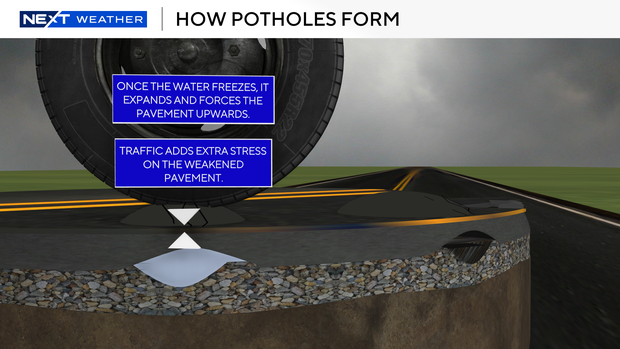
If the ground remains frozen at 10 degrees Fahrenheit for weeks on end, the water trapped beneath the road stays as stable ice, and the damage is paused.
However, a "rollercoaster" winter, where temperatures swing from 15 degrees to 45 degrees and back again within days, accelerates the destruction.
These are just examples of a temperature swing, but they match well with ones we have seen many times in the past.
Each swing acts as a mini-jackhammer on the road.
Why Michigan roads always seem so bad
Michigan geography puts it at a distinct disadvantage, as the state has the "perfect storm" of factors for pavement fatigue.
Heavy snow and spring rains provide the fuel. Clay-heavy soils under many Michigan roads, especially around Metro Detroit, trap moisture rather than draining it.
Heavy traffic provides the impact force needed to collapse weakened pavement.
What to expect this spring
As we head toward the spring thaw, eventually (I promise), the frequency of the freeze-thaw cycles in late February and March will determine the severity of "pothole season."
If we see a gradual warm-up, road crews may be able to keep pace.
But if we see rapid shifts between freezing nights and rainy days, Metro Detroit drivers should prepare for a bumpy ride.