Study at National Jewish Health in Colorado helping patients manage food allergies better
Researchers at National Jewish Health are testing the effectiveness of a new medication for food allergies. At the same time, they may be developing a way to predict how severe an anaphylaxis response a person is going to have.
"What we're doing is looking at how much more of their allergen are they able to consumer over at the duration of the study," said Dr. Jessica Hui, an allergy & immunology physician at National Jewish Health.
Participants in the study take the new treatment for food allergies, omalizumab, over the course of four months.
"It's surprising how much more of their food allergen they're able to eat at the end of the study," Hui explained.
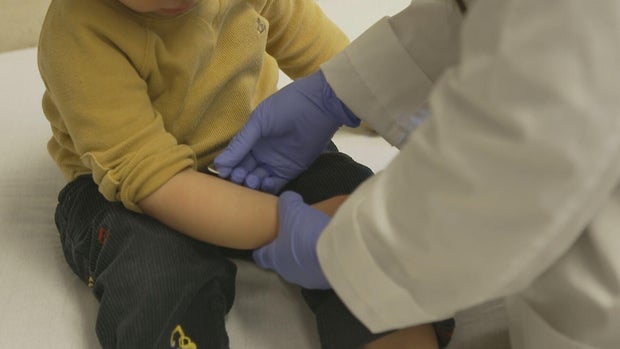
At the same time, researchers are using tape to collect skin cells throughout the four month study. They'll look for markers in the skin that might indicate if someone is at a higher risk for a severe anaphylactic reaction. Right now, doctors do what's called a food challenge in order to identify allergies. They feed different foods to the patient and look for an allergic reaction. It's the "gold standard" in identifying food allergies, but it's also invasive and can be dangerous if a patient has a severe reaction. If the skin tape method proves successful, it would provide a non-invasive and safe alternative to food challenges.
"We're able to, just within those tapes, look at various aspects of the skin barrier," Hui said.
Two-year-old Ozzie told CBS News Colorado that he likes watermelon, but he's tested positive for allergies to milk, peanuts, sesame, and mustard. It makes navigating the world a little difficult, especially because milk is in a lot of different foods.
"It's an uneasy lifestyle, for sure," said Stephanie Herm, Ozzie's mom.
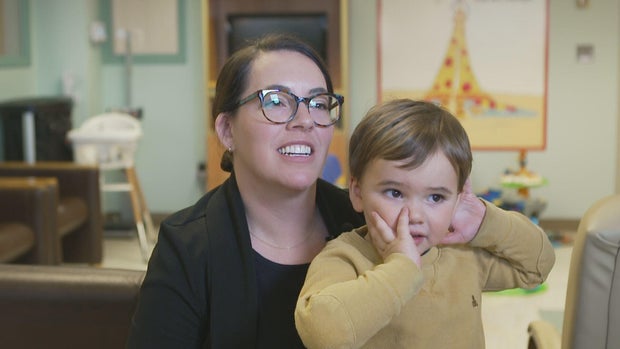
Ozzie took part in the study at National Jewish Health and had variable results. At the end of the four months, he was able to safely consumer small amounts of his allergens without reaction. It alleviated a lot of the stress around sending him out into the world.
"If a child in his class hands him their cows milk cup, he's not going to die," Herm said with a gasp.
While Ozzie will always have to carry an EpiPen with him, now having allergies to four foods is a little more manageable.
LINK: For information about the study Evaluating Skin Barrier Changes in Food Allergy
Researchers are still enrolling patients in the study. You can also support the work being done at National Jewish Health by buying a ticket to Rev the Runway, a high-end fashion show fundraiser. Rev the Runway is Wednesday, November 5, 2025 at Mercedes-Benz of Denver.