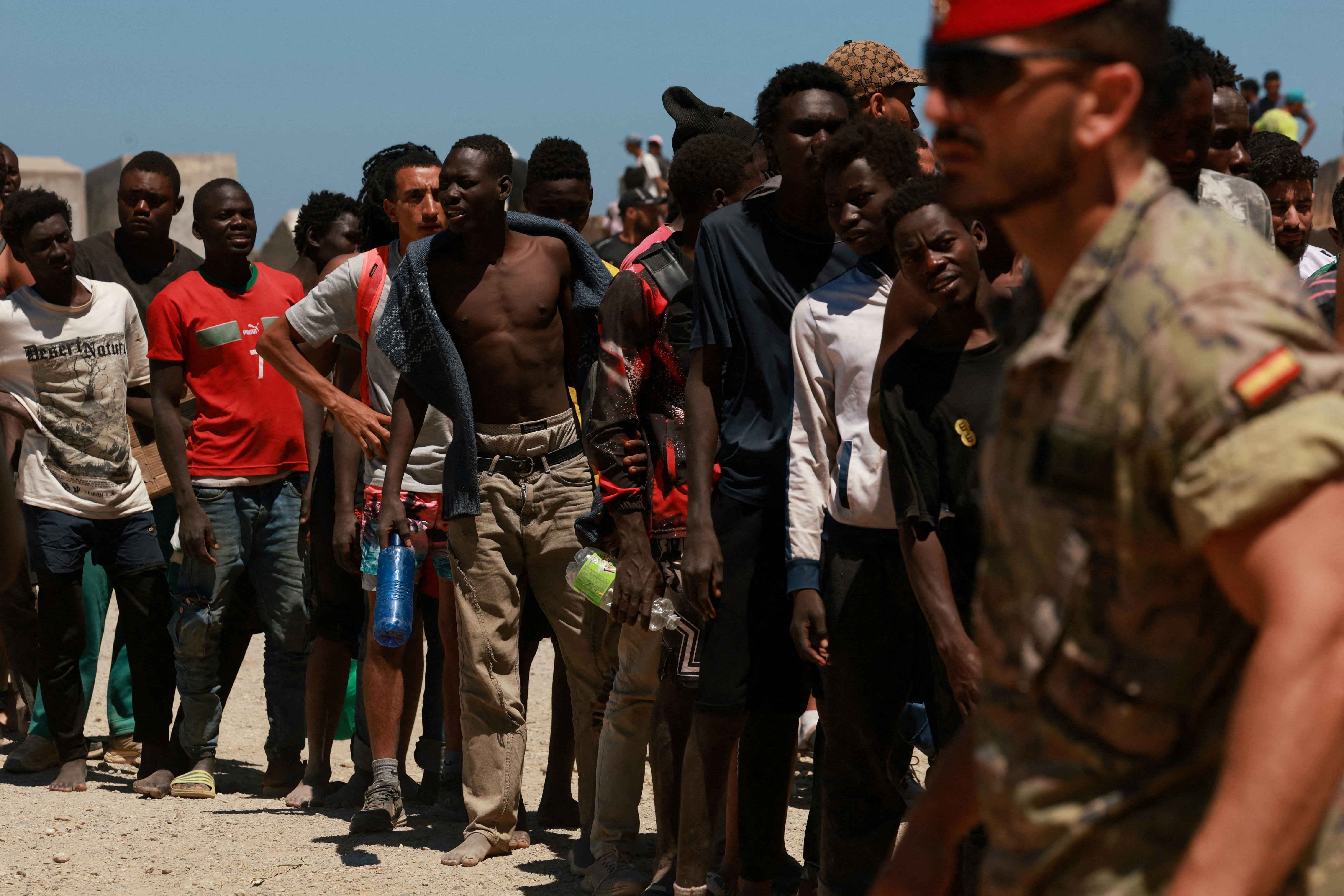
Morocco blames Ceuta border surge on "exploitation of digital platforms," misleading info
Morocco is blaming last week's massive surge of migrants into the Spanish enclave of Ceuta on various factors, including "malicious exploitation of digital platforms" and the spread of misleading information. Most of the migrants were sent back home by Spanish officials after the sudden — and deadly — border rush.
A Moroccan official said late Sunday that the surge of thousands of migrants last week into Ceuta, a small Spanish city on Morocco's Mediterranean coast, was "not the result of circumstantial or spontaneous factors."
"They were the outcome of the interaction of several overlapping factors, foremost among them the malicious exploitation of digital platforms, the dissemination of misleading information, the role of human trafficking networks, and the misinterpretation of legal and administrative information aimed at creating the false impression that entry into the European area could be achieved easily and without legal consequences," said Ministry of Interior spokesman Rachid El Khalfi.
Some Moroccan migrants told CBS News they saw social media posts stating, "Spain is an open door," along with videos of people swimming from Morocco to Ceuta. It was unclear who was behind the social media claims.
Spain's Prime Minister Pedro Sánchez last week blamed the sharp increase in crossings on "human trafficking mafias" trying to exploit a recent Spanish Supreme Court ruling that makes it harder to turn away migrants arriving from Morocco by sea.
One young man said he saw posts referencing the court ruling. The people who spoke to CBS News said they did not have premeditated plans to come to Spain, but made the spontaneous decision to swim when they saw others doing it.
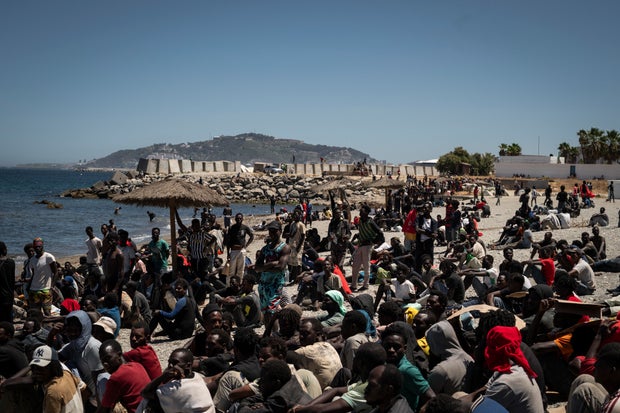
El Khalfi said about 40,000 people headed toward the city of Ceuta and another 1,135 people headed to Melilla, another Spanish enclave farther east. That's lower than previous estimates of about 50,000 or 60,000 going to Ceuta.
Morocco's interior ministry also released a death toll different from that given by Spanish authorities, who had said Sunday that at least 72 people died, including by drowning and in a stampede. El Khalfi said 11 people died, including one who fell from a rocky area near Ceuta and 10 due to drowning.
He said Moroccan authorities are working with their Spanish counterparts to verify the numbers, identities and nationalities of those who died. Most of those who tried to cross were Moroccans.
Most of the migrants who surged into Ceuta had returned to Morocco by Sunday, with many simply walking back across the border. El Khalfi also said all of those who reached Melilla "were returned immediately." Spanish officials said they plan to add fencing around Ceuta.
Ceuta and Melilla have the only land borders the European Union shares with Africa.
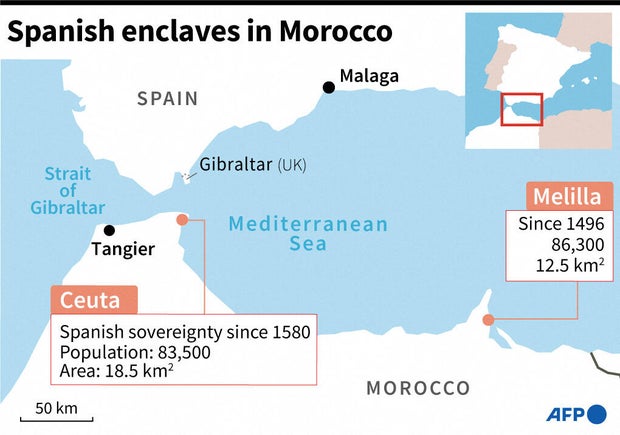
Ceuta is often seen as a destination for those trying to reach Spain from Africa, but crossing the border from Morocco into Ceuta does not immediately grant migrants free access to Europe. Additional border controls would be required to enter mainland Europe and transportation options are limited.
The scenes of chaos on Ceuta's beaches and streets drew fierce condemnation from officials in Spain and conservative leaders across Europe.
Italian Prime Minister Giorgia Meloni called on the European Union to suspend the Schengen agreement with Spain, which allows freedom of movement within member states. French Interior Minister Laurent Nunez said that he had given instructions to "immediately strengthen" controls at the border the nation shares with Spain.