Mixed reactions to Colorado proposal that would reset wages in service industry

Legislation was proposed at the Colorado State Capitol on Thursday that could change how the tipped employees like servers and bartenders are paid.
Struggling restaurant owners are hopeful the bill will not only close the pay gap between back-of-the-house and front-of-the-house workers, but that it will keep their establishments open.
But there are concerns among some in the industry that tipped employees could see immediate wage cuts -- as much as $4 per hour.
"In these slower seasons, we tend to rely on our base pay more," said Claude Grossi, a server at the Alamo Drafthouse.
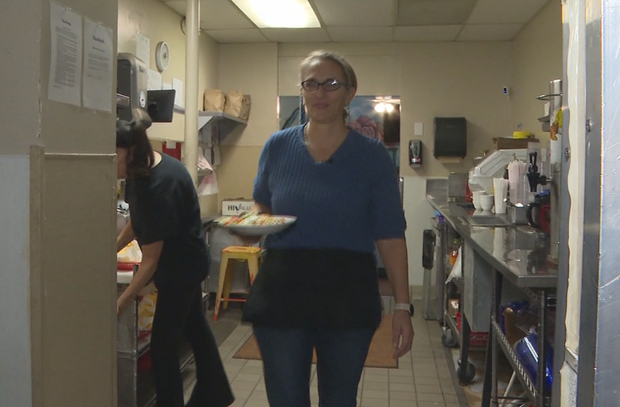
Eden Parker, a server at the Blue Bonnet in Denver, believes front-of-the-house staff has benefitted from several recent minimum wage increases. But her coworkers preparing and cooking and washing dishes in the kitchen ... not so much.
"I just did my taxes, and I made almost $42 an hour," Parker said, "and that's great."
The proposed state legislation would impact employees in Boulder, Edgewater and Denver -- communities that have already increased minimum wages on their own which presently exceed the state's minimum wage.
"They're trying to make it equitable and give the back of the house the raise that they absolutely deserve," Parker said.
However, Grossi added, "It's going to be incredible detrimental to the folks who are working tipped positions."
Currently, the minimum wage for tipped workers in Denver is $15.79 an hour, as long as they receive $3.02 in tips to "offset" that. Under the proposed bill, the minimum wage for tipped employees in Denver would be lowered to $11.79. Tips, or additional funds from the employer, would have to make up the difference.
"To have even less on your base pay is going to be so difficult for folks," Grossi said.

Blue Bonnet General Manager Chrissy Strowmat thinks Denver's minimum wage increases have cost the restaurant half a million dollars. This bill could put another $200,000 back into the business.
"That would allow us to bring back some of the support staff and to give the back of the house more pay," she said.
Her hope is for more equitable wages and a boost for an already struggling industry.
"It'll just give us another breath of life, if you will, to keep us going," she said.
But to some, the impact the new law could have for those workers already living paycheck to paycheck is worrisome.
"To think I would have to find something else not in the service industry just to pay my rent, it's pretty scary," Grossi said.

Up to 100 people on both sides were expected to testify Thursday evening at the State House's Business Affairs and Labor committee hearing. That number of speakers could make that hearing go deep into the night.
The proposal, should it pass, would take effect in October.