Final wish denied as Colorado ALS patient's access to experimental drug stalls
At 71 years old, facing a terminal diagnosis, Colorado resident Tom Pringle has one more thing he wants to do before he dies: help other people in similar situations by trying an experimental drug to treat his ALS, also known as Lou Gehrig's disease.
"Don't feel sorry for me," Pringle said during a recent interview. "Just give me an opportunity to see if this drug works. If it has any effect for me, then it obviously would have an effect for other people with ALS, and that's what we're trying to do here."
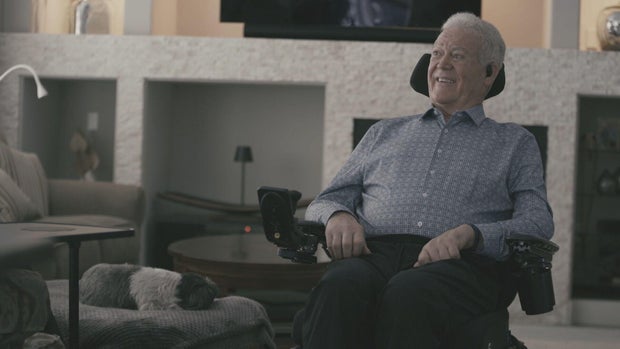
But his efforts to try an experimental drug called Tonabersat have hit a dead end, at least temporarily, as his doctors have declined to supervise his use of Tonabersat.
"Why won't they sign off?" Pringle asked. "Sounds like a no-brainer."
After a lifetime of athleticism and a love of the outdoors, he noticed weakness in his left arm about two years ago. He eventually saw a neurologist who diagnosed Pringle as having ALS, Amyotrophic Lateral Sclerosis, a neurodegenerative disease with no cure. ALS takes away the ability to move, speak and breathe. ALS patients typically have a two to five-year life expectancy.
"It's a slow goodbye," said Pringle. "The disease takes something every day."
Tom, who grew up in Boulder and attended CU, has been a lifelong fan of Colorado football and has held CU football season tickets for years. Along the way, he met another CU grad, Brad Duft, who also regularly attended CU games and had gone to high school in Boulder with Pringle's wife, Patti.
In 2025, Pringle told Duft about his ALS diagnosis.
When he heard that, Duft said, "I'm thinking 'Holy cow, I've got a drug that has been shown to work in an animal model of ALS,' and I'm thinking 'If we can get him this drug under our Right to Try laws, that would be terrific.'"
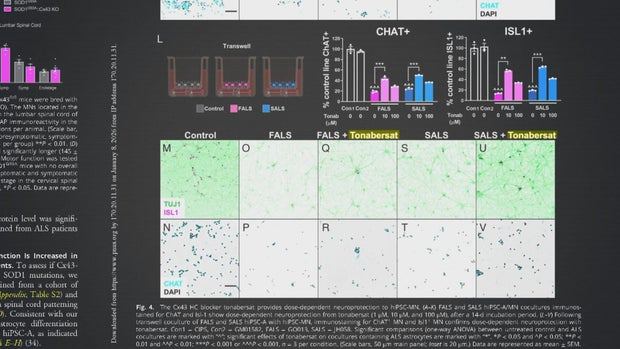
As it turned out, Duft is in the biotech industry and helped form a company that developed Tonabersat, an experimental, unapproved drug that Duft said has shown promise in treating mice with ALS.
Duft told Pringle about Colorado's Right to Try law, first passed in 2014 and updated in 2025, which allows terminally ill patients to access investigational treatments that have not received FDA approval. A federal Right to Try law was passed in 2018, largely mirroring state laws. But the Colorado law and the federal law require a physician to recommend and supervise the experimental treatment.
"If I had to take a guess as to whether this would be successful or not, it would be absolutely yes," said Duft. "I think it would be successful. Could I be wrong? Sure."
For Pringle, using Tonabersat under Colorado's Right To Try law represents a chance to gather information and data that might help other ALS patients. He is not afraid of potential consequences.
"After all," said Pringle, "I'm not afraid to die."
But when he approached his care team at UC Health in 2025 about trying Tonabersat, the answer was no.
In an email from August 2025, shared with CBS Colorado, a nurse wrote Pringle, "I have spoken with your providers. They all agree that 'Right To Try' does not obligate them to provide the necessary time, monitoring and paperwork that would be required by them. They also do not believe that the drug would offer any help based on the data available so far."
The email and subsequent conversations with his medical support team were a gut punch for Pringle.
"It's frustrating to know there is a drug right there that we could try and find out if it does anything or not," Pringle said during an interview at his home. "Thats all I want to do is find out if it does anything or not for me or possibly other people."
Right To Try laws largely shield doctors from legal liability when they prescribe experimental drugs. The laws aim to reduce physicians' fear by providing broad immunity as long as physicians exercise "reasonable care."
Kelli Christensen, the director of public and media relations for UCHealth, provided a statement explaining the hospital's position.
"UCHealth deeply empathizes with individuals facing life-altering diagnoses and supports Colorado's 'Patient's Right to Try Individualized Treatments' statute," wrote Christensen. "This statute empowers eligible patients to explore investigational drugs based on their physician's recommendation. The statute does not require drug manufacturers to provide investigational drugs to patients, and the law does not require physicians to recommend an investigational drug, especially if the physician does not believe that the treatment would be beneficial to the patient based on available research and data. UCHealth is committed to improving our patients' lives, and our teams rely on robust medical evidence when advising on treatment options. We understand the challenges that patients face, and we are dedicated to offering the most compassionate and evidence-based care possible."
Duft says the Tonabersat is readily available and would be made available to Pringle at no cost. "This should have been done yesterday," insisted Duft. "It should have been done last month, it should have been done two months ago, three months ago."
Duft said he is trying every day to find a way for Pringle to be cleared to take Tonabersat and see if it has any effect.
"Why am I doing all this?" Duft asked. "Because I care, and I'm watching a friend die and I'm trying to help him. He is facing a death sentence."
Colorado State Rep. Lindsay Gilchrist, who co-sponsored a 2025 update to Colorado's Right to Try law, said the law is "very targeted, but it allows for these individuals who don't have any other options to have another option. The way to move forward with an experimental treatment is to find a physician who would do that."
Pringle says he still loves his doctors and his UCHealth medical team. But for Pringle, who has mostly lost the use of his limbs, trying to manage his health and continuing to work full-time in real estate while searching for another doctor willing to oversee an experimental treatment is a big ask. He says he has no illusions that Tonabersat will be a game-changer for him.
"But maybe it will help people down the way," he explained. "We don't have any dreams of completely recovering. It is literally for people down the way that we hope to be able to help."