Colorado man's federal drug sentence comes months before expected state approval of ibogaine use
A Colorado man was imprisoned late last year after a weightlifter died in his basement. The death was the result of a treatment using ibogaine, a psychedelic drug that is illegal to bring into the country.
The Broomfield man is the first person in the U.S. known to be put behind bars for this particular drug's use. And, knowing that it will likely be legalized in Colorado in the coming months, he is not happy.
"How they say this (drug) led to his death is beyond me. It really is," Ameen Alai said in a recent podcast interview. "When the government wants you, they're gonna get you."
Colorado approval in progress
Colorado, at the beginning of this century, established itself as one of the states with the most relaxed drug laws. In 2000, it became the sixth state in the country to approve medical marijuana. The second state to approve recreational marijuana in 2012. And, more recently, it was the second state to decriminalize several, but not all, natural psychedelics in 2022. Those included psilocybin — commonly referred to as "magic mushrooms" — DMT, and mescaline.
And ibogaine.

Ibogaine, a hallucinogen made from the root bark of a West African shrub named iboga, is said to have healing properties that have not yet been clinically tested. It's similar to most of those natural psychedelics passed in 2022. Research seeking to pinpoint their medical and psychological benefits is in progress and incomplete, but growing.
So far, ibogaine shows blue-ribbon potential for treating several forms of addiction, according to a 2018 study published in the National Institutes of Health. It has a documented ability to help patients curb cravings or withdrawals, and detoxify from alcohol, cocaine, methamphetamine, opiates, and nicotine. Preliminarily, it also shows potential to treat PTSD, anxiety, and depression in military veterans.
Ibogaine treatment is legal New Zealand and largely unregulated in Mexico. But most countries have some form of restriction due to concerns about serious health risks. In Belgium, France, Norway, Sweden, Ireland, China, and the U.S., it's banned outright. Approval from the U.S. government is a normally a process of several years, but the current administration indicated last year it may step up the consideration for treatment with psychedelics nationwide. For now, ibogaine remains a Schedule I controlled substance. Federal law makes it illegal to bring it into the country.
Yet, over a dozen states are moving forward with their own explorations of legality — like treatment for heroin patients or veterans only — or funding research through clinical trials, according to the advocacy group Americans for Ibogaine. Because it is decriminalized in Colorado, it's legal to possess it, carry it, and use it yourself, if you avoid federal detection. But it cannot be shared or sold, per Colorado law.
That could change this year.
A state-appointed panel is constructing the legal framework needed for oversight of in-state treatment with ibogaine. According to a state spokesperson, the panel should present state officials with its guidelines within several months. Then, ibogaine treatment in Colorado can begin professionally, and it could be the first state to do so.
That is little comfort, however, to the one Colorado resident already serving time for the drug. Ameen Alai recently began serving a federal prison sentence for arranging Haman's ibogaine treatment in the basement of his Broomfield home almost five years ago. The treatment session happened 20 months before Colorado voters approved that short list of natural psychedelics.
It was, sadly, the worst of outcomes: Haman died from the treatment.
Denver-based federal prosecutors believe Alai is so far the only person in the U.S. to be jailed on an ibogaine-related offense.
Treatment goes wrong

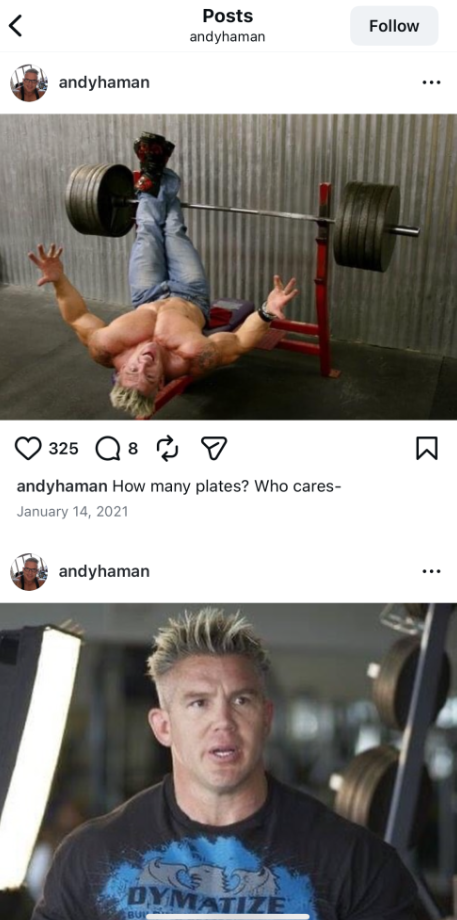
Anthony "Andy" Haman was a former national champion freestyle wrestler, competitive weightlifter, and professional bodybuilder. In 2020, he was quite visible in those sports, with a significant social media following. He dressed as superhero, "Captain America," and visited children in hospitals.
After years of competition, he settled in Colorado Springs with his family and became a coach and teacher. He continued to maintain an impressive physique, bench pressing 600 pounds several times in a 2009 online video. That video helped him land an acting role as a muscular squad leader in the 2017 film "The Jurassic Dead."
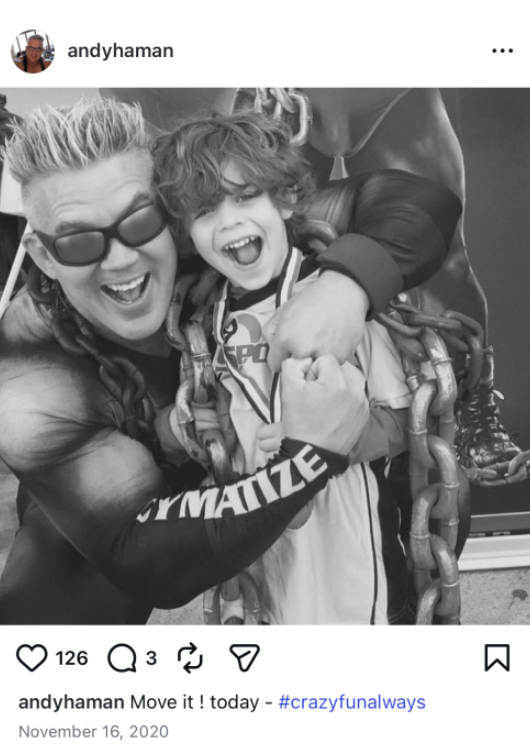
Still, Haman was not entirely healthy, and Alai was asked to help. Alai and Haman were already acquaintances. Alai was a practicing fitness coach and healer, a self-professed "guru" with at least two years of experience in ibogaine treatments.
An ibogaine session was arranged. Haman showed up at Alai's home in Broomfield on March 19, 2021, according to case documents.
Hours into Haman's dosing, Alai and another man left Alai's home to fetch a quick lunch. They returned 10 minutes later, according to case documents. Haman was having a seizure and wasn't breathing. Alai called 911 and began CPR. But Haman never recovered. He was pronounced dead 22 minutes later. He was 54 years old.
"Rest in peace, Andy Haman," Alai said in an interview before he went to prison. "God rest his soul."
The coroner's autopsy report on Andy Haman cited ibogaine toxicity as the cause of his death; an overdose, in other words. But the report listed other contributing factors: An enlarged heart and restricted blood flow in the arteries. Also, the coroner mentioned a number of other concerns from Haman's medical history. Most significantly, he had elbow surgery five days before the ibogaine session. The surgery was intended to combat an infection.
"[T]he procedure reportedly went well," the Adams-Broomfield Coroner's Office wrote in the autopsy report, "but according to his wife, he was septic."
Sepsis is a life-threatening medical condition on its own. To be septic means the body is responding strongly to an infection, so strongly that the body can send itself into shock or shut down vital organs.
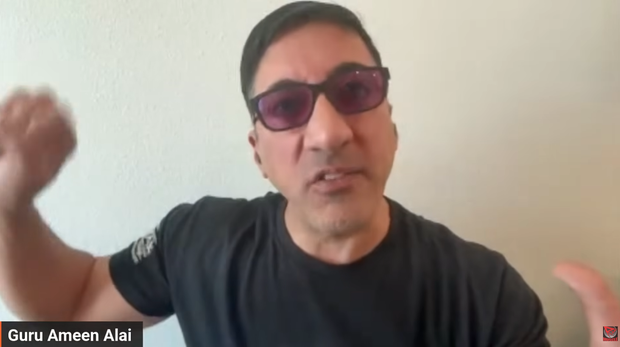
Alai claimed not to know about Haman's condition. He defended the ibogaine session in a YouTube podcast, "RxMuscle - The Truth About Bodybuilding," recorded two weeks after he was sentenced September 16, 2025, and six weeks before he reported to prison.
"Tens of thousands of people die from fentanyl overdose in the United States. There have only been 33 deaths ever from ibogaine," he said.
That statement is corroborated by the National Institute of Health. An academic report published two months before Haman's death stated 33 deaths were publicly known worldwide since 1990. Some were attributed to cardiac events triggered by the drug, others to toxicity or an overdose of ibogaine in particular.
"A lot of people know Andy had surgery right before I saw him, on his elbow," Alai stated on the podcast. Haman expressed to him before the ibogaine session that he had a "clean bill of health." Not being truthful about his condition cost Haman his life, Alai claimed.
"Lying like that is what leads to problems. If the truth had been known — the fatty liver, the cirrhosis, heart three times the size of normal — nobody would've ever said that he should have tried this," Alai claimed in the podcast. "He should not have shown up at my house so unhealthy. He shouldn't have lied about that. It didn't do him any good."
Haman left behind a wife, four daughters and a son. Alai said on the podcast that a family member contacted him in hopes of helping his father conquer a long battle with alcohol.
Dave Polumbo, the host of "The Truth About Bodybuilding" podcast, seemed to indicate knowledge of that. Polumbo said during the Alia interview, "The sad thing is, you and Andy, and all of us, were friends. We only wanted to see Andy get better. I loved the guy. The whole family is amazing.
"Andy was on a bad trajectory at that point in his life. It's very sad what happened, but I feel it's making it worse by holding you responsible," Polumbo continued. "It's not like you shot him with a gun in cold blood."
Alai replied, "I tried to bring him back to life. I tried my best. I really did."
Members of Haman's family contacted by CBS Colorado for this story did not return messages.
Prison sentence
Earlier this year, Alai, his attorney and federal prosecutors reached a plea deal on the lone Schedule I distribution charge. He and his attorney believed a probation sentence was likely, not any prison time. But he claimed the judge made an example of him. Alai was ordered to serve four years in federal prison.
"This sentencing wasn't about me. It was about the future of ibogaine testing in the United States. The judge declared ibogaine is the most dangerous Schedule I drug on Earth. And she said it is far more dangerous and deadly than fentanyl," Alai said in the podcast.
The fact that federal prosecutors offered Alai a plea deal suggests they may not have had undisputable proof that Alai administered the ibogaine to Haman.
Alai intimated just that, saying he believed he was guilty for assisting in Haman's death, but not causing it.
"People came to me and asked me for help. I didn't promote this, I wasn't out there selling anything," Alai said in the podcast. "I had no part in the manufacturing, the distribution, the sale. None of that.
"I wasn't the buyer of the drug and I wasn't the seller of the drug."
Precisely how the ibogaine was administered to Haman isn't clear in the case documents. The federal indictment brought against Alai says he "delivered" the ibogaine.
Alai wanted to make it clear he did not: "It wasn't my session. It wasn't my ibogaine. I didn't capsule it."
So who gave Haman the Ibogaine?
Alai, when pressed on the podcast about the third man present during Haman's session, was vague.
"I'm not a rat," he said. "That person is doing what they do. That's fine."
But it is no secret. The third man in the Alai's house that day was James Tamagini, then a 57-year-old from Massachusetts, according to court documents. Tamagini went public about it, as well.
He voiced his own version of the incident when he appeared on another bodybuilding podcast, "Mark Bell's Power Project," in October 2021, less than a year after Haman's death.
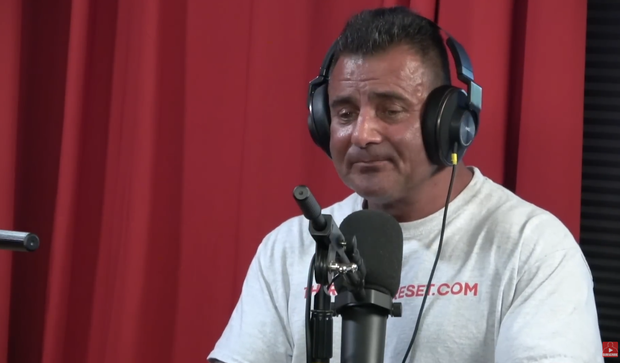
He claimed he participated in previous ibogaine treatment sessions led by Alai.
"I was with Ameen with 50 people before I ever ventured out on my own," Tamagini said in the podcast. "From what I saw, there's nobody that pays more attention to detail than him."
Tamagini said he himself was treated by Alai.
Shortly after college, he was critically injured in a car accident. A morphine drip negated the pain, and he, as the patient, was in charge of administering it with the press of a button.
"After three days, I was hittin' that mother f***er like there's no tomorrow," Tamagini explained in the podcast. "It turned me into something that I had not been."
That began a decade-long "love affair" with elicit drugs, Tamagini stated in the podcast. It ended when he went to Alai and took ibogaine.
"As soon as I heard the name, I was voracious in my researching this," Tamagini said in the podcast. The treatment occurred in a hotel room. "At first you feel tingly and warm. It's somewhat pleasant. Then it gets unpleasant. And when it gets unpleasant, you want to lay down.
"Funny things start to happen."
Hallucinations, "riding the wave," and a catatonic state were part of the trip, Tamagini stated in the podcast. So was recalling important, impactful, or regretful experiences from his childhood.
"I started to see things from my past," he said in the podcast. "The whole time, your body was never in a restful state. You were fighting to heal yourself. It was like an internal struggle. For me, it lasted two full days."
Tamagini now operates his own ibogaine treatment program near Cabo San Lucas, Mexico. It is called the "Red Pill Reset." The facility offers consultation and support through an "ibogaine journey." He suggests patients fast beforehand so they "don't have anything to purge."
"To me, it wasn't a pleasant experience. But other people have described it as a pleasant experience. That's the one thing I know about this," Tamagini said in the podcast. "It's completely individual. It's all dependent on what the issues are, the body composition, how much of whatever substance they took."
His patients are asked beforehand to sign a waiver: "I'm strictly there to consult you."
Tamagini has not been charged in Haman's death. When asked why, a spokesperson for the Colorado District of the U.S. Attorney's Office (Department of Justice) replied, "No comment."
Tamagini did not respond to interview requests for this story.
"It's not over."
Alai described taking ibogaine himself in Mexico, too, where it's unregulated. He believes there are other obstacles to approving its use in the U.S.
"Ibogaine threatens all of Big Pharma," he said in the podcast. "Ibogaine threatens the entire Big Pharma 'point' which is, 'take something every day.' When you take ibogaine, when you take it successfully...your brain gets rewired.
"It seems to block opiate withdrawals," Alai continued. "(You) come out of it not wanting to do drugs, not feeling depressed. You're happy. Big Pharma doesn't want that."
He promised to continue fighting his incarceration: "It's not over. I don't want to get into details about that. But it's not over."
CBS Colorado reached out to the Florida attorney who represented Alai in the federal case for comment about any potential legal actions. That person has not responded.


