COVID In Colorado: Nearly 2 Years Since First Diagnosed CO Case, Governor Says 'We're In A Much Better Place'
DENVER (CBS4) - Gov. Jared Polis held his first news conference of the year specifically about COVID with good news to deliver. He says the "vast majority of Coloradans who are vaccinated can proceed with normal life free of fear of the virus."
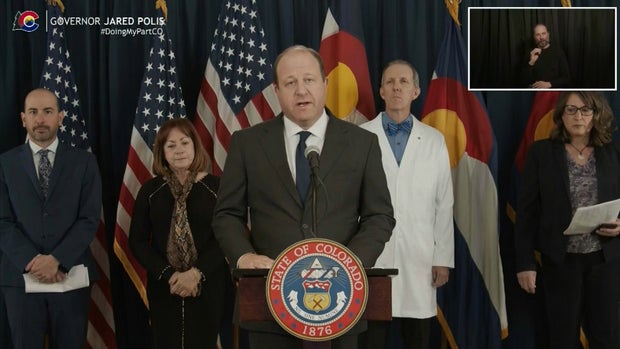
Polis opened his remarks Friday afternoon with a recognition that it's been nearly 2 years since the first diagnosed COVID-19 case was found in Colorado. That was on March 5, 2020.
"We're just 10 days short of 2 years, and I can tell you, for me -- just like for you -- it feels like 10 years instead of 2 years," he said. "But despite the challenges that we faced as a state and as a nation, we are now in a much better place, and a very different place, than we were in 2020."
Mask mandates also expired across the state, including in schools. They still remain in place on public buses and trains and at Denver International Airport.
Nearly 91% of the Colorado population has some level of immunity against the omicron variant.
Polis and Colorado public health officials introduced what they call a roadmap for the current health situation moving forward and for if things get worse once again with the pandemic, or if a new public health threat arises.
It contains the following health guidance about COVID-19 for people right now in Colorado:
- If you are fully vaccinated and up to date with all three doses: You should feel comfortable living life as normal.
- If you are vaccinated, but immunocompromised or high-risk: Take necessary steps to protect yourself and proactively speak with a health care provider about a potential fourth dose of the vaccine, preventive treatment options, and what to do if you test positive.
- If you are not fully vaccinated: Get fully vaccinated with three doses as you are still at risk of contracting severe disease even with the emergence of variants that cause less severe disease in fully vaccinated people.
It also outlines four points for state readiness:
1. Establishing Hospital Readiness Standards, Surge Planning and Normalizing COVID Patient Care in Traditional Medical Settings: Ensuring health care systems are prepared for future response efforts and normalizing COVID-19 treatment and prevention back into traditional healthcare settings.
2. Ensuring Public Health Readiness and Surge Capacity: Building on lessons learned so the public health and emergency management fields can expand and contract for disease control and other emergency needs.
3. Investing in Healthcare Workforce Stabilization and Expansion: Stabilizing the current workforce and building and maintaining a sustainable health care workforce for the future.
4. Engaging the Federal Government in National Endemic Response, Pandemic Readiness and Needed Reforms: Striving for a national plan for pandemic readiness and response, and investing in the public health system, including an updated and interoperable national surveillance system, and flexible, non-categorical funding to allow flexibility and increase the public health workforce.
MORE FROM CBSNEWS.COM: CDC revises mask guidelines, says 3 in 10 Americans should still mask indoors