Colorado State University pauses billboard installations after backlash from community and lawmakers
After months of pressing forward with billboard installations around campus against the wishes of the city of Fort Collins and many residents, Colorado State University has paused installation of additional signage for the time being. CSU tells CBS Colorado they have elected to stop further installation of new signs until they can evaluate next steps.
As reported by CBS Colorado in 2025, the university had been swimming upstream from the start in its effort to install the billboards.
Fort Collins has had a ban on billboards within city limits for decades, unless previously grandfathered in. The city made that decision as a way to preserve the scenic beauty of the quickly-growing city.
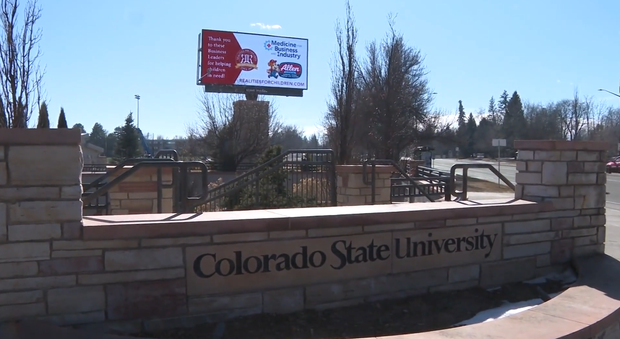
However, CSU sits in the center of the city and is technically on state-owned land. Against the wishes of local and state lawmakers, CSU elected to move forward with installation of large electronic billboards in and around campus, many of which face outward toward city-managed roadways and land.
Jack Armstrong, a longtime resident of Fort Collins, said he was among the many who told both CSU and lawmakers that he was troubled by the signage. He claimed they were nothing but ads that distract drivers.
"Buy this, buy that," Armstrong said.
The university had long described the billboards as a way to ensure campus safety, claiming they would be used to spread information to students and staff that concerned public safety.
However, in the months that they have been operating, the signs near-entirely show advertising for university sporting events or local businesses. Tuesday afternoon the signs were showing warnings of high wind advisories.
"Signs like that are designed to attract our attention and look at them," Armstrong said.
Ironically, some of the ads on the billboards say "You Looked" on them, as a way to encourage more people to purchase ads through the billboard company "Street Media."
Armstrong, and state Sen. Cathy Kipp, are among the many who recognize that CSU was legally allowed to install the signs. However, both said they felt it was the university telling the surrounding city that they are above the wishes and rules the rest of Fort Collins has to follow.
Armstrong said he has called the university many times to express his concerns. However, he said he is always sent to a voicemail that promises that someone will call back.
"I have never gotten a phone call back from CSU," Armstrong said.
That is part of the reason why Kipp and other lawmakers at the capitol in Denver are now proposing legislation to force CSU to take the signage down. Under Kipp's proposed law, CSU would have to follow city ordinances when it comes to signage or sound that is visible or audible from city property. The university could keep the signs if they were granted a waiver by the city, under the proposed law.
After standing by their partnership with Street Media Group, even amid pushback from the community, city council and state lawmakers, CSU recently pivoted their position and said they will be pausing any further installation of signs.
The university has never agreed to interview with CBS Colorado about the signs since they were first proposed, but has rather chosen to issue written statements on the multiple reports CBS Colorado has published.
In a written statement to CBS Colorado, a spokesperson for CSU said:
"CSU understands that members of our community have strong feelings about the recently installed signs, and we appreciate the feedback that has been shared. We value our relationship with our neighbors and take those perspectives seriously.
The signage currently in place is part of a plan designed to enhance campus communication and generate revenue dedicated to safety improvements.
At this time, CSU has paused any additional signage installations while we review community input and consider next steps with our partner, Street Media. We remain committed to engaging thoughtfully and ensuring that our decisions reflect both institutional needs and community perspectives."
"My feeling was this was a good first step," Armstrong said. "I hope that the university will take down the big signs that are dangerous for drivers around here."