Colorado launches statewide response to growing pine beetle threat near Front Range communities

Colorado leaders are sounding the alarm on a growing pine beetle outbreak that experts say could kill millions of trees and significantly increase wildfire risk near some of the Centennial State's most populated areas.
Gov. Jared Polis signed an executive order Monday morning, creating a new task force aimed at slowing the spread of mountain pine beetles, with a particular focus on ponderosa pine forests along the Front Range. State and federal foresters say this outbreak looks different from the massive lodgepole pine die-off that swept through Colorado in the early 2000s.
"Unfortunately, the pine beetles are back," Polis said. "This time it's right along the western Front Range ... very close to our population centers."
Forestry officials say warmer winters, dry conditions and dense, stressed forests have created ideal conditions for beetles to thrive.
Aerial surveys show expanding beetle activity across millions of acres, including forests along major travel corridors like I-70 and U.S. 285.
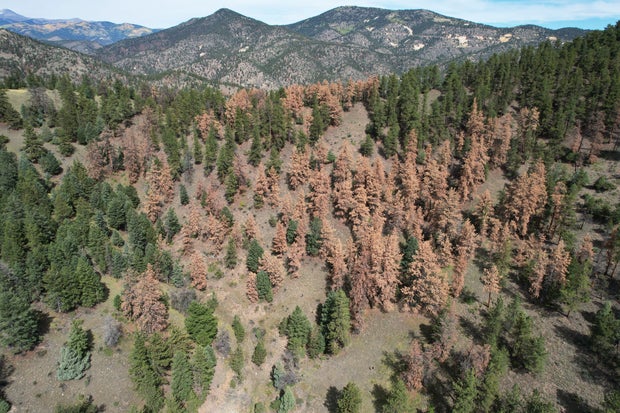
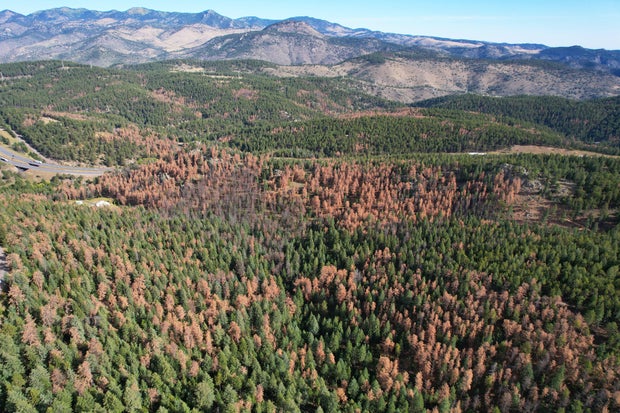
"What we're seeing are pockets of beetle activity distributed across the Front Range that signal the real potential for large scale tree mortality," said State Forester Matt McCombs.
According to the U.S. Forest Service, more than 30 million acres statewide are showing increasing beetle populations. Regional Forester Troy Heithecker warned the impacts could intensify over the next 3 to 5 years if conditions don't change.
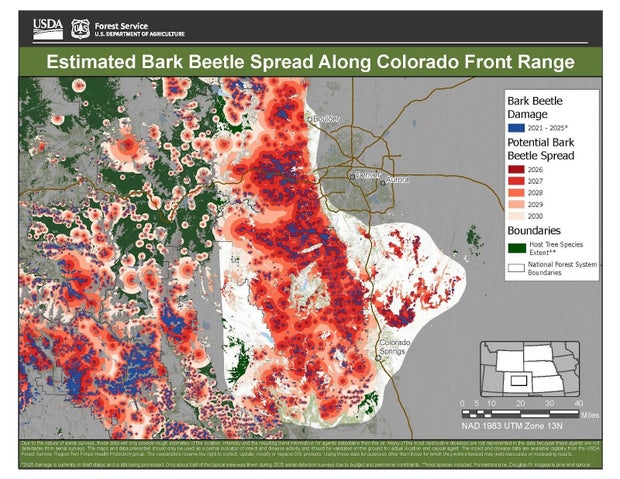
"Expanding mountain pine beetle populations are a sign that forest health conditions are out of balance," Heithecker said. "We must act immediately to reduce forest density and promote resilience."
Unlike past outbreaks that were mostly concentrated on federal lands, researchers said many of the forests now at risk sit near neighborhoods, utilities and recreation areas. Officials say dead and dying trees dramatically increase fire danger, especially during hot, dry summers.
The newly formed task force will bring together state agencies, federal partners, local governments, and industry groups. Its mission includes expanding forest treatments, prescribed burns, community mitigation grants, research, and homeowner education. The governor also plans to request additional funding in his upcoming budget to support mitigation and prevention efforts.
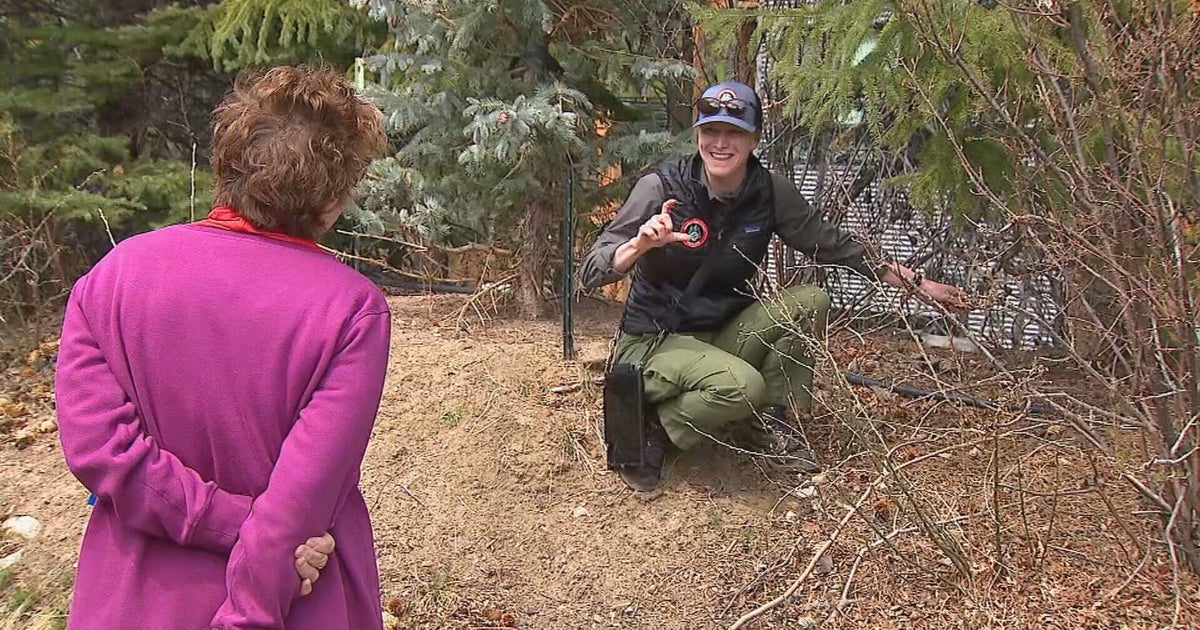
Forest entomologists are urging homeowners to take action as well. Forest Entomologist with Colorado State Forest Service's Dr. Dan West says early signs of infestation can often be spotted before trees die.
"(Neighbors) can look for pitch tubes," West explained. "If trees are stressed from drought, you may instead see fine sawdust collecting around the base of the tree."
Officials emphasize that this is not a call for panic, but for preparation. The goal, they say, is to prevent a beetle-driven forest health crisis from becoming the next wildfire disaster along Colorado's Front Range. While this infestation in the next few years might be too late to stop, getting a plan together for the foreseeable future can start right now.
"This effort has to be about long-term change," McCombs said. "So future Coloradans aren't standing in the same place, facing the same preventable risks."
State leaders say more details on task force appointments and public engagement opportunities will be released in early 2026, including grant opportunities for communities on the front lines of the infestation.