Colorado Parks and Wildlife unveils Wolverine Restoration Plan, hopes to bring 100 animals to state

Colorado Parks and Wildlife has released more information about how, where, and why it plans to reintroduce wolverines into the state and why wildlife officials say Colorado is critical to the species' future. The 106-page report details the plans behind the bipartisan effort.
The state confirmed plans to reintroduce wolverines in 2024, but until now, many of the specifics had not been made public. The newly released plan outlines a multi-year strategy, highlighting distinct differences between this effort and Colorado's controversial gray wolf reintroduction.
Colorado currently has no resident wolverines. CWP said in the report that the species was wiped out nearly a century ago through poisoning, trapping, and "predator eradication campaigns." Since then, only a handful of lone male wolverines have ever wandered into the state, none of them staying long enough to establish territory or reproduce. CPW said those rare sightings were "so small that they did not represent a viable population."
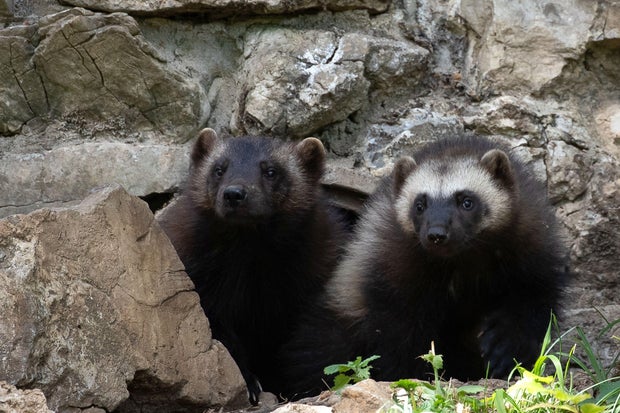
The goal now is to rebuild a population from scratch. CPW estimates Colorado could support between 100 and 180 wolverines, roughly matching historical numbers before the species was killed off. According to the report, Colorado contains about 20% of all "prime wolverine habitat" in the lower 48 states, making it the largest unoccupied block of suitable habitat in the country. Essentially, Colorado has the potential to be a huge boost to wolverines, which are officially federally listed as "threatened."
CPW believes our high-elevation terrain may become even more important as climate change reduces cold, snowy environments elsewhere. The report explains natural recovery is extremely unlikely because female wolverines rarely travel long distances to establish new territories, writing that "without reintroduction, the probability of natural recovery of a breeding population in Colorado is low."
The Denver Zoo conservation officials who spoke to CBS News Colorado in 2024 supported the plan, saying humans played a role in eliminating the species, but can also play a role in bringing it back.
"Humans can be the problem, but we can also be the solution," said Stefan Ekernas of the Denver Zoo. "This is a space where we can help bring the species back that ought to be in Colorado."
Unlike wolves, CPW expects wolverines to have minimal impacts on people and livestock. The animals are solitary, live at very low densities, and tend to avoid human activity whenever possible. The report notes there have been only two documented cases of wolverines preying on livestock across their entire North American range. Wolverines primarily scavenge carcasses in winter and prey on small mammals, such as pikas, in summer, earning them a reputation among biologists as a natural cleanup crew.
CPW also notes that less than one percent of suitable wolverine habitat overlaps with ski areas, and sightings by people are expected to remain extremely rare. The report cites recreational overlap as limited and says population-level impacts from human activity remain unproven. Domesticated sheep depredations are listed as a potential concern, but CPW is picking reintroduction locations with few domesticated sheep roaming, and instances where wolverines went after sheep are mostly in Scandinavia, where they don't have other prey, like pikas.
Potential release zones include the central mountains (think Summit County), areas north of I-70, and the San Juan Mountains. CPW expects the animals to spread out across the high alpine regions, with singular wolverines occupying large territories and avoiding one another as well as people.
Under the plan, CPW would release at least 30 wolverines, with as many as 45 animals released over at least three years. The animals would be captured from Canada or U.S. regions with healthy populations, health-checked, fitted with GPS collars, and monitored closely after release. Because this type of reintroduction has never been attempted before, CPW says it will use an adaptive, learn-as-it-goes approach that allows strategies to change based on what the data shows. That will help them determine whether or not to release pregnant female wolverines or release recently born wolverines alongside their mothers and see which method sticks best.
While the plan outlines phases measured in years, there is no official start date yet. CPW says releases cannot begin until federal approvals are finalized and state rules, including livestock compensation, are in place. That's the same piece of the wolf reintroduction that also specifies when it is OK to take lethal action against a depredating wolf.
If successful, the agency hopes to establish a self-sustaining wolverine population in a place where the species once thrived at a time when fewer places in the country are still cold and remote enough to support it. Success will be determined by population growth and the eventual (and, in CPW's view, hopeful) change to their status on the endangered species list.