Colorado residents frustrated over planned outages, seek more information about burying power lines

As Colorado's Public Utilities Commission held a community meeting on Wednesday to listen to people affected by power outages, the topic of burying lines remains a point among some who have been frustrated.
"Pretty stressful. We were out of power for probably about a day and a half," said Larimer County resident Trevor Ferebee at his home this month. Ferebee cares for his 82-year-old mother, who is on oxygen and has been buying backup power supplies.
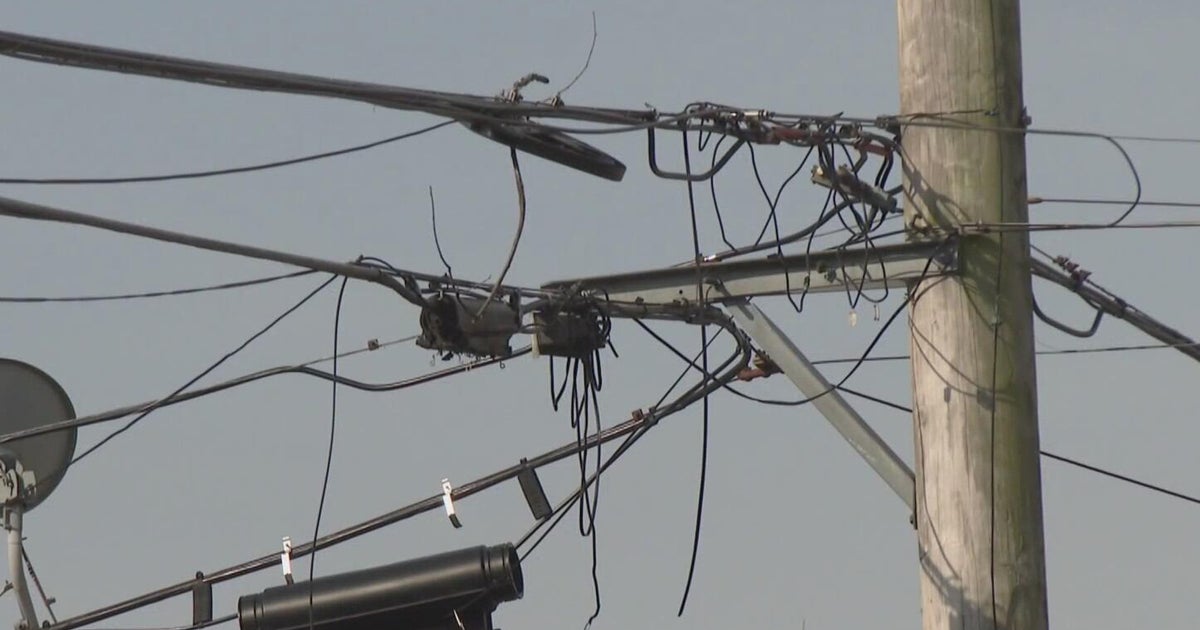
"I think Xcel needs to probably start burying these lines that are exposed."
The main problem is cost. And the system that was initially constructed.
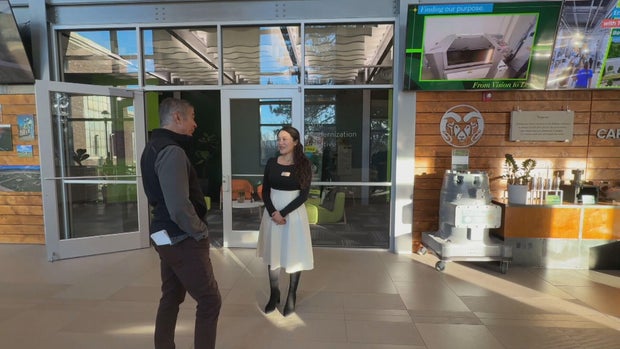
"Fifty, 60 years ago, when we started to build some of the critical infrastructure, I think overhead power lines were definitely a good choice. Because it costs less compared to building underground lines," said Zongjie Wang, Ph.D., an assistant professor of electrical engineering and director of the Grid Modernization Initiative at CSU. The Initiative is a public-private partnership with a goal of making the electrical grid reliable and resilient.
"Underground is definitely way more expensive," compared to an overhead power line, said Dr. Wang.
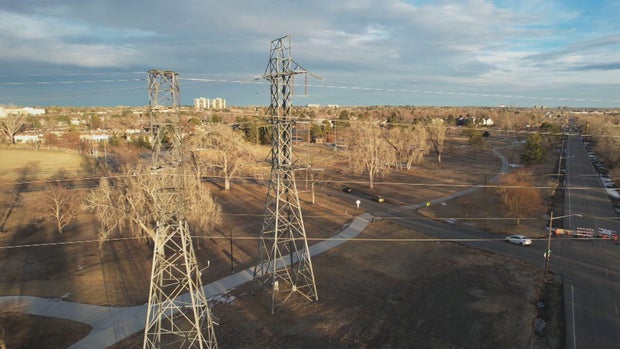
The City of Fort Collins was the first in the country to bury all of its distribution lines, which began in the 1960s. Distribution lines are the local lines that bring stepped-down power to homes and businesses. Transmission lines are those that commonly carry ultra-high voltage, typically mounted higher, above trees.
Robert Kenney, President of Xcel Energy Colorado, says the utility is dealing with a different situation regarding fires.
"We've seen the wildfire risk evolve. And as that wildfire risk has evolved, our mitigation efforts have had to evolve as well," he said.
"Most of the risk with respect to starting a wildfire is on the distribution lines as compared to the transmission lines," noted Kenney.
The cost of burying distribution lines can vary a great deal. The cost says Kenney is," Roughly $400,000 to $1.5 million a mile for an overhead line, as compared to roughly $3.9 million a mile to bury distribution lines."
The issues are many.
An underground line has more insulation around it, running through conduit, noted Dr. Wang. It can be difficult to run lines in areas where there is water intrusion or those with trees or rocks that have to be removed, and uneven ground in Colorado provides challenges. Detecting faults is easier above ground where they can be seen, she explained.
But the advantages are many as well. The underground lines can last longer and may not lose as much power.
"It has better efficiency, it has better resilience. Whenever there is a strong wind coming through, we do not have to shut down the power line," said Wang.
The Grid Modernization Initiative is looking at where burial is most effective.
"What are the locations that frequently have these power outages, or what are the locations having a lot of strong winds that we have to do something," said Dr. Wang.
Xcel is currently planning to bury some lines, but only a fraction of the overall power infrastructure over the next couple of years.
"We expect to underground about 50 miles of distribution lines in various parts of our service territory. We are going to do that in the areas that we have assessed to be the highest Wildfire risk areas," said Kenney. "So we're looking at parts of Boulder, parts of Fort Collins, and the north and south metro area are where we're looking at initially."
He added that there are other cost-effective ways to protect lines from fire. "Our wildfire mitigation plan describes other mitigation measures that we are putting in place," Kenney explained. "Replacing bare conductor with covered conductor, replacing small diameter wire with larger diameter wire that's less susceptible to falling to the ground."
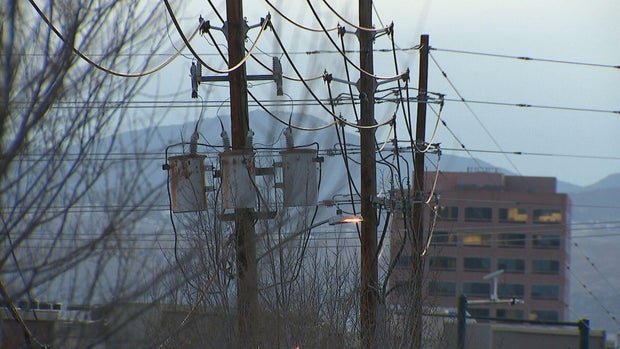
Undergrounding transmission lines, noted Dr. Wang, can be as much as 20 times more expensive than above-ground installation. The process of doing either transmission lines or distribution lines would likely lead to higher costs for consumers. But there are long-term benefits, such as fewer outages.
"We will look and see if there's more that could be done, and in addition to that, we have a whole host of other mitigation efforts that we're continuing to deploy as well," said Kenney.