Colorado CDC researcher terminated amid federal budget cuts while working on Lyme disease projects

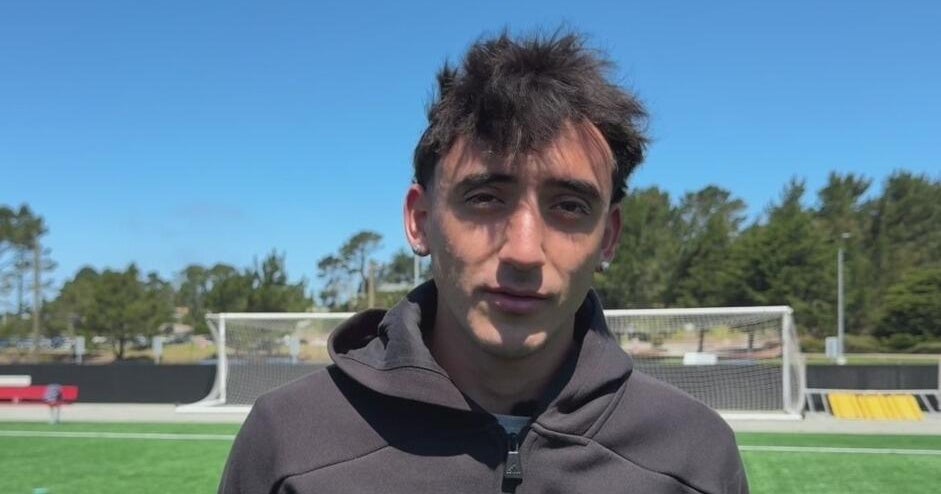
Colorado research biologist Joe Cardiello was excited about being involved in what could become lifesaving research for people who have been impacted by Lyme disease. However, recently, he and his colleagues shared concerns about whether or not they would continue to have a job.
"I would say we all knew that there were potential reductions in funding that might happen with the new administration," said Cardiello.
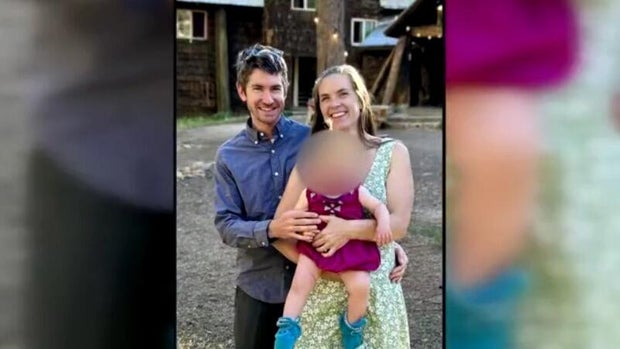
It was the kind of job Cardiello says comes around once in a lifetime.
"I think I was finally, the last two or three months, really kicking into gear and feeling like part of the team," said Cardiello. "I had jumped around in different biological fields but [I] wanted to work on public health."
About six months ago, Cardiello packed up with his wife and daughter and moved to Fort Collins to work at the Center for Disease Control's Vector-Borne Laboratory, with the National Center for Emerging and Zoonotic Infectious Diseases.
"I loved working there, I loved seeing what everyone else was working on," he said. "We had a group of six of us that were working on Lyme disease or the bacteria that causes Lyme disease."
This month, Cardiello and other CDC staff received an email, giving staff the option to resign and be paid out for eight months, or wait and see what would happen with the ongoing federal cuts.
"With my immediate family, we talked a lot about it, and we said, 'If this closes and a week later I get fired, I'll probably regret that,' but it was a job that I loved and we figured any extra time I have to work on this project and with this team is better than nothing," said Cardiello.
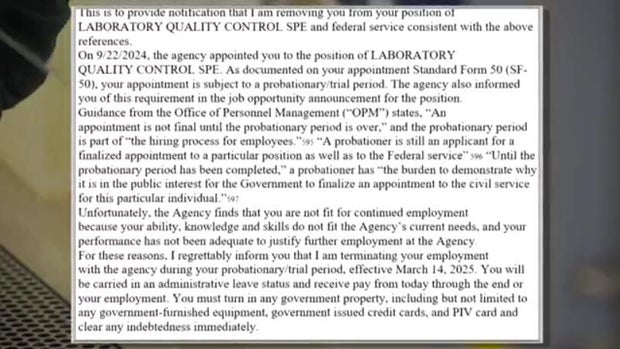
On Saturday, Cardiello was sent a letter of termination via email from the Department of Health and Human Services.
"I think it's very frustrating because I've seen how hard my boss worked to get me there. I've seen how I've rearranged my life," he said.
For Cardiello, this news is more than just a blow to his family.
"It's just wild to think about how chaotic this will be on all of the research and they're not paying attention to who's doing what and whether there is a plan for succession within these teams," said Cardiello.
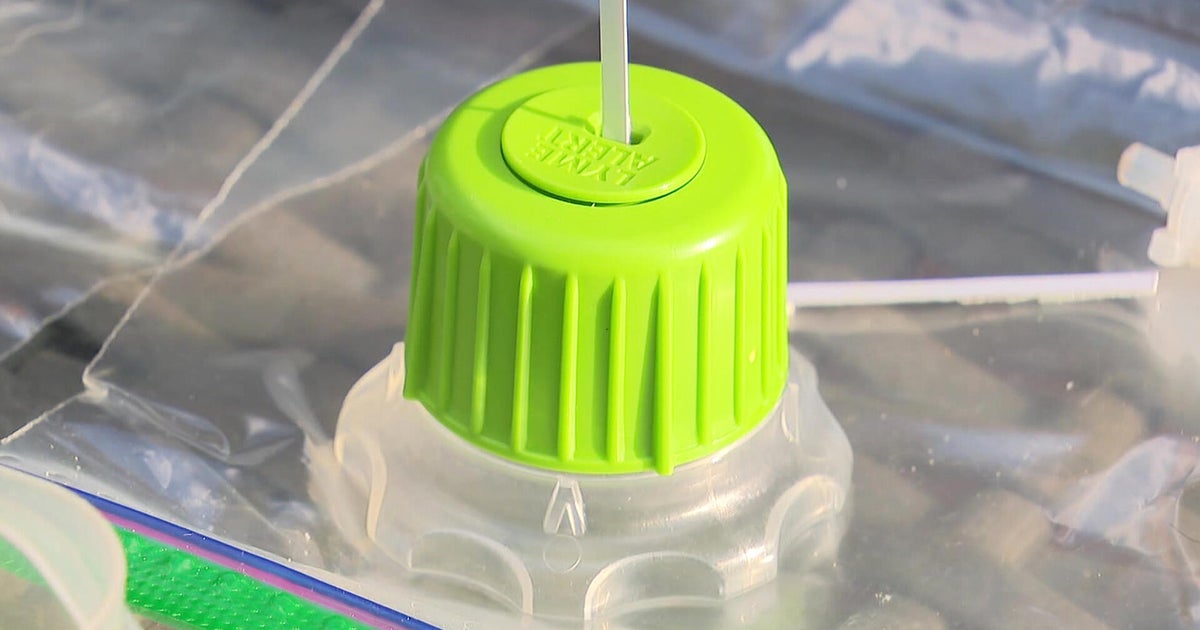
His Microbial Pathogenesis Team was working on a groundbreaking new way of using CRISPR technology to detect Lyme disease sooner.
"Within days after infection whereas most detections that you use it really takes a while for your body to produce these antigens, so there's tests where you can learn if you had it a month later or something," said Cardiello.
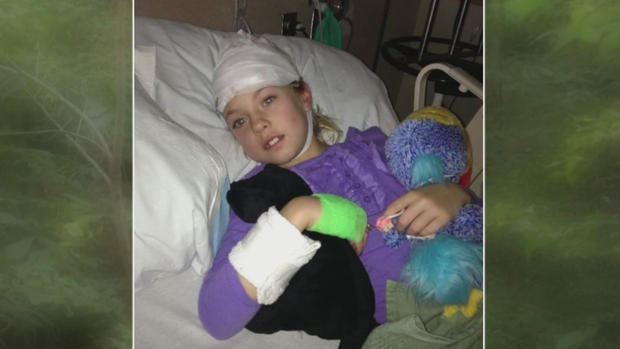
"I mean, knowing that that was something that he was working on, my reaction to that is truly devastating," said Olivia Goodreau.
Goodreau, a Denver native, who unknowingly contracted Lyme disease when she was seven, says she could have benefitted from testing advancements like this after suffering for nearly two years without answers.
"At that point had been misdiagnosed by 53 doctors," said Goodreau. "It felt like everything under the sun from being at a high-altitude state to late-stage autism to ADHD, two types of cancers. Then, I was misdiagnosed with Wilson's disease and told that I would be dead by the age of 40 or earlier, and I was told that at 8 years old, which is very traumatizing. Then, right after that, I was misdiagnosed with Munchausen syndrome.
Just like Cardiello, Goodreau has been working to improve the lives of other people with the disease, through her nonprofit Live Lyme Foundation. However, those efforts have also stopped in part because of federal cuts.
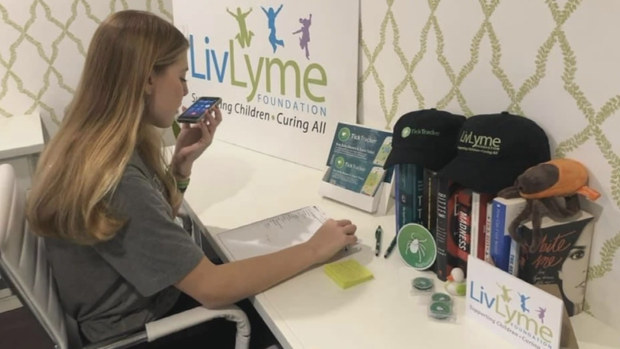
"We have two NIH grants and both of them are frozen," said Goodreau. "I almost feel like I'm seven years old again, eight years old, wondering what is going on?"
Cardiello says he is not sure what his next steps will be for finding a new job, but he worries more about what will happen if these cuts continue.
"They're going to continue to not come and consult people at the agency to find intelligent ways to carefully cut and trim," he said. "I think my hope would be that people in this administration would start constructively working with the agencies to find places where they could make things more efficient in a constructive and helpful way."