Colorado arborist urges homeowners to protect ponderosa pines from Mountain Pine Beetle

It's the most common tree in Douglas County, but it's also under threat from the mountain pine beetle. As Colorado Gov. Jared Polis sounds the alarm about pine beetle outbreaks, there are steps homeowners can take to protect ponderosa pines.
"We love the trees in our communities. They're oxygen makers that give life, and we love to care for that life," said Michael Dwyer, a Douglas County arborist and founder of Cova Tree.
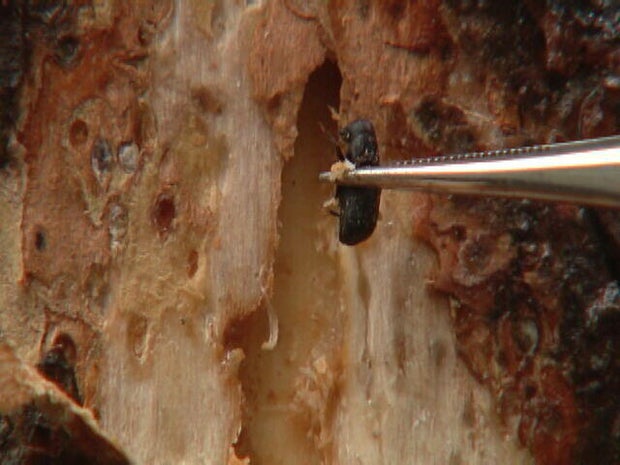
Lately, Dwyer has noticed more mountain pine beetles in the yards he treats across the Front Range.
"This year in particular, we saw a lot of it, and it was surprising. It's been more than past years," Dwyer said.
State officials say warmer temperatures and ongoing drought have weakened trees and created ideal conditions for the spread of beetles. Last month, Gov. Jared Polis created a new task force aimed at slowing the spread of mountain pine beetles in ponderosa pines, warning that millions of ponderosa pines in Colorado's most populous areas could be killed by the beetle in the coming years.
"I felt that all weekend, like deep in my heart. You know, we love the trees," Dwyer said. "It can be shocking to us when we're driving out into the mountains and we see huge sections of forests that have died from the mountain pine beetle. So to think that it's coming into our urban areas, where we have these forests that we just love, and the thought of it being killed is sad."
Dwyer said even healthy trees are at risk.
"In years past, we have Ips beetle, or red turpentine beetle, that typically go after stressed trees that are drought affected, and so they'll come to those trees. Now, with this mountain pine beetle outbreak, it's going to attack healthy trees," Dwyer said.
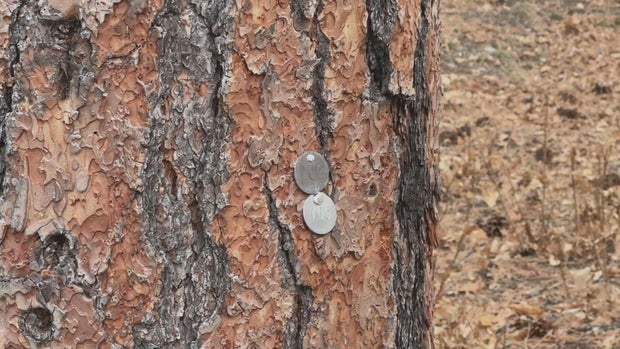
The good news, he said, is that there is a preventative treatment that can protect trees from the mountain pine beetle.
"The chemical itself is called emamectin benzoate, and it's a product called TREE-äge R10 that we use, and that's actually injected into the base of the tree at multiple areas. And then we put a tag on the tree so that we know that that tree has been treated," Dwyer said. "We'll make an injection site and then put a plug, and the product becomes part of the vascular system of that tree."
Dwyer said the chemical kills beetles that tunnel inside the tree. He said insecticide sprays can also help keep beetles off trees, but that method is more likely to impact other animals in the ecosystem.
He also recommends deep watering and mulching trees to keep them healthy.
"The combination of the deep root watering, which we do want to make sure the tree is as strong as it can be on its own, then by doing the trunk injection, it lasts for two years at a time," Dwyer said.
It's usually too late to save trees once the pine beetle burrows in. Sick trees are often cut down to prevent spread and reduce fire risk.
"When we do have to remove live trees, we have a practice called ho'oponopono, which is a Hawaiian healing practice where we acknowledge the life that's in that tree, or was in that tree, and basically say, 'I'm sorry. Please forgive me. Thank you. I love you,'" Dwyer said.
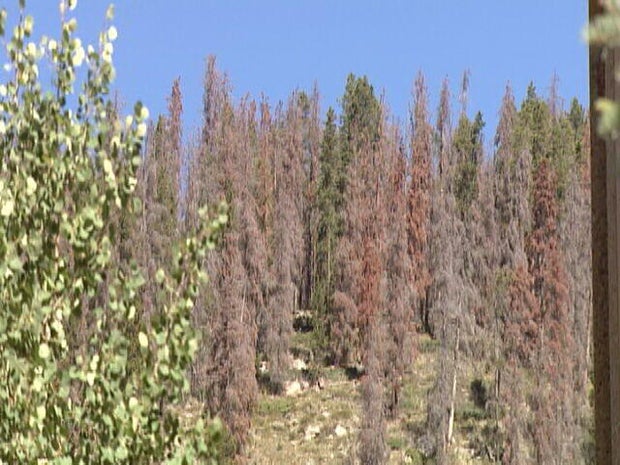
Dwyer wants landowners to know the early signs of an infestation.
"What we call pitch tubes, which you can look on the side of the tree, and you'll see a popcorn-shaped, waxy buildup, which is the tree trying to pitch out a bark beetle. We also will see frass, or dust, at the base of a tree. So also, you'll start to see browning of branches and needles," Dwyer said.
He hopes landowners will take quick action to protect surrounding trees.
"I hope that we'll all do our part, because it would be everybody teaming up together, the entire communities, to help save the trees," Dwyer said.
Cova Tree recommends scheduling a tree wellness walk-through with a certified arborist who can help identify the most at-risk trees.