Ritter Announces Immigration Fingerprint Program
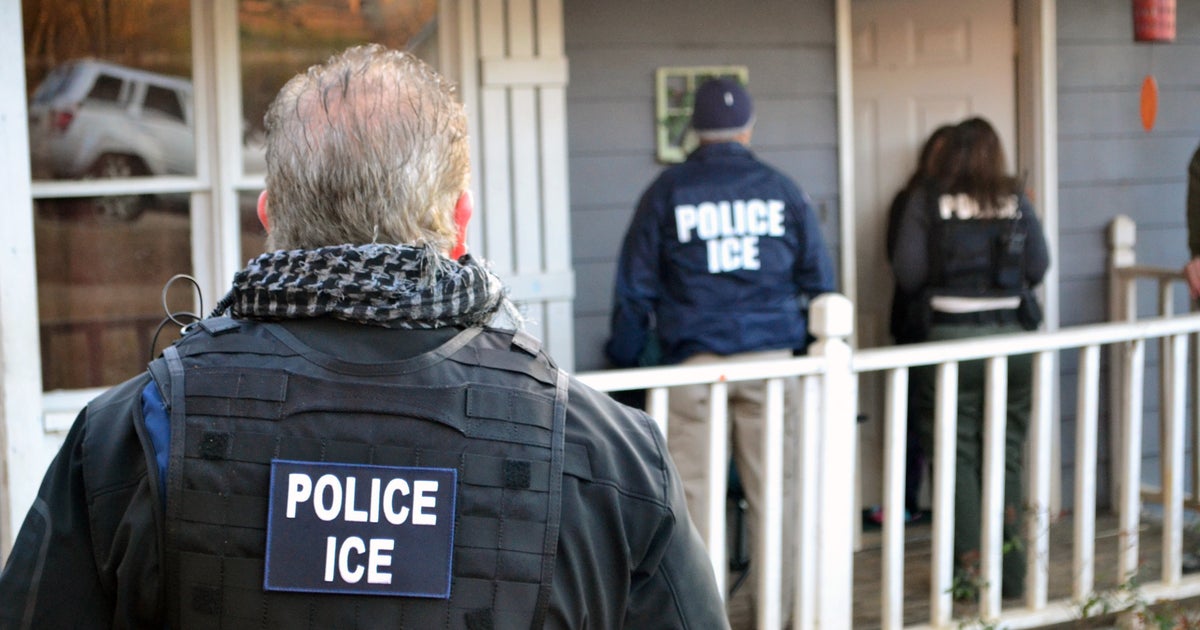
DENVER (AP) - Gov. Bill Ritter on Tuesday approved the use of a divisive federal program that identifies illegal immigrants through the fingerprints of every person booked into jail, angering dozens of groups and lawmakers who argue it will lead to unjust deportations and racial profiling.
Ritter made the announcement with little fanfare, sending word of his decision by e-mail after several months of deliberation. It came one week before he's set to leave office.
Ritter said the Secure Communities program improves "public safety, national security and crime fighting," and Colorado will participate with some modifications, including quarterly reports and statistics so the state can assess how it is working.
The program run by U.S. Immigration and Customs Enforcement quickly references fingerprints against records from the FBI and Department of Homeland Security, a capacity local jurisdictions don't immediately have.
Advocates for the program say it is an efficient and fair way of identifying illegal immigrants because everyone booked into a jail is screened.
"It can't lead to racial profiling. Everybody is run," Ritter, a Democrat, told The Associated Press.
ICE said in its proposed agreement with Colorado that it will protect victims who report crimes. However, the agency says it still has discretion over how to run Secure Communities.
Critics of Colorado's tailored agreement with ICE say other states include language explaining the goal of the program is to "remove aliens convicted of a serious criminal offense," but the word "serious" is absent from Colorado's accord.
U.S. Rep. Jared Polis said that means the program won't focus on the most serious criminals and that ICE "will be given the authority to remove anyone with impunity in Colorado, regardless of their level of criminality or finality of conviction."
More than 890 jurisdictions in 35 states have joined the program since 2007, and ICE has said it wants to have the system in every jail by 2013.
It could be days or weeks before Secure Communities is operational in Colorado. The initiative won't be immediately implemented statewide and will begin with a few counties, said Lance Clem, a spokesman for Colorado's Department of Public Safety. Denver, Arapahoe and El Paso have expressed interest in starting.
Ritter received dozens of letters leading up to his decision -- most of them against the program -- including appeals from the American Civil Liberties Union, the Colorado Bar Association and Colorado Immigrant Rights Coalition. The sheriffs' and police chiefs' associations in Colorado supported the program.
"I took their input very seriously," Ritter said of the groups' concerns.
The reporting requirement that will be in effect for Colorado isn't new. ICE reported Secure Communities figures last summer-- including data on what crimes people were arrested for and whether they were ultimately deported -- in response to an open records lawsuit filed in New York.
New York, Kansas and Indiana are among states that also have sought to modify the program, but ICE said those changes did not substantially alter how the agency identifies illegal immigrants.
Immigrant groups around the country have criticized Secure Communities as being too broad and not having sufficient oversight to ensure that only the most serious criminals are targeted and that there's no racial profiling. Opponents say it could lead to unjust deportations, citing as an example domestic violence victims who can get swept up for simply reporting a crime, a charge ICE has adamantly denied.
U.S. Rep. Ed Perlmutter, a Democrat from Golden, said the program was a "step in the right direction toward fixing our current immigration policy."
Opponents of the program denounced Ritter's decision and protested outside the Capitol Tuesday morning holding signs, including one that read, "Ritter you signed away our humanity." Polis, another Colorado Democrat, said in a statement that he was "incredibly disappointed with Gov. Ritter's decision."
Polis later told the AP he believes Secure Communities is "highly flawed" and the rapidly growing initiative will increase crime because immigrant victims will be afraid to cooperate with police. The Boulder congressman encouraged incoming Democratic Gov. John Hickenlooper and the Legislature to find a way to remove Colorado from Secure Communities while concerns about the initiative are addressed federally.
Hickenlooper said in a statement that Secure Communities "is intended to remove dangerous people from our communities."
"As long as there is no profiling, and as long as the program is implemented properly, our communities will be safer and the rights of our citizens will be protected," he said.
The Colorado groups who protested Ritter's decision said they don't believe the modifications to the agreement with ICE do enough to address their concerns and they don't substantially change how the program works.
"The fact that Gov. Ritter is signing on this secretive mass-deportation program is disappointing because we believe his administration appeared intent on crafting good policy," said Hans Meyer, policy director for the Colorado Immigrant Rights Coalition.
- By Ivan Moreno, AP Writer
(© Copyright 2011 The Associated Press. All Rights Reserved. This material may not be published, broadcast, rewritten or redistributed.)