Wrongfully convicted Chicago man realizes dream now that he's freed from prison after 22 years

Some call Cook County, Illinois the country's wrongful conviction capital. The National Registry of Exonerations (NRE) shows Cook County leads the nation with the most exonerations: 488 as of July 2025.
The county also has the second highest rate of exonerations among large counties: 9.59 per 100,000, just behind Orleans Parish in Louisiana.
The NRE report found one reason why Cook County has so many is that the State's Attorney's Office has an active Conviction Integrity Unit.
Many of the original convictions were for crimes like drug possession, weapons possession and murder. A number involved misconduct by some members of the Chicago Police Department including Sgt. Ronald Watts along with his fellow officers and Detective Reynaldo Guevara and his colleagues.
Kevin Jackson's story
One of those Cook County exonerees, Kevin Jackson, walked out of prison in early 2025 after spending two decades fighting to prove his innocence. At first, he represented himself.
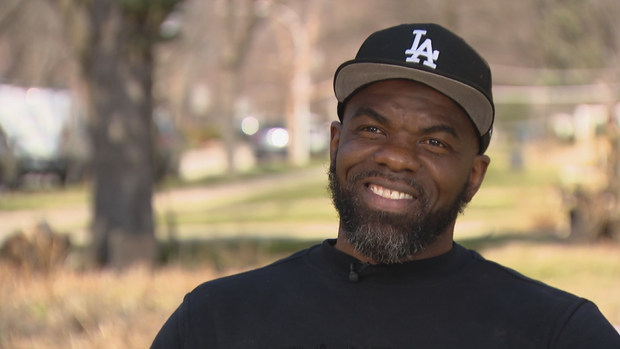
"My post-conviction was dismissed, frivolous without merit," he said. "And that was tough on me because being a poor Black kid with no representation, it's hard to get out of jail."
CBS News Chicago Investigator Megan De Mar interviewed Jackson in 2023 while he was still behind bars.
In the two decades he had spent in prison he missed a lot, he said, including the deaths of family members.
During that interview Jackson was being held in a state prison more than 300 miles away from his family, making it difficult to stay in touch.
Somehow, he managed to keep up with his sister and her son, providing encouragement and advice through the years.
"Make sure your son comes first. Make sure he gets his doctor's appointments. I'll be there for you the best way I can from here," he said. He called his sister a perfect mom. "My nephew's in college. He graduated. He's working. She did good."
Jackson was arrested in 2001 at the age of 19, charged with murder. He was told witnesses came forward who pointed the finger at him. They later recanted.
"I'm thinking I will get to the [police] station and, and thinking it's gonna be all right, but it wasn't," he recalled. "I can't tell you how much I cried in that interrogation room. Just couldn't believe it."
Police and prosecutors never convinced him to confess.
"I just couldn't see myself confessing to something that I didn't do," he said.
But, two years later he was convicted and sentenced to 45 years in the Illinois Department of Corrections. He said in prison, he found others with similar stories. He read their case files and noticed patterns of police misconduct. Eventually Cook County's Conviction Integrity Unit reviewed his case but rejected it.
"Man, I was devastated," he said.
Finally, he heard from attorneys who took up his fight. One was fresh out of law school.
"They believed in me. And they fought, fought hours and hours and hours of research...of typing briefs, talking to me, letting me know things are gonna be okay," he said.
Life after exoneration
Jackson was exonerated in 2024 but it took a few more months for him to be physically set free.

"It's hard to tell someone to be patient when they're incarcerated for something they didn't do," he said.
The work of his legal team compelled the state's attorney's office to launch an extensive reinvestigation of his case. A sweeping 76-page report dismantled the original conviction and raised major concerns about integrity.
The First District Appellate Court said any reasonable review would determine "these convictions resulted solely from coerced and false statements."
"The First District then did do the right thing, but that only came at a cost of 23 years and four months of his life," said Elizabeth Bacon, one of his attorneys.
During the 2023 interview, Jackson said he had a goal, a dream for when he was finally free.
"Landscaping," he said. "I just love being out in nature. Being incarcerated so long, you appreciate nature."
He said he could go for months at a time without ever stepping foot outside.
Now more than a year outside, Jackson has started a landscaping business. He wants to expand and hire a team. But he worries that something as simple as a background check could block his future plans.
"When they type me in, I'm a convicted murderer until I get my record expunged," Jackson said.
To do that, he needs a Certificate of Innocence. He filed for one in 2025, but the state's attorney's office under Eileen O'Neill Burke is contesting his petition. Prosecutors explained in a court filing they are contesting because, the "petitioner has not met his burden of proving his innocence by a preponderance of the evidence."
"There's no reason to still be having this fight," said Brandon Clark, another attorney representing Jackson.
Clark and Bacon began comparing notes with lawyers representing other exonerees and noticed there has been a sharp increase in objections under the new state's attorney.
Clark said he believes this administration has made contesting Certificates of Innocence a blanket policy.
"That's what's been communicated to us. The state's attorney is, with very few if any exceptions, objecting to all petitions," he said.
The state's attorney's office told CBS News Chicago there is no blanket policy and that "We carefully evaluate each Certificate of Innocence petition and assess the totality of the evidence on an individual basis."


