Mayor Brandon Johnson weighing corporate head tax, social media ad tax to balance Chicago budget

The city of Chicago has a massive $1.1 billion budget gap to fill for 2026, and with Mayor Brandon Johnson promising not to once again pitch a property tax hike – which the City Council unanimously rejected for 2025 – the mayor said Tuesday he's looking at creative ways to raise tax dollars.
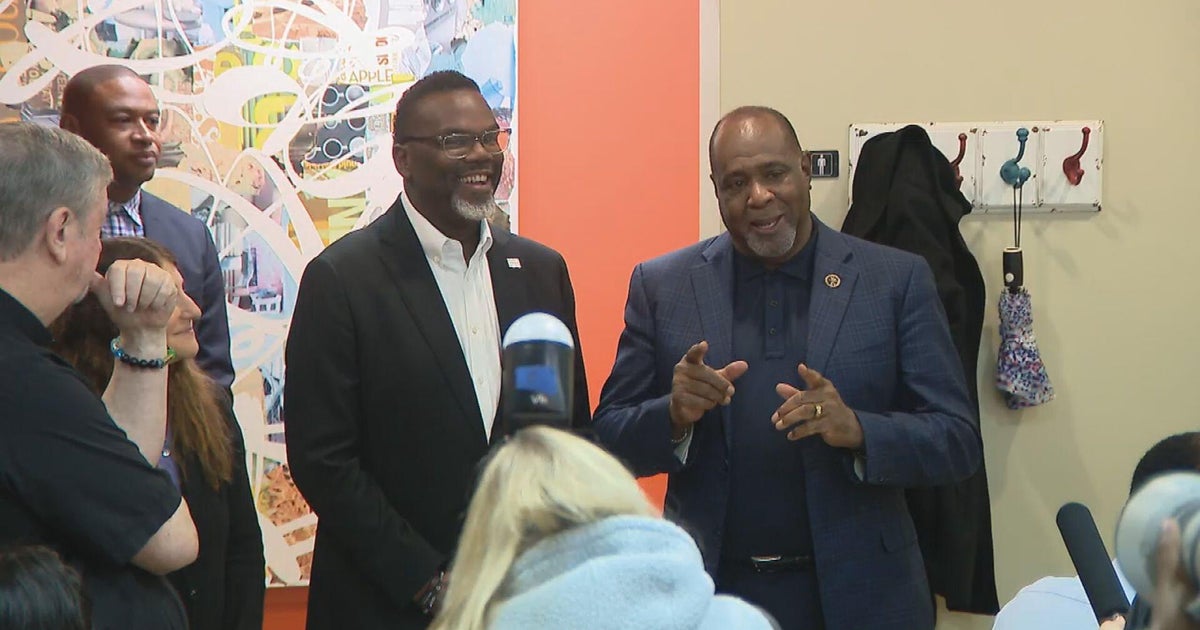
"Everything has to be on the table. Everything has to be on the table," Johnson said.
The menu on that table appears to target Chicago's ultra-rich. Johnson said he is looking for ways to extract more tax dollars from the 127,000 millionaires who now call Chicago home, as well as the 25 billionaires residing inside the city limits.
"There's a reason for us to be able to tap into those individuals and entities with means, so that we can continue to see the positive trend of violence going down in the city of Chicago," he said. "I believe it's to all of our benefit to ensure that we're doing everything in our power to maintain the investments that we've put forward."
As for concerns that Chicago's wealthiest residents will leave if they get taxed more, Johnson insisted, "they're not leaving Chicago."
"This notion somehow that we're scaring millionaires away, it's just the opposite," he said. "Not that I know a whole bunch of millionaires, but do you know what they talk about when they do engage with me? They talk about community safety. They don't talk about taxes. Their number one issue is community safety, and as we continue to see the trend moving a positive direction, that allows for our economy to grow."
Johnson said the number of Chicago millionaires jumped 24% in recent years.
As budget season approaches this fall, the mayor said he's weighing reinstating Chicago's corporate head tax.
On the books from 1973 through 2014, it taxed companies with more than 50 Chicago-based employees $4 per employee per month. That tax raised $35 million in its final year under Mayor Rahm Emanuel, who phased out the head tax starting in 2012, calling it a job killer.
"This is the perfect time for us now to look at progressive means so that we can continue to demonstrate the positive trend here," Johnson said.
What message could reinstating head tax send to Chicago employers?
"Move your employees outside the city of Chicago," said Samantha Breslow, an attorney specializing in Chicago's corporate tax structure. "I represent companies that say to me, 'Why would I be in the city of Chicago any longer? Why would I have employees here, because I'm being subjected to this tax.'"
Breslow said the city needs to focus more on generating tax from additional sales and service receipts. Expanding the city's sales tax to services would require approval from the Illinois General Assembly and Gov. JB Pritzker.
Johnson said a new tax on social media advertising is also on the table.
"People have made billions of dollars from the digital industry, literally billions of dollars, and that free advertisement happens on a consistent basis. So this is something that I've been looking at since 2018," he said.
Chicago would not be the first government body to attempt to tax social media advertising.
"I think they need to be very careful with implementing a tax like that. It's been attempted in other states, and there has been substantial challenge to it and not a lot of success," Breslow said.
The mayor has working groups assessing which of these and other forms of so-called "progressive revenue" should move forward.
Taxpayers will learn which ones might make it into his 2026 budget plan when he presents his budget address this fall. City Council would then have to approve it.