Jackson Park is a combination of aesthetic beauty and Chicago history lessons

The Obama Presidential Center finds its setting in Jackson Park, one of the most important sites in Chicago history.
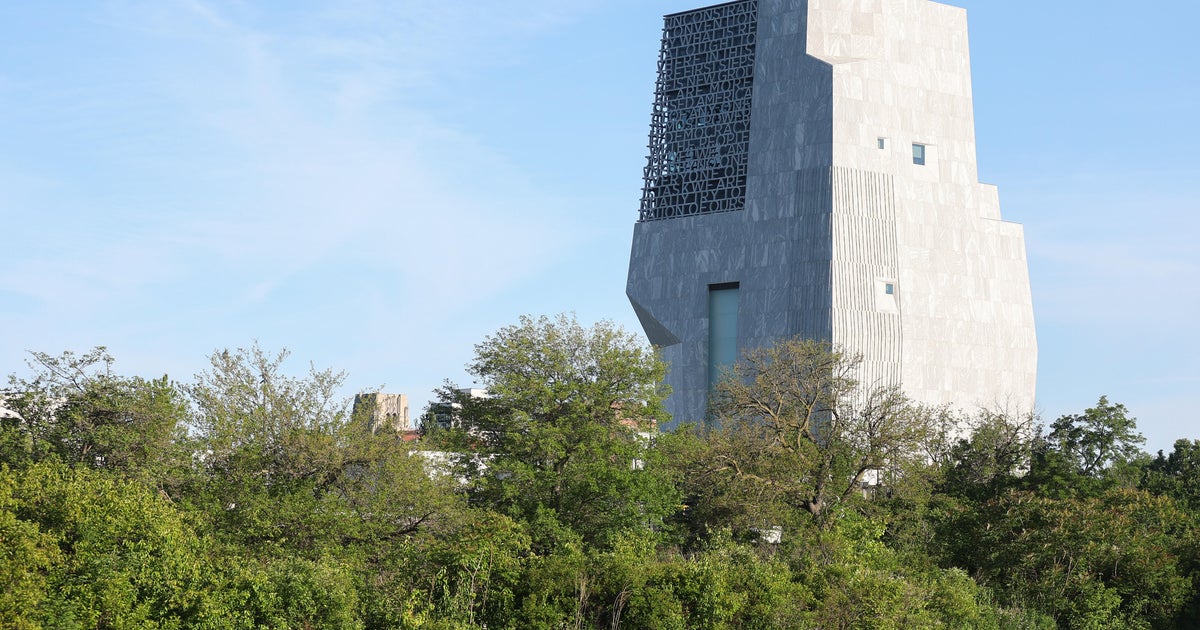
The presidential center — with its obelisk-like tower — is located in Jackson Park at the end of the Midway Plaisance. In 1893, both the park and the Midway were the proud site of the World's Columbian Exposition, but Jackson Park has a history going back before that.
"Jackson Park is really one of the most significant places in Chicago," said retired Chicago Park District historian and preservationist Julia Bachrach. "It's a beautiful landscape designed by a very famous landscape architect, Frederick Law Olmsted, and so it's almost like the Central Park of Chicago."
Bounded by 56th Street and the Hyde Park neighborhood on the north, Stony Island Avenue and the Woodlawn neighborhood on the west, and 67th Street and the South Shore neighborhood on the south, Jackson Park was the brainchild of the South Park Commission, created by Illinois lawmakers in 1869.
The commission brought in Olmstead and Calvert Vaux, who indeed were also the landscape architects for Central Park in New York City.
In 1890, Chicago was selected to host the World's Columbian Exposition.
"Everybody wanted it in their neighborhood, and there were some major civic leaders on the South Side who really felt that Jackson Park was the best place for the fair," Bachrach said.
Olmsted returned to design the fairgrounds in Jackson Park, along with renowned Chicago architect and city planner Daniel H. Burnham. Magnificent, palatial structures rose throughout the park — buildings for Machinery, Agriculture, Manufactures and Liberal Arts, Transportation, Electricity, Mines and Mining, Fisheries, and in the one grand exhibition hall from the World's Fair that we still know today, Fine Arts.
"It kind of harkens back to Ancient Greece and Rome, and that you'd have these very beautiful classical buildings that would create kind of outdoor courtyards and spaces the way they kind of related to one another, and they were quite monumental," said Bachrach.
International pavilions and the first Ferris wheel rose along the Midway Plaisance heading westward.
However, the structures were not meant to be permanent. They were made of a plaster-based material called staff and whitewashed — hence the name the White City.
"By the time, really very early on, from when they opened the fair — which was in the late spring of 1893 — Burnham and some others were already bemoaning the idea that the whole thing would be razed within a couple of years," Bachrach said. "They realized that the magnitude of this literally put Chicago on the map for the world."
But many of the World's Fair buildings did wind up being ill-fated. The exposition closed two days early after Chicago Mayor Carter Harrison Sr. was assassinated, and over the next several months, much of the White City ended up burning down. In July 1894, one arson fire destroyed seven buildings, including many of the exhibition halls.
But the Palace of the Fine Arts, on the north end of the festival grounds, was protected by a brick substructure to protect priceless art collections from around the world. After the World's Fair, still with an artifice of Ionic columns and Caryatids made of staff, the Palace of Fine Arts became the Field Columbian Museum — the predecessor of the Field Museum of Natural History.
The Field Museum moved north to its current home on what is now called the Museum Campus in 1921. After a period of deterioration and doubts about its future, the former Palace of Fine Arts back in Jackson Park had its exterior recast in limestone and its interior completely redone in an Art Moderne style. It reopened in 1933 as what we now call the Griffin Museum of Science and Industry.
To the south of the MSI opens the Columbia Basin, which in turn splits into the park's East and West lagoons. Between the lagoons is Wooded Island, best known for the Osaka Japanese Garden.
There was a Japanese pavilion on the island during the time of the World's Fair, Bachrach notes. The Phoenix Pavilion, as it was known, remained in place after the World's Fair, and was restored with transplanted flora following the Century of Progress Exposition of 1933-34 to the north at Northerly Island, Bachrach said.
The Japanese Garden was closed and abandoned after the attack on Pearl Harbor in 1941, and the Phoenix Pavilion at its center was set on fire and destroyed in 1946. It was not until 1980-1981 that the Japanese Garden was rebuilt and restored by Kaneji Domoto.
The garden became known as the Osaka Japanese Garden in 1993, after Chicago entered into a Sister City relationship with Osaka, Japan.
The garden now also features more than 120 Japanese cherry blossoms, a Japanese-style gate and tea house, a moon bridge, lanterns, and several Japanese red maple trees. In 2016 at the Japanese Garden, Yoko Ono unveiled Sky Landing — a sculpture composed of 12 large steel lotus petals.
Also on Wooded Island is the Paul H. Douglas Nature Sanctuary, named for the U.S. Senator from Illinois who was behind many preservation efforts in the 1960s. The natural respite is known as a spot for birdwatching.
Farther south still in the park, at Hayes and Richards drives, is the Statue of the Republic. The statue is an enduring and familiar symbol of the World's Columbian Exposition, but is not the same one that was mounted on a pedestal in the World's Fair's Court of Honor waterway.
Sculptor Daniel Chester French's original Statue of the Republic, which Bachrach called "kind of like Chicago's answer to the Statue of Liberty," stood 65 feet tall, with one hand holding a globe with an eagle perched on top, the other a staff with a Phrygian cap, or "liberty cap." She was made of gilded plaster.
The original survived the arson fires that destroyed so many World's Fair structures. But in August 1896, the deteriorating statue, by then missing an arm and much of her ornamentation, was deliberately destroyed by fire by the South Park Commission.
The 24-foot replica of the statue now standing in Jackson Park was erected in 1918. She is also slightly modified, with a plaque reading "Liberty" at the apex of her staff instead of a cap. The statue was restored by the Chicago Park District and rededicated by Mayor Richard M. Daley in 1992, ahead of the 100th anniversary of the World's Fair.
The golf course at Jackson Park is also a revered attraction, dating back to 1899. At the time, reports say, it was the first public golf course west of the Allegheny Mountains.
The golf course features 18 holes.
Jackson Park also features a harbor, and beaches at 57th and 63rd streets. The latter beach features a beach house and event venue with sunny balconies rising overhead.
Just to the south along the lake, La Rabida Children's Hospital provides care for kids with chronic conditions and developmental disabilities.
The Obama Presidential Center joins this historic and picturesque collection of spaces when it opens Friday, June 19.