Chicago heat wave looms, with heat index pushing into triple digits for more than 5 days




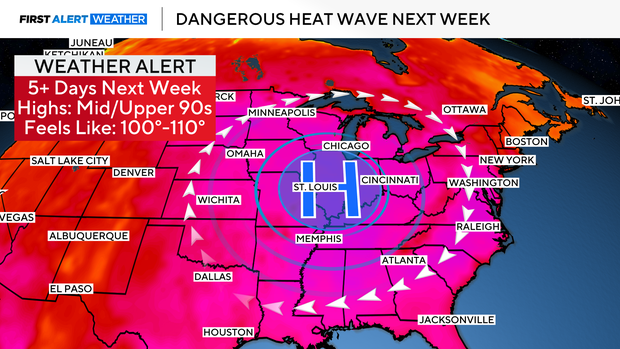
The Chicago area is facing a dangerous heat wave next week, with humidity pushing temperatures into the triple digits and excessive heat warnings likely.
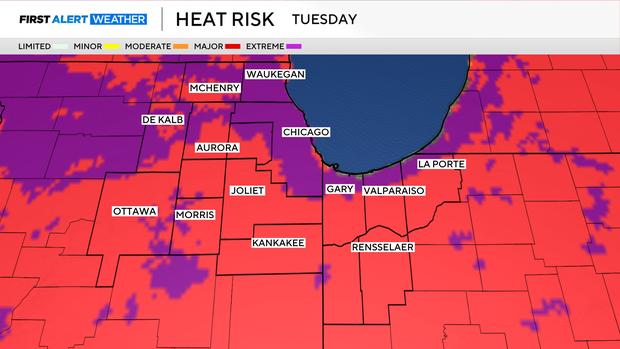
Dangerous heat and humidity will begin to build into the area starting Monday and likely continuing all week. Air temperatures are expected to be in the mid- to upper-90s for five or more days, with humidity making it feel like anywhere from 100 to 110 degrees each day.
The high heat index creates a much higher risk of heat-related illnesses, especially for children, the elderly, people with chronic illness or health issues, especially respiratory issues, and people without reliable air conditioning.
Next week could bring Chicago's first stretch of five or more consecutive days at or above 95 degrees in 14 years, and the hottest temperatures the city has seen in two years.
"A lot of us who have been here for a while remember the 1995 heat wave and how devastating that was," aid Matt Doughtie, with Chicago's Office of Emergency Management and Communications. "So we have taken a lot of proactive steps since then, including a series of wellbeing checks. So anybody who needs a wellbeing check to check on a friend or family member can contact 311."
More than 700 people died in Chicago's 1995 heat wave, exposing issues in the city's emergency systems.
The Department of Family and Support Services said seniors across Chicago got calls Friday ahead of the heat, providing a warning and tips.
To stay safe, you should limit strenuous outdoor activity during the hottest part of the day, and find ways to stay cool before the heat settles in on Monday. If you can, check on your vulnerable neighbors during the heat wave to make sure they're staying safe.
If you need to request a wellbeing check during the heatwave, call 311. If you or someone you know is experiencing a heat-related illness, you should call 911.
Dr. Sheetal Rao of UI Health warned that heat impacts everyone more than they think, and so it's important to be prepared for the weather.
"Heat is definitely a more insidious type of weather phenomenon but it really is lethal and it can be so it's really important to plan ahead," she said.
Find cooling centers in Chicago and Cook County
DFSS operates six community service cooling areas during heat at 90 degrees and above, which are open Monday - Friday, from 9 a.m. to 5 p.m.:
- Auburn Gresham Center - 1140 W. 79th Street
- Garfield Center - 10 S. Kedzie Ave.
- King Center - 4314 S. Cottage Grove
- North Area Center - 845 W. Wilson Ave.
- South Chicago Center - 8650 S. Commercial Ave.
- Trina Davila Center - 4312 W. North Ave.
Chicago's Office of Emergency Management and Communications also maintains a map of all cooling centers and public facilities in the city that can be used during a heat wave if you don't have reliable air conditioning. The map is interactive and lists all facilities, their locations and their hours.
Chicago Park District, Chicago Public Library, City Colleges of Chicago and Chicago Police District locations are also available to the public to cool down during the heat wave, during their hours of operation.
Cook County has dozens of cooing centers that are open and available during the summer, and also often extends their hours heat events.
Two locations are open 24 hours a day at all times: the Evanston cooing center at 1703 Orrington Avenue and the Hazel Crest Department of Fire and Rescue at 3000 W. 170th Place.
Several other cooling centers are open 24/7 during heat waves:
- Orland Park Police Department at 15100 S. Ravinia Avenue
- Bettenhausen Rec Center in Tinley Park at 8125 W. 171st Street
- Tinley Park Police Department at 7850 W. 183rd Street
- Tinley Park Public Safety Building at 17355 S. 68th Court
Chicago's public swimming pools are also open for the season and can be used to cool down during the heat wave, but remember to stay hydrated and know that the hottest part of the day is still dangerous even if you're in water.
People experiencing homelessness can and should contact the city for help finding shelter during the heat wave.
Anyone seeking shelter may contact 311 to request shelter placement, OEMC said.
- The Shelter Placement and Resource Center (SPARC) – 2241 S. Halsted St.
- Provides shelter placement assistance and overflow beds for single adults.
- Not a cooling center or shelter—call ahead to ensure availability: (773) 825-3956
- The Salvation Army Emergency Assessment and Resource Center (EHARC) – 924 N. Christiana Ave.
- Provides shelter placement assistance and overflow beds for families with children under 18 years of age.
- Not a cooling center or shelter—call ahead to ensure availability: (872) 281-7610
- DFSS-funded shelters
- Most operate 24/7 year-round.
- DFSS typically activates all overnight shelters to operate 24/7 throughout extreme weather conditions.
- DFSS funds delegate agencies for expanded operations.
DFSS Homeless Outreach and Prevention (HOP) teams and street outreach partners will be out working to help unhoused Chicagoans as well, offering transportation to cooling centers, distributing essentials like water and hygiene supplies and providing food gift cards, bus cards and informational resources.
Heat stroke vs. heat exhaustion: Symptoms and treatment
The greatest health risks during a heat wave are heat exhaustion and heatstroke.
It is easy to become overheated and dehydrated during excessively hot weather; it is essential you drink water and drinks with electrolytes to stayed hydrated and stay safe during heat waves.
Heat exhaustion is milder than heat stroke, and can develop over days instead of minutes or hours. Heat exhaustion symptoms include headache, nausea, dizziness, weakness, irritability, thirst, heavy sweating, high body temperature and decreased urine output.
To treat heat exhaustion, move into a cool indoor space or shade immediately, drink liquids, remove unnecessary clothing including socks and shoes, use cold water or a cold compress on the head, face and neck to cool down, and frequently sip cold water. The CDC also encourages calling 911 or taking the person to an urgent care clinic or the emergency room for treatment.
Symptoms of heatstroke include confusion, altered mental status, slurred speech, hot and dry skin or profuse sweating, very high body temperature, loss of consciousness, and very high body temperature. If treatment is delayed, it can quickly become fatal, the CDC warns.
If you are with someone experiencing heatstroke, call 911 immediately and stay with that person until paramedics arrive. Move the person into a shaded, cool area, remove their outer clothing and work to cool them down as quickly as possible, preferably with cold water or an ice bath. You can also get the skin wet, place cold, wet cloths on the skin or soak their clothing with cold water. You should also fan them to get air circulating around them which will help water and sweat evaporate and also help cool them down.
If you can, place cold, wet cloths or ice on their head, neck, in their armpits and on their groin to help cool them down faster.
How to stay safe during a heat wave
The Chicago Department of Health shared the following guidelines for satying safe during a heat wave:
- Stay hydrated. Drink lots of water and avoid alcohol, caffeine, and sodas.
- Limit outdoor activities and stay inside. If you do not have air conditioning, keep shades drawn and blinds closed, but windows slightly open for air circulation.
- Apply sunscreen and wear loose, light, cotton clothing and brimmed hats if you must spend time outside.
- Take cool baths and showers.
- Never leave anyone (including pets) in a parked car, even for a few minutes.
- Keep electric lights off or turned down.
- Minimize use of your oven and stove.
- Check on relatives and neighbors, especially the elderly or people with disabilities.
- Make sure someone you trust has an extra key to your house for emergencies to check on you.
- Ensure access to prescription medications, oxygen, and medical devices ahead of time to avoid going outside during a heat wave.
The Department of Family and Support Services has also sent out additional information for seniors and family members of senior citizens, who are particularly vulnerable during heat waves:
- Make plans to pick up groceries, run errands and/or secure medications in preparation for the extreme heat.
- Stay indoors in air-conditioned areas. DFSS Senior Centers activate as cooler centers during extreme heat. Our 20 Senior Centers are open and available daily from 8:30 a.m. to 4:30 p.m., with Renaissance Court available from 10:00 a.m. to 5:00 p.m. Visit Chicago.gov/Seniors for senior center locations. You may also call 311 to secure the location of a nearby senior center or other cooling locations.
- Please check on friends, family and neighbors. If you know someone whose safety or well-being is in question, or if you are worried about your safety, contact 3-1-1 — and request a senior well-being check.
- The excessive heat can create dangerous conditions, increasing the potential for heat related illness. If you are experiencing an extreme heat emergency —call 911.
Protect your pets from extreme heat
Heat waves can also be dangerous and even fatal for family pets. Dogs may need booties to protect their paws from hot pavement; Best Friends Animal Society recommends holding your hand to the pavement for 7 seconds before a walk. If you can't do so comfortably, it's too hot for your dog to be walked without paw protection.
If you don't have paw protection, walk your dog somewhere without pavement where they can be in the grass, which stays cooler.
Never, ever leave your pet unattended in a hot car and know that pets also get dehydrated quickly, so have plenty of fresh cool water on hand. Animals can die of heatstroke within 15 minutes, and cracking windows to a car does not help. If you see a pet in an unattended vehicle, call 911 and do not leave them unattended until the problem has been resolved.


