Drone program aims to overcome challenges of getting medications to some Maryland communities

In some of Maryland's Eastern Shore communities, getting access to medicine can be a challenge.
For example, residents of Smith Island only get their medications delivered by ferry.
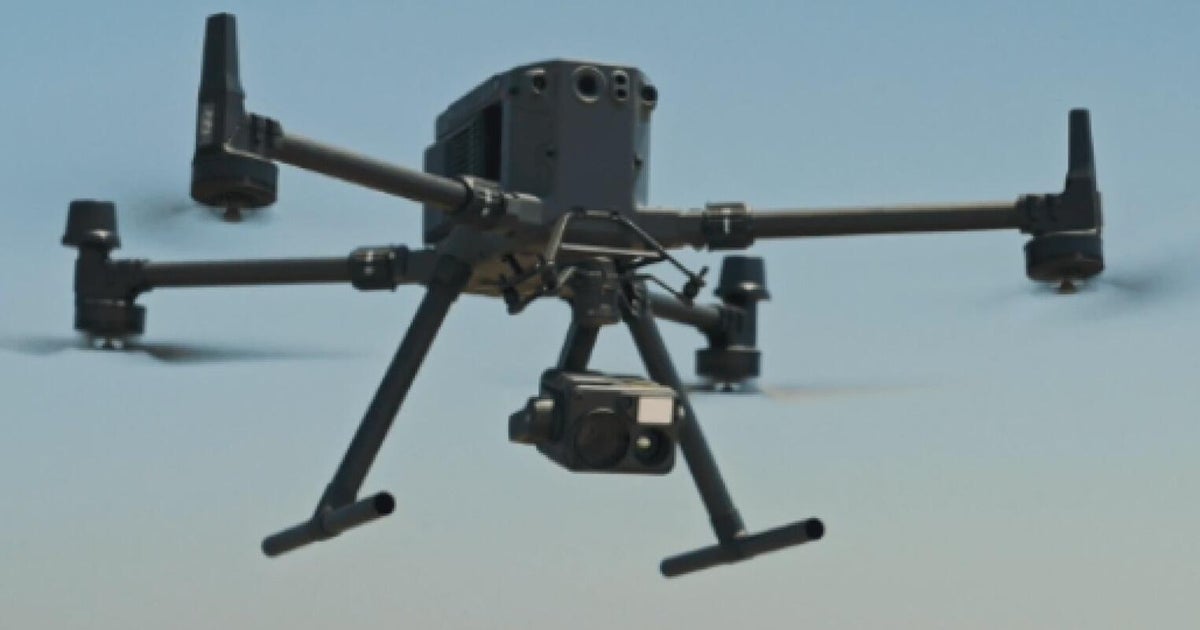
University of Maryland researchers are trying to make it easier by delivering medicine using drones.
The researchers are in the middle of gathering data from a pilot program. WJZ got an up-close look.
Making it easier to access medicine
People in Crisfield have grown used to the sight of drones flying around, carrying boxes.
For Susan Heath, the box was holding something special.
"It was different than going to the pharmacy," she said.
Heath admitted that she's not sure she would use the program again, as she is able to drive and lives close to Marion Pharmacy. But she sees the convenience of it.
"Sometimes you can't get to the pharmacy when you need to get to the pharmacy, and then the drone will be able to drop stuff off and be much better," Heath said.
She especially sees the convenience for her neighbors.
"We live in a very small community. There is transportation issues," Heath said. "We have a lot of elderly that can't get out... we have other infirmed that just can't get out. This would be wonderful to have it dropped in there."
Testing the drone program
Crisfield became the testing ground for the University of Maryland's Medical Delivery Pilot Program, which is managed by the university's UAS Research and Operations Center (UROC).
The university is also partnering with the company DroneUp.
All the delivery drop-off points are programmed by the drone.
DroneUp monitors to make sure the drone doesn't run into anything and that there are no issues with the drop-off.
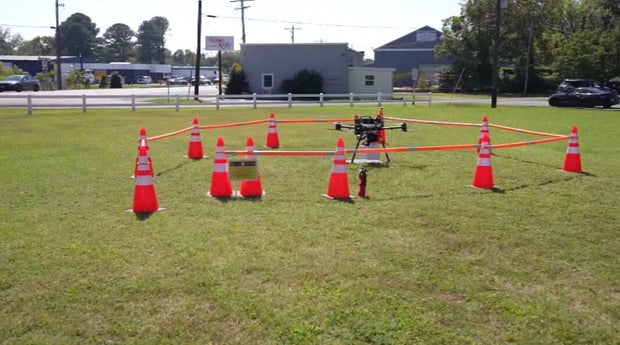
Once the delivery is done, the drone returns and makes its next delivery.
With the data gathered, the university is seeing how cost-effective the delivery could be for pharmacies like Marion, as the store already drives prescriptions for some of its patients.
Researchers are working to get a drone over the Chesapeake Bay to Smith Island, which is currently only accessible by ferry.
The drone in the pilot program is nearly 55 pounds, but the one that goes over the Chesapeake Bay will be about 65 pounds.
Impact of medication challenges
John Slaughter is UROC's director. He said talks about this program started years ago. A federal grant awarded to Maryland in 2024 got the ball rolling.
Since then, Slaughter has become well-versed on medical access on Smith Island and what happens when people aren't getting their medication on time.
"What you wind up with is this problem with compliance with those medical programs," Slaughter said. "When that happens, people get sick. People wind up in the hospital, and so forth."
Currently, medicine is delivered to Smith Island residents once a day by ferry. Severe weather and other obstacles can prevent deliveries for days at a time.
Slaughter stressed that this research isn't aiming to make the ferries obsolete. He just wants another option available.
"We know the boats are running and that's established and that works," Slaughter said. "But there's times they can't go. We want to stack on top of that, make sure people get their meds. If there's an urgent case, then potentially we can help with those kinds of things."
What's next for the drone program?
The next step in the program is test deliveries to Smith Island. The University of Maryland is partnering with the State Department of Planning for this research.
Last month, the Federal Aviation Administration (FAA) proposed a new rule to ease restrictions on drone package deliveries like this one.
That proposal is undergoing a public comment period.