Metro Atlanta lawn care company feels impact of high gas prices: "You start in the hole every single day"

Some Georgia businesses are beginning to feel the ripple effect of high gas prices.
Metro Atlanta lawn care company Cut Like A Girl relies on gas to power its equipment and fuel its trucks. Annesah Tahir, the company's owner, says high gas prices are becoming a major concern for them.
"The equipment itself is going to run you almost $40 just to fill the equipment up, fill extra gas cans up, so you start in the hole every single day," Tahir said.
Tahir estimates she's spending at least $200 a day on gas for her equipment and trucks.
"You have to make back the fueling," Tahir said. "And then maybe you'll make back some money if it doesn't rain, of course."
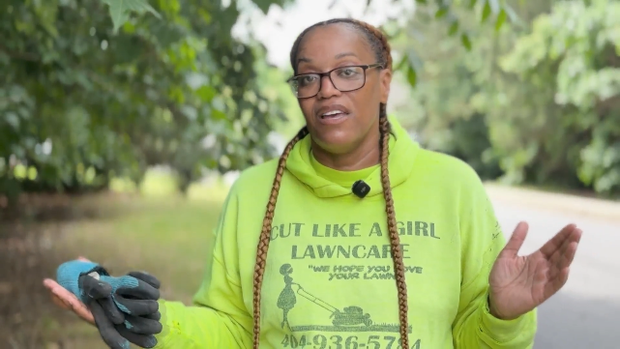
Even though gas prices are high, Tahir said she's lucky to have her 80-plus customers and additional contracts.
"I'm trying not to raise prices again, because I have great customers," Tahir said. "You don't want to put all of the burden on your customers because it might be temporary; you don't know."
The co-founder of GreenPal, a service connecting customers to local lawn care companies, say they've seen prices rise over the last few years.
"Lawn care prices in Atlanta have increased roughly 10% to 20% year over year as landscaping companies deal with rising fuel, labor, and equipment expenses," GreenPal co-founder Gene Caballero said in a statement. "Based on pricing data from GreenPal's network of lawn care professionals, homeowners shopping for lawn mowing service across metro Atlanta are seeing higher quotes than they did last season."
To offset higher costs for fuel and other products, such as fertilizer, Tahir is cutting back and keeping her business lean. She has two employees, herself and her son.
"I'm really not thinking about hiring more people this year if we can continue to do it on our own, we will," Tahir said.
As far as using electric lawn care equipment, Tahir said it's simply not an option.
"Everything is going to be used with gas because we're outside sometimes 10 to 12 hours a day," Tahir said. "So, we're not doing anything electric because at some point, it's going to die. Gas is not gonna die."


