Invasive Joro spiders take over Georgia trees, so scientists are working to understand their growth

Fake spiderwebs are a sign that Halloween is around the corner, but it's the real ones that are catching the attention of many Georgians.
You've probably seen the massive spiderwebs and the large, bright yellow and black Joro spiders popping up everywhere.
Lilburn resident Lora Sandler made a career writing about bugs.
"I have this passionate love for caterpillars and butterflies, and I just thought up two whimsical stories: One about a girl who gets caterpillars in her hair, one about a baby who loves caterpillars in an unusual way, he loves to stomp on them," Sandler said.
While she writes about caterpillars and butterflies, she's slowly becoming surrounded by Joro spiders.
"At least eight webs with four or five spiders in each web," she said.
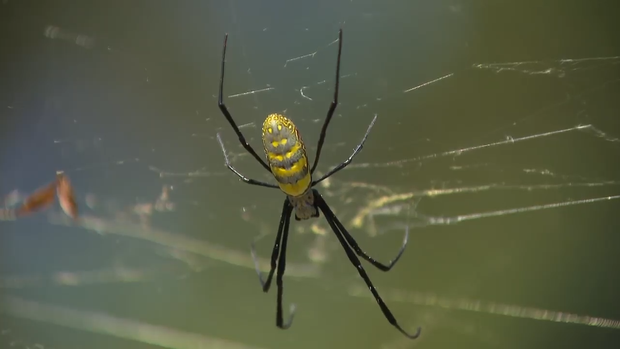
She's not alone. These eight-legged web-weavers are invasive, and their population has been booming in the Southeast, which piqued the interest of Georgia Gwinnett College biologists.
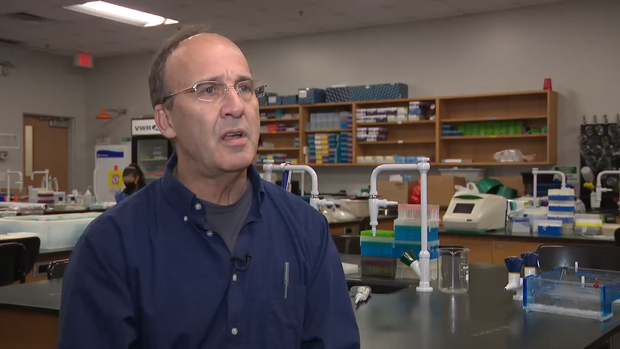
"How do we manage these invasive species? Well, we have to know their biology. What are their natural enemies, what are their weaknesses, what are their strengths—things like that," biology professor Dr. James Russell said.
Russell, Dr. Chris Brown, and Georgia Gwinnett College students discovered the spider carries a bacteria called Wolbachia, which could help control the population.
"It does some pretty unusual things. It's a reproductive manipulator. So in some cases, it turns males into females, who then clone themselves; it also feminizes males that can't clone themselves," Russell said. "Sometimes it just kills males."
The spiders are native to East Asia and have been in Georgia since 2013. They likely came to Georgia as stowaways on a shipping container.
If you're worried about running into a Joro spider web, they're not dangerous.
"They're harmless," Russell says. "They're not going to hurt you."
Sandler doesn't plan on evicting the spiders from her garden.
"They're not hurting me, they're not hurting hummingbirds or butterflies that I can see, so why can't we just let them do their job?" she said.
For now, the Joro spiders will keep weaving their webs across the South.


