How much screen time is too much for kids? Atlanta mom of four shares strategy after new Surgeon General warning

The federal government's warning about the dangers of excessive screen time is sending shockwaves through households and classrooms alike, drawing comparisons to public health crises of the past.
"The U.S. Surgeon General doesn't come out very often with nationwide warnings," "In fact, one of the ones we can all remember is when we labeled cigarettes as harmful to human health," says Titania Jordan, chief parenting officer at the Atlanta-based online safety company Bark Technologies.
That historic tobacco warning was issued back in 1964. More than 60 years later, the nation's top doctor is sounding a similar alarm not about smoke, but about screens.
For Anasthasie Osirus, a mother of four and an educator, managing her children's digital habits is a constant focus. When she heard the U.S. Surgeon General's latest recommendation limiting digital device use to no more than two hours a day for children aged 6 to 18, her first reaction was sheer realism.
"To be honest, two hours seems very short," Osirus said.
She views the advisory as a vital roadmap for modern parenting.
"When they were little, we taught them 'stranger danger' and not to talk to strangers. We prepped them for that. We have to do the same things with technology," Osirus said.
According to the U.S. Surgeon General, too much screen time causes a wide range of developmental and psychological risks. Excessive digital device use is associated with increased rates of anxiety and depression, as well as severe developmental delays in young children. Additionally, children face ongoing struggles with attention spans and focus, significantly poorer sleep quality, and potential exposure to inappropriate online content.
The psychological grip of digital devices is a matter of deliberate design, Jordan warns. Engaging with screen content changes a child's brain chemistry.
"It simulates a different part of your brain. It spikes your dopamine, it spikes your feel-good chemicals, kind of like when you eat ice cream or your favorite dessert," Jordan said.
The danger lies in the sheer scale of that chemical rush.
"If you do too much of that, it spikes it way up here," Jordan explained. "So that other real-life activities, hanging out with friends, going on a playground they, don't feel as good. These devices, tech, apps, and games have been engineered by really smart people to do that so you keep coming back and spending more time there, because that's how they make money."
While the crisis has been brewing for years, Osirus first noticed a severe shift in behavior following the disruptions of the COVID-19 pandemic a period during which the Surgeon General notes screen time spiked and stayed high.
"When they returned to school, they were all addicted to their devices," Osirus recalled.
As a teacher, she watched the fallout directly in the classroom, noticing a sharp decline in foundational learning skills. "Their reading stamina was short. So they were not able to read through the text for a long time," Osirus said. "They weren't able to retain the information for a long time. They were not able to put together complex thoughts as it relates to a book that they're reading, from chapter to chapter."
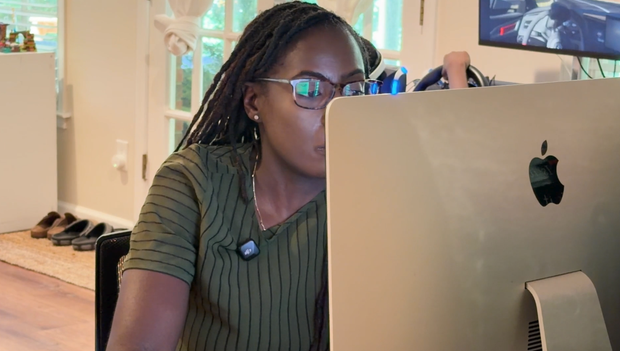
Noticing similar challenges at home, Osirus and her husband decided to restructure their household's relationship with technology. They implemented a system of 30-minute "technology tickets" that their children must earn through other responsibilities and real-world activities. From her own device, Jordan can manage her household's digital landscape.
"From here I can control everything, whether it's turning the camera on or off," she noted.
While the Surgeon General's warning surprised many households, for parents like Osirus who have been fighting the digital tide, the national warning brings a sense of relief.
"We saw where we were on the right track and also the areas we need to tighten up," Osirus said. She emphasizes that while the advisory is deeply alarming, it is also incredibly affirming.
Titania Jordan says parents can use equipment and devices that offer parental controls.
She says most cable or internet providers, social media apps, and the devices themselves should all have some safety features.


