Georgia's rapid population growth is taking a toll on its tree canopy

A new analysis from Global Forest Watch shows that from 2000 to 2024, Georgia ranked second in tree loss nationwide.
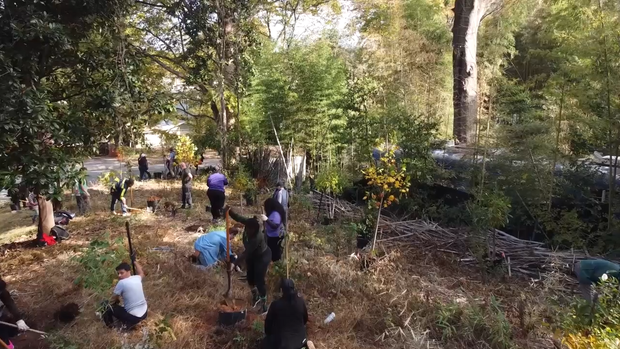
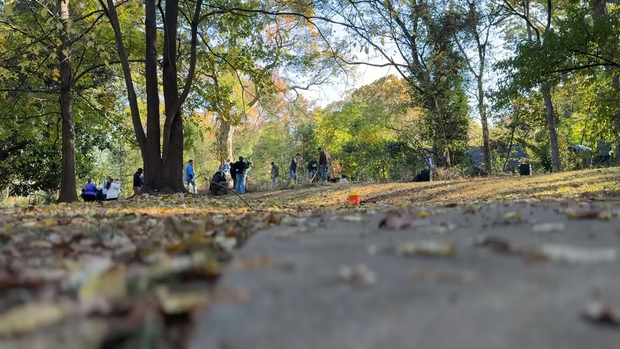
For Greg Levine, Executive Director of Trees Atlanta, fighting this trend is his calling. Every year, he heads up 'Plantlanta,' one of the biggest volunteer tree-planting efforts in Atlanta. For the past 10 years, it has been run by Trees Atlanta, an organization now celebration its 40th anniversary of community service in Atlanta
For Levine, restoring Atlanta's tree canopy also restores his faith in people. "It's good for the soul, but it's also good for the city, and it's good for the people that live around you," he said.
Trees Atlanta plants 9,000 trees every year — a small step forward to restore some of the more than 2.5 million acres of trees Georgia has lost over the past four decades.
"The biggest driver for losing canopy is that people want to live here," Levine said. "And the way that we have developed in the past has not been a holistic way for healthy living. Meaning we don't develop as densely as we should, keeping people more together and keeping more greenspace that way."
Logan House, the City Arborist for Decatur and President of the Georgia Arborist Association, said tree loss isn't caused by development alone. "The tree loss we're experiencing is not just because of development," House said. "We're also losing trees because of the age of our city and the age of some of our neighborhoods. The tree species that were planted, are not necessarily long live trees, and they're not getting replaced on people's single-family residences. So, it's important that when you lose a tree, you replant a tree."
Levine said development is good for the state's economy but must be balanced with tree preservation, because trees provide far more than shade and oxygen. "Every kid knows that trees make oxygen, but, trees take out particulate matter, so they actually clean the air," he said. "They slow down stormwater. They can clean stormwater as well. Root systems and trees help reduce asthma rates. Trees are like they're the one stop solution to so many environmental problems."
Georgia's canopy also brings major financial benefits. Research from Georgia Tech and the Georgia Forestry Commission found the Atlanta area saves more than $600 million annually by removing chemicals from the air, and $187 million each year by managing storm runoff and preventing flooding.
Seth Hawkins of the Georgia Forestry Commission said showing communities those savings can shift how leaders prioritize development.
"When you start demonstrating that the trees are not a cost, they're actually a great asset for the community and actually save the community a lot of money in the long term, it becomes one of those things helping communities pick their priorities," Hawkins said.
He is working with counties across the state to encourage laws and ordinances that protect trees.
"I've seen the huge, just paradigm shift of people wanting to be proactive and develop around trees in Georgia," Hawkins said. "I have faith in us."
House said planning and zoning rules influence how communities balance development, affordability and environmental protection. "That issue gets into a lot of the issues we as arborist discuss all the time," he said. "How are our planning and zoning rules impacting these kinds of projects and how are we? How is the conflict between creating affordable housing, interacting with our important green infrastructure and our tree canopy cover? And that's a difficult, that's a difficult problem to solve and difficult issue to balance."
He said the first step toward slowing tree loss is for cities and counties to place greater emphasis on preservation.
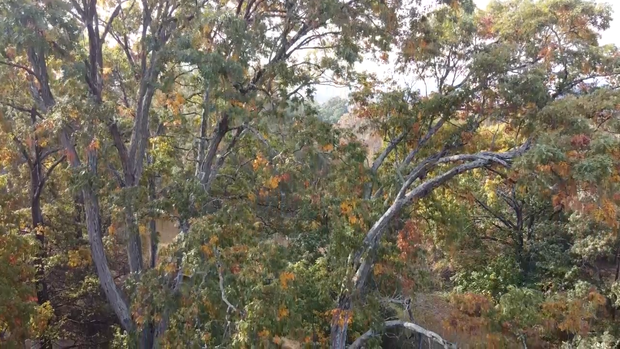
"An important part of preserving and growing our tree canopy is not only planting new trees, but preserving existing trees," House said. "So, some ordinances in different municipalities have requirements, to protect trees outright. And some of them provide an option to remove trees for a cost. They do not necessarily strictly prevent the removal of trees. So having a line about preservation of the certain number of trees or certain condition of trees, I think is an important part of this."
As for the clear-cutting seen along Georgia interstates, both GDOT and the Georgia Forestry Commission say the removals are for driver safety and represent only a marginal share of statewide canopy loss.
"Getting that more clearance along the sides of highways because cars can veer off the highway and structures right," Hawkins said. "But when you really start looking at the actual, like, acreage that that strip of removal comprises, even on a state macro level, we're losing the trees to many more other things than that."
For volunteer Norah Easterling, being part of community action offers inspiration. "It makes me so happy to see that hope is not lost," she said. "People still care about the environment."
Levine hopes more Georgians will get involved in efforts like 'Plantlanta' or tree plantings happening around the state. "The more active we are, we make a better place to be no matter what else is happening around us," he said.
He reminds people that even a small effort today can lead to long-term impact: a tree planted now will grow into a solution for tomorrow.