Georgia veterinarians and farmers get vulnerable animals ready before winter weather hits

As the winter storm gets closer to Georgia, people in Cherokee County who live on farms are doing what they can to keep their animals warm and safe.
With the air and ground already saturated, freezing temperatures and ice can be dangerous for any outdoor animals, so Georgians who live on farms and their vets are getting prepared for the worst.
On Friday, Dr. Natalie Richardson, a large and small animal veterinarian, was doing more than her normal rounds across the region's farms.
"We're up here in Cherokee County. And this road is particularly curvy and up here on the side of a mountain. So, the ice, if it comes in hard, this road will be impassable for at least a day or two, possibly more," Richardson said.
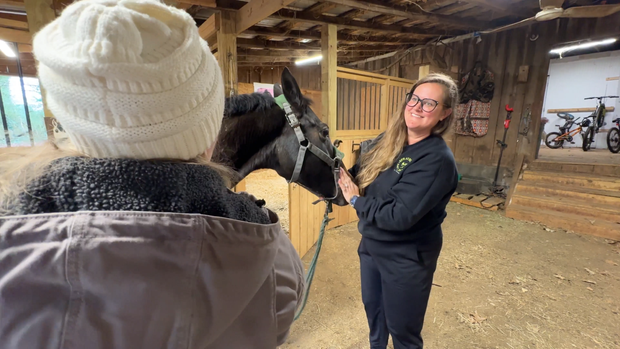
Richardson was making sure her clients, like Kelly Bond, were prepared for extreme cold and ice.
In typical dry, cold weather, livestock like horses have a remarkable ability to thermo-regulate. They have two coats of hair and go through a process called "pyloerectation." In cold temperatures, the hair will stand on end, creating a thicker, insulating layer of warm air close to the skin.
But that changes if they get caught in the rain, ice, or sleet.
"Once they get wet with the weather coming in, there's not going to be a lot we can do," Richardson said.
When a horse is wet, the process breaks down. Richardson says a blanket is a critical safeguard, and the best protection is a roof over their hooves. Horses should be put up inside a barn during an ice event.
"So, every horse, even cattle, they do a little bit better than horses, goats, chickens," she said. "They need shelter."
For chickens, water, a ventilated coop, and a heat source with no drafts or sources of wind are the best protection.
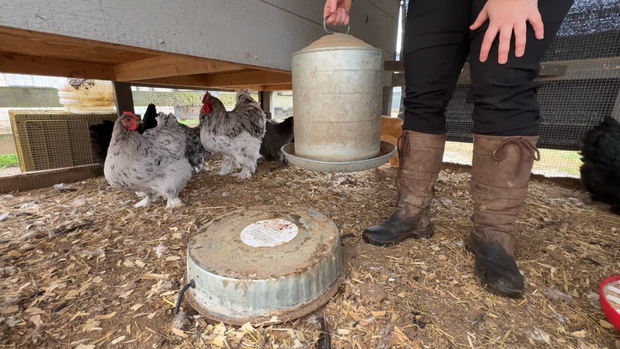
"There is that little bit there, though, that's open, so that's where a draft could come in," Richardson said, pointing out a small gap in the coop to Bond. "So coming here with some plastic wrap or something that closes off that draft would be great."
And without question, Richardson says, all dogs and catsshould be sheltered indoors during this approaching and potentially extreme weather. Unlike horses, dogs and cats are highly prone to frostbite.
She says you should monitor your animals throughout extreme weather. With any animal, access to food and water is critical, even when it's cold. So, make sure a dog or cat's water isn't frozen over. The same goes for horses and chickens.