Georgia Supreme Court sides with Sapelo Island residents to put battle over zoning on the ballot
The Georgia Supreme Court has ruled in favor of a group of Black landowners in a fight over land protections for one of the South's last Gullah-Geechee communities.
On Tuesday, the state's highest court unanimously reversed a ruling that had halted a referendum on a county zoning ordinance that had passed in 2023. The ordinance doubled the size of homes allowed in a tiny enclave called Hog Hammock on Sapelo Island.
Many of the island's homeowners feared the change would lead to million-dollar properties in the area, resulting in one of the nation's most historically and culturally unique Black communities potentially facing unaffordable tax increases.
The residents created a petition, gathering more than 2,300 signatures from registered voters seeking to put the zoning change to a referendum but McIntosh County commissioners sued to stop a special election for the referendum. A week before election day, a lower court ruled that the ordinance was not subject to the referendum process, declaring it void. Hundreds of people had already cast early ballots.
In their new ruling, the Georgia Supreme Court justices found that the lower court was wrong to decide that the zoning ordinance was not subject to referendum procedures found in the Home Rule Provision section of Georgia's Constitution.
"Nothing in the text of the Zoning Provision in any way restricts a county electorate's authority to seek repeal of a zoning ordinance," Supreme Court Justice John Ellington wrote in the opinion. "The superior court therefore erred in concluding that Judge Webster acted without authority in considering the Referendum Petition and in setting a special election for a referendum on the issue of whether the Ordinance should be repealed."
With the court's decision, a vote on the referendum will be allowed to move forward, barring further legal challenges.
Attorney Dana Braun, who represents the Hogg Hummock residents, said they're pleased with the ruling and that it will give county residents "some real say" in whether they support the zoning change.
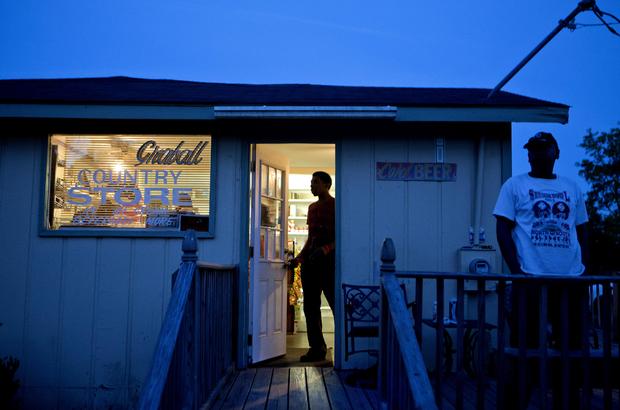
The unique culture of Sapelo Island
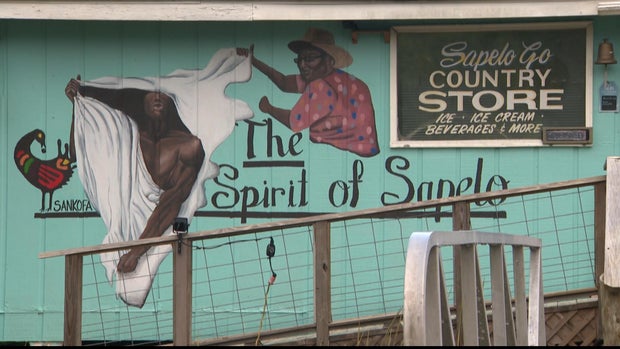
Roughly 30 to 50 Black residents live in Hog Hammock, also known as Hogg Hummock, a community of dirt roads and modest homes founded by 44 families of enslaved people who worked the cotton plantation of Thomas Spalding.
It's among a dwindling number of small communities began by emancipated island slaves — known collectively as Gullah or Geechee, in Georgia — scattered along the coast from North Carolina to Florida. Scholars say the island's separation from the mainland caused the communities to retain much of their African heritage, from their unique dialect to skills and crafts such as cast-net fishing and weaving baskets.
In 1996, Hogg Hummock was put on National Register of Historic Places, the official list of treasured U.S. historic sites. Residents depend on the local government in McIntosh County, where 65% of the 11,100 residents are white, to maintain protections that preserve the community.
The state Supreme Court was not weighing whether the community deserves special protections. Instead, the justices had to consider technical questions about whether local zoning laws can be challenged by referendum and whether McIntosh County commissioners had a right to sue to stop the vote last October.
The Associated Press contributed to this report.