Atlanta doctor says Cyclospora can cause diarrhea up to "40 times a day." Here's when to seek help.

Federal health officials are continuing to investigate a nationwide increase in Cyclospora infections that has sickened hundreds of people, including more than a dozen reported in Georgia.
According to the Centers for Disease Control and Prevention, 843 confirmed domestically acquired cases have been reported in 31 states, resulting in 86 hospitalizations. No deaths have been reported. The agency says the number of cases is expected to rise because there is often a delay between when people become sick and when cases are confirmed and reported.
The CDC has not identified a specific food source linked to the nationwide increase.
What is Cyclospora?
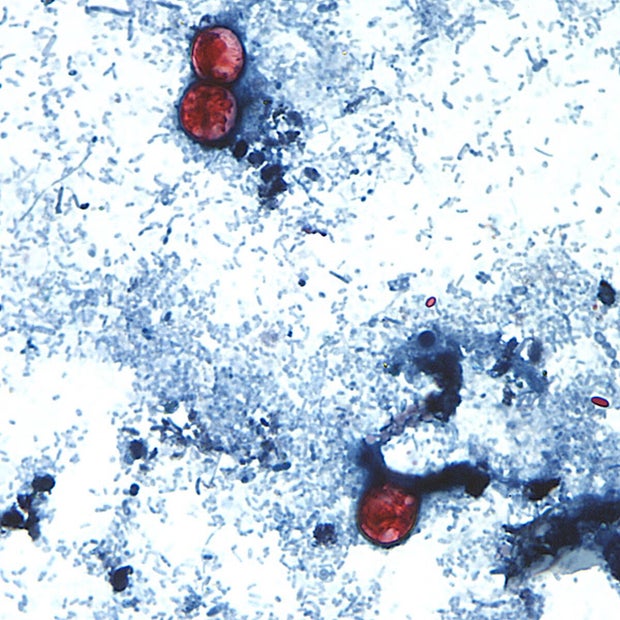
Cyclospora is a microscopic parasite that spreads through contaminated food or water. Unlike many common stomach illnesses, it is not spread from person to person in the traditional sense.
"There is a source usually, and in the past it's been foodborne," said Dr. Colleen Kraft, an infectious disease expert at Emory University. "We're still unclear as to what the source is."
Kraft said investigators rely heavily on patient interviews to determine what people ate before becoming sick, but that process can be difficult because symptoms often do not appear until two days to two weeks after exposure.
"They really rely a lot on asking people what they ate," Kraft said. "The issue though, is that most of us, because the incubation time is so long, it's like two to two weeks, we're not going to remember. I don't remember what I ate last week."
What are the most common Cyclospora symptoms?
Doctors say the most common symptom is severe watery diarrhea, though people may also experience nausea, bloating, fatigue and, in some cases, a low-grade fever.
Dr. Frita Fisher, a physician with Midtown Atlanta Nephrology, said some patients have experienced severe illness.
"Patients are reporting having diarrhea episodes 14 times a day, even 40 times a day," Fisher said. "So it's pretty extreme. If you're having diarrhea like that, and if it lasts more than a few days, it's important to go and see a doctor … and ask to be tested for Cyclospora specifically because it's not in the routine labs."
Doctors say severe diarrhea can quickly lead to dehydration, especially for older adults, young children and people with weakened immune systems.
Fruits, vegetables and Cyclospora
Despite the increase in cases, doctors say people should not stop eating fresh fruits and vegetables.
The Georgia Department of Public Health says that Georgians should take extra precautions, making sure to wash their hands as well as all fruits and vegetables before eating or cooking. Produce that is cut, peeled or cooked, should be refrigerated as soon as possible.
However, Fisher said washing alone does not eliminate the parasite.
"The only thing that will actually kill the Cyclospora is heat," Fisher said.
Health experts say thoroughly cooking food kills the parasite, although that is not practical for many fruits and vegetables typically eaten raw.
Kraft said Cyclospora is uncommon, treatable and preventable and urged anyone with persistent diarrhea to seek medical care.
"If you develop diarrhea that lasts a week or more, especially during the summer or after eating fresh produce, don't just wait it out," Kraft said. "See your healthcare provider and ask whether testing for Cyclospora is appropriate."
The CDC continues working with state health departments and federal partners to identify the source of the current increase. Until investigators pinpoint the cause, doctors recommend continuing to eat fresh produce, practicing good food safety and seeking medical care if symptoms do not improve.


