Medical groups' lawsuit attempts to undo the CDC's childhood vaccine schedule changes
Multiple public health groups are suing Health Secretary Robert F. Kennedy Jr. and the Centers for Disease Control and Prevention in an attempt to reverse the agency's recent changes to the recommended childhood vaccine schedule.
The recent lawsuit, filed by groups including the American Academy of Pediatrics, American College of Physicians, and the American Public Health Association, as well as three unidentified individuals, calls the changes a "drastic overhaul" that was both "harmful and unlawful."
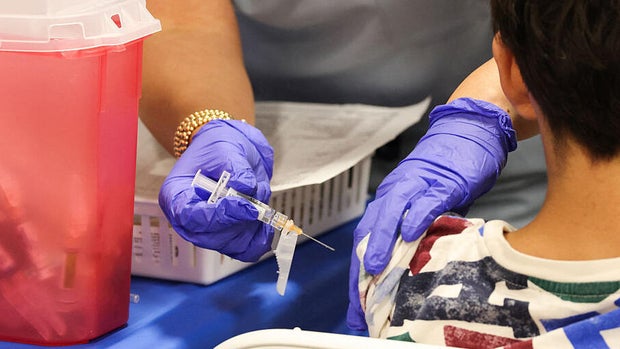
Last week, the CDC cut its recommendations down to 11 childhood vaccines. The agency announced it would no longer broadly recommend protection against flu, rotavirus, hepatitis A, hepatitis B, some forms of meningitis, or RSV. Instead, the protections against those diseases are only recommended for certain groups deemed high risk, or when doctors recommend them in what's called "shared decision-making."
"After reviewing the evidence, I signed a decision memorandum accepting the assessment's recommendations," Acting CDC Director Jim O'Neill said in a release announcing the changes on Jan. 5. "The data support a more focused schedule that protects children from the most serious infectious diseases while improving clarity, adherence, and public confidence."
Insurance will still cover the vaccines for the diseases despite the change, meaning that parents who want the immunizations will still have access to them without paying out of pocket. But medical experts said the decision creates confusion for parents and could increase preventable diseases.
A continued legal fight against the CDC panel
In the new amended complaint, the groups pointed to Kennedy's overhaul of the CDC's Advisory Committee on Immunization Practices last June as an action that "directly harmed Plaintiffs and the public health and welfare at large." Kennedy removed all 17 sitting members on the panel, replacing them with 14 advisors, some of whom were known to have questioned the medical research of immunizations.
The legal arguments over the original lawsuit, filed in July after the ACIP overhaul, have continued and escalated into the new year as the panel continues to change and make recommendations.
"The actions of the Defendants taken throughout this litigation have caused an abundance of harm and created a moving target," the complaint reads in part.
The plaintiffs are asking a federal judge to rule that the CDC's vaccination recommendations be reversed and the ACIP appointments and the panel's recent votes be "set aside."
Vaccine rates dropping across the U.S.
U.S. vaccination rates have been slipping, and the share of children with exemptions has reached an all-time high, according to federal data. At the same time, rates of diseases that can be protected against with vaccines, such as measles and whooping cough, are rising across the country.
States, not the federal government, have the authority to require vaccinations for schoolchildren. While CDC requirements often influence those state regulations, some states have begun working together to create their own recommendations on immunizations.
Kennedy has repeatedly insisted he is not anti-vaccine, telling CBS News' Dr. Jon LaPook, "What I'm gonna do is make sure that we have good science so that people can make an informed choice."
The Associated Press contributed to this report.