Atlanta air traffic controller remembers 9/11 from inside the control tower: "It was an eerie silence"
Smyrna resident David Gibson remembers the silence nearly 25 years ago as if it were yesterday.
For an air traffic controller at William B. Hartsfield Atlanta International Airport, later renamed to Hartsfield-Jackson Atlanta International Airport, that kind of silence was almost unheard of.
There was usually a chatter inside the tower. The controllers talked to the pilots and to each other. They joked between calls while keeping one of the nation's busiest airports moving.
But on the morning of Sept. 11, 2001, that changed.
"It was an eerie silence," Gibson said. "It was the quietest I've ever seen an air traffic control tower in my career."
Gibson had spent years guiding aircraft, first in the Air Force and later with the Federal Aviation Administration. He began working at the Atlanta tower in 1999, about two years before the Sept. 11 attacks.
For Gibson, that fateful Tuesday started like any other.
"It was a normal day," he said. "There was nothing out of the ordinary."
Then a coworker returned from a break.
"He came up to the tower and said, 'Hey, a plane just hit one of the Twin Towers,'" Gibson recalled. "We all looked around like, 'What?'"
There was little time to process what they were hearing.
Word soon came down from the Federal Aviation Administration that all aircraft had to be grounded.
Gibson remembers the order arriving through a teletype-style system, while managers and supervisors also relayed instructions from the FAA command center.
"All airplanes were to land, and no one was to depart," Gibson said.
The message was direct.
"They didn't say what was going on," Gibson said. "They said, 'You're going to do this. This is happening right now.'"
Planes already headed toward Atlanta could land. Aircraft on the ground could not leave.
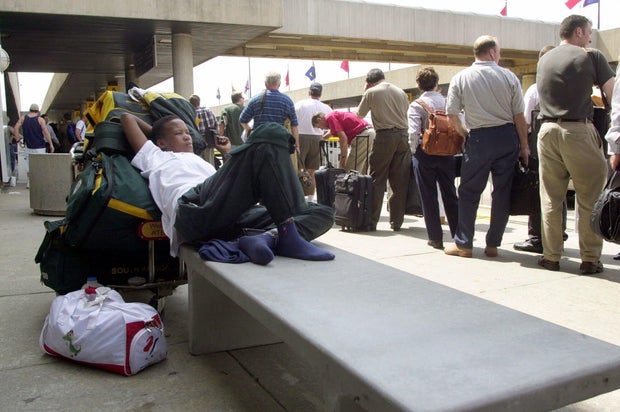
Then the congestion started almost immediately. Aircraft taxiing toward runways stopped. Planes continued arriving, but the aircraft already parked at gates could no longer depart. Space quickly became an issue.
"Everything just shut down," Gibson said. "There were planes everywhere, all over the field."
On the tarmac, pilots were looking to the control tower for answers. At a time when cellphones were still in their infancy and social media did not exist, word traveled much slower than it does today.
"We would just say, 'Listen, we'll get back to you,'" he said.
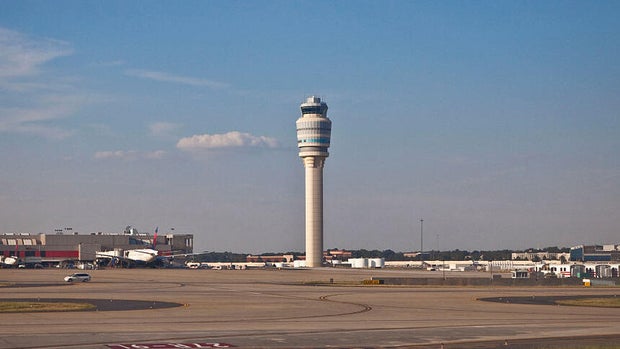
As more information reached the tower, the magnitude of what was happening became clearer.
A second plane struck the World Trade Center. Then came word of the attack on the Pentagon. Later that morning, United Airlines Flight 93 crashed near Shanksville, Pennsylvania.
"We were just speechless," Gibson said. "We were looking around, dazed, like, 'What is going on?'"
The normal chatter inside the tower disappeared.
"People were just quiet," he said.
Then another fear set in. Could Atlanta be next?
Gibson said he and several coworkers began wondering whether major airports might become targets.
"We were thinking, 'Are they going to aim one of those planes for Atlanta?'" he said.
Hartsfield was competing with Chicago's O'Hare International Airport at the time for the title of the world's busiest airport.
"It was kind of like we were sitting ducks," Gibson said. "We just didn't know."
But the work did not stop. There were still planes to land and pilots waiting for instructions.
"We didn't know what to say to each other," Gibson said. "We just had to do our jobs."
For Gibson, that meant putting his own fear aside. When he finally got a break, his former wife called. His first concern was his son.
"I just wanted to check on [him] to make sure he was ok," Gibson said.
His parents and other relatives were trying to reach him, too, but once he returned to the tower, the job came first.
"Once we were in the tower, we were doing our job," Gibson said. "The personal stuff was put to the side."
Twenty-five years later, Gibson does not remember every plane or every conversation from that day.
He remembers the silence. He remembers the fear. And he remembers not knowing what could happen next.
Asked to describe that day in one word, Gibson chose one.
"Uncertainty."


