Across Atlanta, buildings hold lesser-told stories of Dr. Martin Luther King Jr.'s life and legacy
Historians at Morehouse College are using the week of Dr. Martin Luther King Jr.'s birthday to draw attention to how specific places across Atlanta helped shape his thinking and the civil rights movement, many of which are still standing today.
One of the most influential was Sale Hall Chapel on the Morehouse College campus.
"We have a photo of Doctor King sitting right here preparing for the conversation," said Dr. Harold V. Bennett, the Martin Luther King Jr. Endowed Chair in Philosophy and Religion at Morehouse College. "Whatever the lecture was that day, whatever the topic was, we have a photo of this intellectual, spiritual giant getting ready for whatever the brothers were about to get introduced to that day."

Bennett says King spent countless hours in the chapel listening to lectures by his mentor, Dr. Benjamin E. Mays, who served as president of the college for more than two decades. Historians at Morehouse say the only class ever taught by King was held in Sale Hall Chapel and that his approach to civil rights was deeply shaped during his undergraduate years there, when he earned his bachelor's degree.
"This was a place where he felt a sense of release," Bennett said. "Freedom to think about what was going on, the plight of oppressed folk, and to understand that you don't have to separate theory from praxis. All of it goes together."
After returning to Atlanta following the Montgomery Bus Boycott, historians say King relied on a network of trusted locations across the city to plan strategy and organize, often moving between them for safety.
"There was a sense of safety and security in venues that were in the heart of the Black community," said Dr. Clarissa Myrick-Harris White, Ph.D., a professor of Africana Studies at Morehouse College. "They needed to have a variety of places to meet. Safety was one of the reasons they could not meet in the same locations every time."
Churches played a central role. King grew up at Ebenezer Baptist Church, where his father and grandfather served as pastors, and his mother played the organ. Other churches also became key gathering places, including Rush Memorial Congregational Church and West Hunter Street Baptist Church, which supported students involved in the Atlanta Student Movement and hosted meetings during tense moments in the fight for desegregation.
"These churches provided space and support when it mattered most," White said.
Restaurants were also critical. King and other civil rights leaders regularly met at Paschal's Restaurant, which originally operated on what was then Hunter Street and today is located on Northside Drive.
"They fed the movement," White said. "They fed the leadership, and they had the opportunity to talk strategy."
Another meeting place that remains open today is the Busy Bee Cafe. White says it offered a communal setting where leaders could gather without drawing attention.
"It became a safe, relaxing place for leaders, activists, and everyday people in the community," she said.
Community institutions also played a role. On Auburn Avenue, the Butler Street YMCA hosted the Hungry Club, a forum where prominent Black leaders met regularly to discuss political, social, and economic issues.
"It was an opportunity to talk about issues in a safe space in the heart of the Black community," White said.
Nearby, the Prince Hall Masonic Lodge served as another organizing site. White said many civil rights leaders were members of Prince Hall Masonry, a group deeply involved in political organizing and social change.
"It was not just a fraternal organization," she said. "It was part of the backbone of the movement in the Black community."
Many of these locations were connected by Sweet Auburn Avenue, once described as the richest Black street in the world. White says Sweet Auburn functioned as one of the city's major hubs of Black activism, alongside the Atlanta University Center and local churches.
"These were spaces where people could meet, worship, eat, and organize," she said. "They were also watched, which is why leaders had to be careful about where and how they gathered."
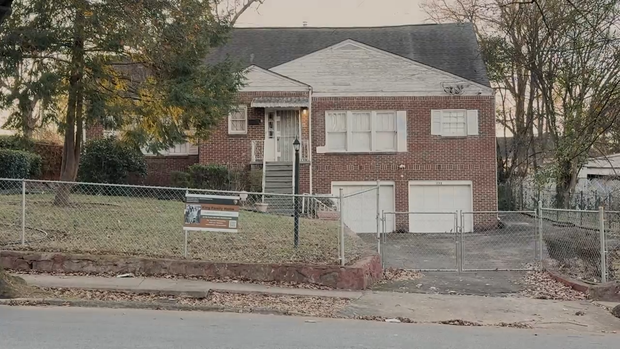
White also pointed to the King family home on Sunset Avenue, where King lived with Coretta Scott King and their children after returning to Atlanta. The home served as both a refuge and a meeting place during a dangerous period in his life.
"It was a space where King could be with his family, but also where he could work, write, and meet with activists," she said.
Historians say seeing these places today offers a reminder that the civil rights movement was shaped not only by marches and speeches, but by everyday spaces that still exist across Atlanta, places many people pass without realizing their significance.