120 years after Atlanta Race Massacre, students reflect on violence and connection to today

One hundred and twenty years after mob violence tore through downtown Atlanta, students at Morris Brown College confronted the history of the 1906 Atlanta Race Massacre and drew connections to today.
The four-day wave of violence from Sept. 22 to Sept. 25, 1906, left Black Atlantans beaten, killed, and driven from their businesses after false accusations against Black men spread through local newspapers. During that time, students at the University Center could not return to school until Oct. 1, 1906.
Some of the areas heavily impacted by the massacre included Brownsville, Five Points, Summerhill, Auburn, Pittsburgh, Auburn Avenue, and Lakewood Heights.
Now, near the same historic grounds where scholar W.E.B. Du Bois once documented the tragedy, a new generation learned how misinformation helped to fuel one of the city's darkest chapters.
Inside a Morris Brown classroom, freshman Denym Chambers said the lesson opened her eyes because she knew nothing about the massacre.
"I did not, but I loved learning about it and being able to be at an HBCU like Morris Brown, so that I'm able to expand my education within my Black history, because I did not grow up somewhere where I did learn a lot about my Black history," Chambers said.
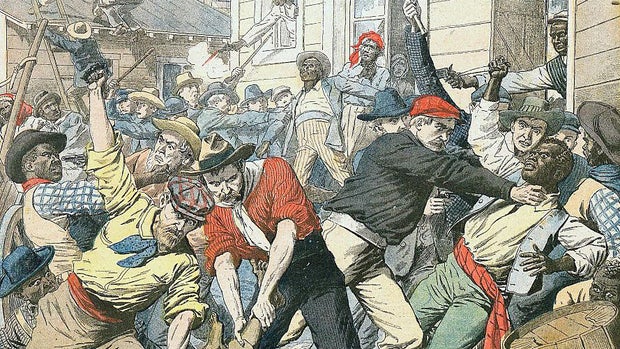
During the massacre, Du Bois took cover at Atlanta University. He wrote his famous poem, "A Litany of Atlanta," reflecting on the violence that historians say killed at least 20 people.
Adjunct professor Sunny Brown told students the history lesson is meant to connect past and present.
"When we talk about the race massacre of 1906, it really goes into not only historically what has happened, but we connect it to what we see today," Brown said. "How does it show up in real time today?"
At the Auburn Avenue Research Library, artifacts from the massacre, including historic newspapers and soil samples from recovery sites, help memorialize victims.
"These are things that are important to the history of our city. These are things that can happen again. So, the more we learn about mob mentalities, about violence, about genocide, the more we learn about history, the less likely we are to repeat certain things," said John Austin, a collections librarian at the Auburn Avenue Library.
Students said one of the most striking parallels is the role of misinformation. In 1906, false newspaper reports helped ignite the violence. They said nowadays misleading information can spread rapidly online.
"A lot of stuff that does come from social media, we definitely do believe. I know that social media definitely can not say the full truth about certain things. That does happen," Chambers said.
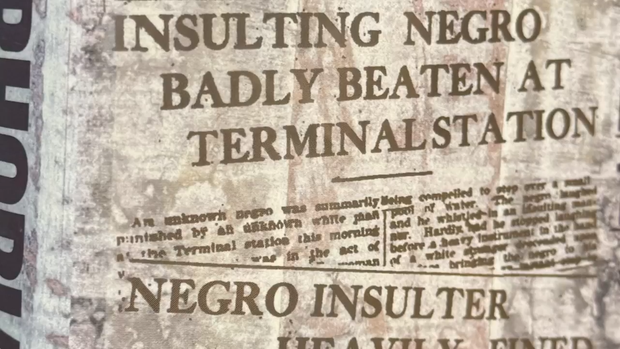
Brown said her goal to examine the massacre helps students think critically about the information they consume, and that they'll recognize how quickly false narratives can have real-world consequences.
Kyler Winston-Kendricks, the lead resident historian at the Apex Museum, walked CBS News Atlanta's crew through an exhibit called Before and Beyond 1906.
"A lot of people called it a riot, but now we call it a massacre. The reason is because the numbers can reach up to 40 to 100 people that were injured or killed in this incident," Winston-Kendricks said.
She said there are 25 known victims, but many others were never identified.
"People were snatched off the streets and snatched out of the trolley cars as well. They were snatched from their businesses. People were laid out in front of the Henry Grady statue as well, " she explained.
Winston-Kendricks said J. Max Barber, the editor of the journal The Voice of a Negro, left Atlanta and went to Chicago, where he published what happened.
"J. Max Barber got this story out, and that is why a lot of newspapers all over the nation and also including the world were talking about the reason as to why this actually happened. You had newspapers that were in Liverpool, England. You had some that were in Scotland. You had some that were in France and also Italy as well, talking about why this was happening," she said.
The Apex Museum's exhibit includes audio recordings of survivors of the massacre, including June Dobbs Butts, John Wesley Dobbs's daughter.
"She's talking about it from the perspective of her father," Winston-Kendricks said.
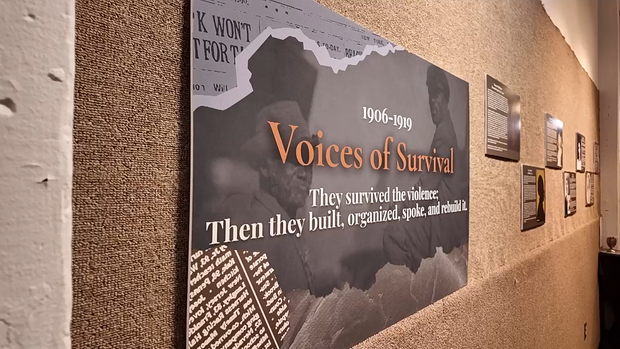
There are also audio recordings describing how guns were smuggled into the city for this massacre so people could fight back and protect their communities as well as recollections from a white survivor, who tells stories of her mother protecting one of her Black neighbors.
The exhibit will remain available at the Apex Museum through October.


