Lulu, beloved mandrill at San Francisco Zoo, dies at age 24
A mandrill and long-time resident of the San Francisco Zoo has died after worsening health conditions, the zoo announced on Wednesday.
Lulu, a 24-year-old female mandrill, died on Tuesday after a medical procedure. The zoo said in a press statement that Lulu was evaluated for a possible cancerous growth on her neck after being diagnosed over the past year with anemia, kidney disease, spinal lesions, and abnormal blood calcium levels.
Lulu died after the mass was removed from her neck, the zoo said. While test results from the growth were not yet available, initial blood tests showed her other conditions had worsened. She died shortly after being returned to her enclosure despite life-saving efforts including CPR and advanced life support, the zoo said.
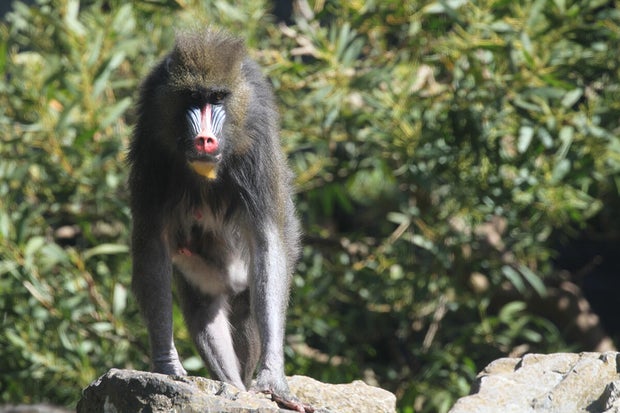
"Our mandrill troop, her caretakers, and the Zoo community are mourning Lulu's passing," Dr. Adrian Mutlow, the zoo's executive vice president of animal health and wellness, said in a prepared statement. "Here, the other mandrills in the troop, including her three offspring, were allowed a grieving period where they could be close to her one last time. Although she still ate and acted normally with her troop, animals can be surprisingly stoic. This exam and Lulu's preliminary lab results revealed she was much sicker than she seemed before the examination."
Mandrills, the largest monkey species in the world, are native to Africa and are classified as vulnerable by the International Union for Conservation of Nature, meaning they are at risk of extinction in the wild. They are similar to baboons, but male mandrills are distinguished by their bright facial colorations and brightly colored rear ends, while females have less colorful faces.
Born at the San Diego Zoo on July 24, 2002, Lulu was feted with a 24th birthday celebration at the zoo earlier this year. She has been a San Francisco Zoo resident since 2004 and produced three offspring with a now-16-year-old mandrill called Big Joe.
"She was an excellent and caring mother," Kyle Runzel, the zoo's curator of primates, said in a statement. "She was extremely gentle and protective, and was a true favorite among her caretakers, staff, and volunteers. We were so lucky to have her in our lives. It was her quirkiness that gave Lulu her charm. She was quite a unique mandrill."
The life expectancy for mandrills is 12 to 20 years in the wild, and 30 years or more in captivity. Angie, a female mandrill at the San Francisco Zoo, died last year at the age of 35, the oldest female mandrill in zoos at the time, the zoo said. The current oldest mandrill in North America is also a San Francisco Zoo resident, Dora, who turned 34 earlier this year.


