Community unites to sustainably restore Santa Cruz's iconic blue whale skeleton
From the California coast, you can see a lot of surfers. It's not so easy to see a blue whale.
"There's probably only 10,000 in the entire world," marine biologist Nancy Black said.
However, at UC Santa Cruz, you can walk right up to a legendary blue whale, or at least its skeleton.
Her name is Ms. Blue. In 1979, Ms. Blue died out in the ocean and washed up on shore.
The Santa Cruz community saved her bones. For decades, her 87-foot-long skeleton has greeted visitors outside the Seymour Marine Discovery Center. But the sun, wind, rain, and salty air eventually took a toll.
"It wasn't just the metal structure that began to rust away. The bones themselves were decomposing," explained Jonathan Hicken, the Seymour Center executive director.
Hicken put out the call to find ways to sustainably restore the landmark. That's when the community, including surfers and engineers, stepped up for a second time to save Ms. Blue's bones.
"The message came through loud and clear. They said, 'Get Ms. Blue back up!" Hicken said with a smile.
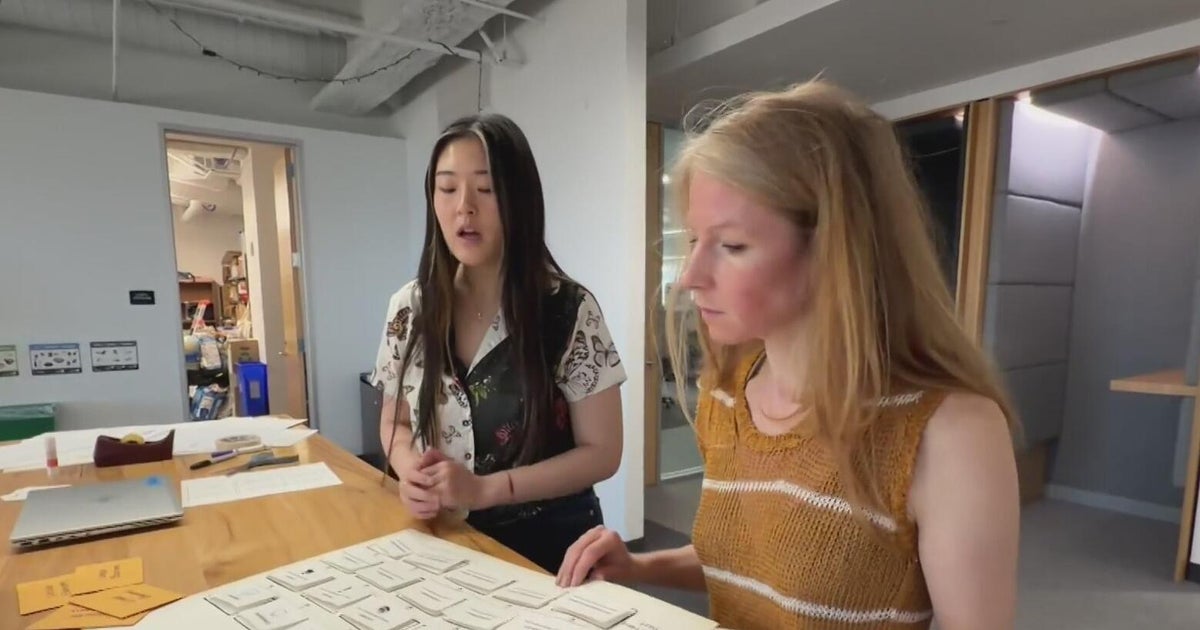
Halon Entertainment, a Hollywood special effects studio, jumped into action. The team created a high-fidelity 3D scan of the skeleton.
"We really wanted to get it right. We really wanted to do right by Ms. Blue," producer Andrew Ritter said.
"It's a real cool merger of the science and the tech that we use," senior VAD supervisor Jess Marley said.
Some of Ms Blue's bones were too damaged to repair. That's where surfer and inventor Patricio Guerrero entered the restoration efforts.
Guerrero is CEO and founder of Santa Cruz-based swellcycle.
The Santa Cruz startup makes sustainable surfboards using giant 3D printers and bioplastics.
"When I started this company, I had no idea we would be making whale bones to tell you the truth," Guerrero joked.
With Halon Entertainment's scan data, swellcycle fired up the 3D printers to create replica bones, using plastic hospital trays destined for landfill.
The staff textured the bones and sealed them with a bio-based resin.
"At the end of the day, you won't be able to recognize our reconstructed bones from the real ones," Guerrero said.
To repair damaged bones, some engineers at U.C. Santa Cruz jumped onboard.
"I do love the ocean and the sea. So just fixing the whale was very exciting for me," said Professor of Engineering Marco Rolandi.
In the Rolandi lab at the Baskin School of Engineering, engineers developed an innovative "bone-repair" putty made out of shrimp shells. The putty is a nontoxic material used to fill in the cracks.
"This helps us restore Ms. Blues' bones in a more sustainable and in an eco-friendlier way," student Ashwin Maricetty explained.
Student Rishima Agnihotri told CBS News Bay Area how their creation and efforts by all show how the Santa Cruz community is serious about protecting the environment.
"We show it rather than just say it," she said.
The project aims to teach the community and world about the power of climate-safe innovation
"Ms. Blue means to me what our future can look like," Guerrero remarked.
It's a future that ensures Ms. Blue remains a landmark for decades to come.