Clean energy construction project at UC Berkeley threatens native butterfly habitat
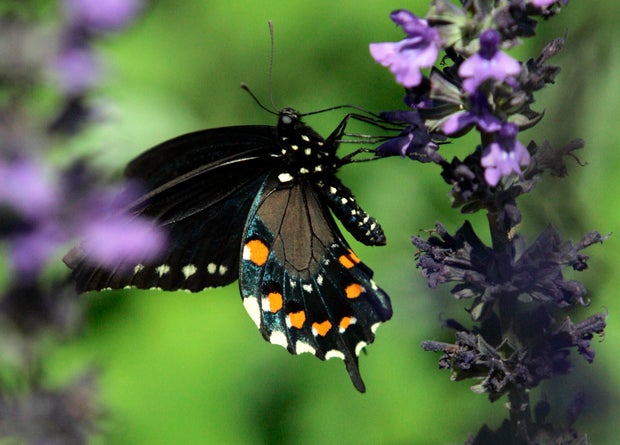
Near the Campanile on the University of California, Berkeley campus, along the legendary Strawberry Creek, a patch of land is the nursery and home to a native butterfly known as the California pipevine swallowtail.
"It's so beautiful to have around. And all the butterflies you see on campus, the blue and black pipevine swallowtails, they're all born on this site," said Rosetta Wang, founder of the Wild Harvest and Restoration Fund dedicated to restoring native plants and animals.
"It's almost like a fairy tale. You know, there are not a lot of places where you can be close to butterflies, caterpillars, walk around and have them flying around you," Berkeley elementary school teacher Jacob Pavlosky said. His students have created colorful drawings of the habitat and butterflies, which now hang around its perimeter.
Female butterflies only lay their eggs on the tender new stems of a certain native plant, the leaves of which are the only food that their distinctive caterpillars eat - the California pipevine.
"I discovered the pipevine was living here amongst a lot of invasive ivy and since then I've been weeding out invasive plants so that the pipevine can thrive," Wang said.
However, much to the dismay of Wang and Pavlosky, a new clean energy project, now under construction at UC Berkeley, threatens the butterfly habitat.
"We regret that this project is going to disturb the area a little bit. We want to disturb it as little as possible," UC Berkeley spokesperson Kyle Gibson said.
The campus is in the process of replacing its aging, natural gas burning cogeneration plant with a modern, renewable all-electric system. The plant near Edwards Stadium on the east side of campus will be shut down once the project is fully completed.
"It is the single largest source of carbon emissions on our campus, and the campus is taking it upon itself to become more sustainable and efficient," Gibson explained.
To do that, crews need to access the major confluence of vital existing utilities lines that are located beneath the habitat. According to Gibson, that means excavating part of the habitat, uprooting the host plants, and disrupting the butterflies.
Neither the plants nor the butterflies are protected under the law.
"We want to maintain our campus biodiversity to the extent that we can, and we do want to minimize the impact of this project as much as possible," said Gibson.
"How can we have green, clean energy among a bright blue butterfly? How can we do both?," former national park ranger and butterfly expert Mia Monroe asked. She now volunteers for the Xerces Society, a nonprofit whose mission includes protecting pollinators including the California pipevine swallowtail, which disappeared from many East Bay urban communities about three decades ago.
Thanks to the efforts of local conservation groups, including the East Bay's Pollinator Posse, the butterfly made a big comeback thanks to local efforts to restore habitats, and cultivate the vines, even in private homes' backyards.
"It is a hearty butterfly, but it almost disappeared," Monroe said. "And do we really want to get things to the brink when they become endangered? Or do we want to, as people did years ago, realize it was quietly blinking out, and it was quietly disappearing and they saved it and brought it back throughout the Bay Area in quantity so it wouldn't be endangered?"
The host plant is key to its survival.
Monroe, Wang, members of the Pollinator Posse, as well as other concerned citizens, jumped into action and contacted the university, asking them not to disrupt the habitat.
"We listened. We heard their concerns," Gibson said.
The university voluntarily came up with a plan to preserve, protect, and replant the pipevines with a four-part strategy that includes limiting excavation, transplanting some of the established plants to other "alternate habitats" along Strawberry Creek, and eventually restoring and even expanding the habitat after all the construction is completed
"We greatly value the caterpillars, the butterflies, and the people who have been tending them," Gibson said.
"That's the thing the university should do is acknowledge the value of this and bring in some people to guide the next steps," Monroe added.
Wang, however, remains deeply concerned. She posted a response to the university's plan, claiming it had numerous gaps. One concern is transplanting established mature vines.
Wang and other botanists told CBS News Bay Area that not only is it challenging to transplant mature vines, but the university needs to do so when the plants are dormant.
The California pipevine has a widespread and deep root system that needs to be carefully handled. The timing needs to occur late fall or in the winter before the first rains, and it would take years for the plant to reestablish itself and produce enough food for the butterfly habitat.
She asked the university to conduct additional surveys before any ground is disturbed.
"I would really like to see that it ultimately is not destroyed," Wang said.


