Scientists are on the lookout for the New World screwworm fly in California

A fight is ramping up against the New World screwworm fly as it spreads to the United States, and, in what sounds like science fiction, it lays eggs that hatch into flesh-eating parasites.
So far, the fly has not been detected in California, but scientists are on the lookout.
Entomologist Amy Murillo shared a rare, up-close look at the flesh-eating fly now terrorizing cattle and dairy farmers.
"The spines here are just like truly amazing," she marveled while viewing the larva under the microscope.
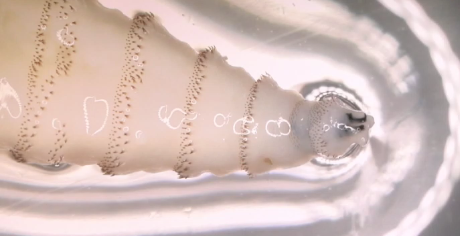
She noted that the rings of spines are used to dig deeper while feeding, much like a screw.
Most flies start as larvae or maggots that feed on dead carcasses. The experts say New World screwworms are different, as females tend to lay eggs in wounds or body orifices, such as the ears or nose. They have sharp hooks that pierce the flesh.
"It only feeds on living flesh, and that's why we're concerned about it," Murillo said.
The U.S. Department of Agriculture sent the dead screwworms to UC Riverside Veterinary Entomology Dept., where Murillo and Alec Gerry are national research leaders and on the frontlines of stopping the pest.
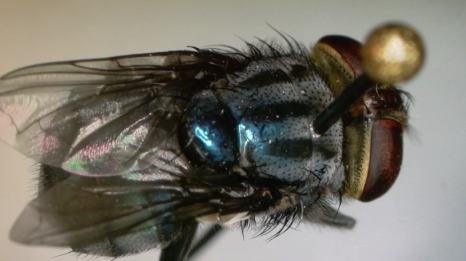
"It hasn't been in the U.S. since 1966, when we eradicated it," Gerry said.
Since the beginning of June, at least a dozen animal infections have been confirmed in Texas and New Mexico, putting California and the rest of the nation on alert.
The $113 billion US cattle industry is especially vulnerable because the parasite likes newborn calves and cows with tagging and other wounds.
But screwworms sicken all kinds of warm-blooded mammals, including, less commonly, humans. If detected early, doctors say infections are treatable.
Flies found in Mexico prompted the researchers to begin monitoring 36 fly traps in four counties months ago. So far, they haven't caught screwworms. But, with parasite confirmations growing despite expanding animal quarantines, they're launching an educational push.
"It's gonna be a farmer or a pet owner or a veterinarian who's probably going to see it first. They're going to see the maggots in a wound," Gerry said.
Staff at a Riverside area animal hospital are paying attention. Scientists fear the fly may piggyback here on less conspicuous animals like a traveling pet.
"We have a lot of feral cats that come in here that we spay and neuter and send back out, so definitely concerning, and you know, Norco people are really concerned about the horses…," Emma Hodgeson of The Pets Place Animal Hospital said.
The US originally eradicated the parasite by breeding sterile male flies and dropping swarms from planes. For decades, it remained contained in Panama. Now, authorities in Texas are releasing sterile flies once more.
"As scientists, we can help break that lifecycle," Murillo said.
These scientists say it's unclear whether screwworms will reach California. But they expect the fight against them to continue for years.


