Na Son Nguyen/AP
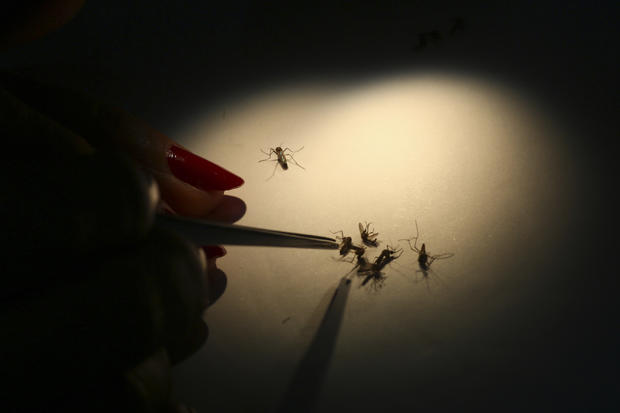
Specimens collected from traps are taken back to the lab in Pasteur Institute in Nha Trang city, Khanh Hoa province, Vietnam, for analysis to determine how well Wolbachia mosquitoes are infiltrating the native population, Sept. 2, 2013.
The mosquitoes are being reared with Wolbachia bacteria that works as a natural vaccine to keep them from becoming infected with the virus that causes dengue. They were released on an island as part of research to help determine whether the bacteria can help in the fight against the disease.
The Wolbachia-infected mosquitoes not only died quicker but they also blocked the dengue virus partially or entirely, sort of like a natural vaccine.
Margie Mason/AP
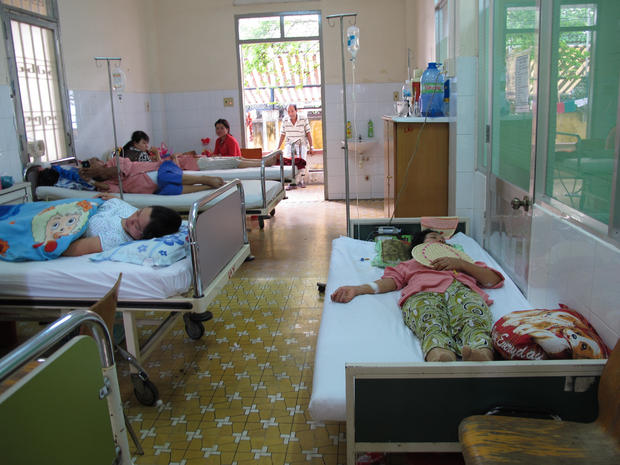
Patients with dengue fever are treated at Khanh Hoa General Hospital in Nha Trang, Vietnam, Sept. 4, 2013.
Known as "breakbone fever" because of the excruciating joint pain and hammer-pounding headaches it causes, the disease has no vaccine, cure or specific treatment. Most patients must simply suffer through days of raging fever, sweats and a bubbling rash. For those who develop a more serious form of illness, known as dengue hemorrhagic fever, internal bleeding, shock, organ failure and death can occur.
Na Son Nguyen/AP
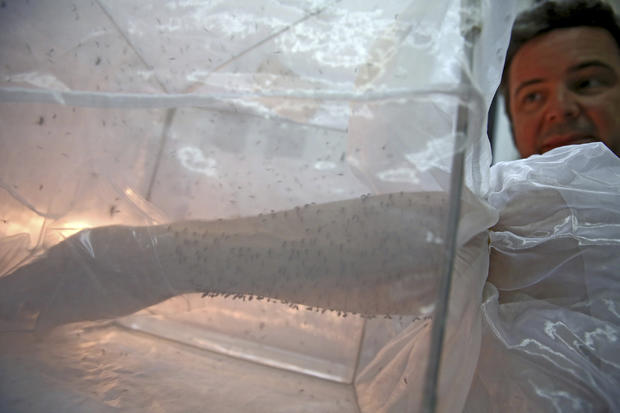
Scientist Simon Kutcher, project manager of the Eliminate Dengue Vietnam research program, blood feeds a cage of mosquitoes in a lab in Hanoi, Vietnam, Sept. 1, 2013.
New research suggests some 390 million people are infected with the virus each year, most of them in Asia. That's about one in every 18 people on Earth, and more than three times higher than the World Health Organization's previous estimates.
Na Son Nguyen/AP
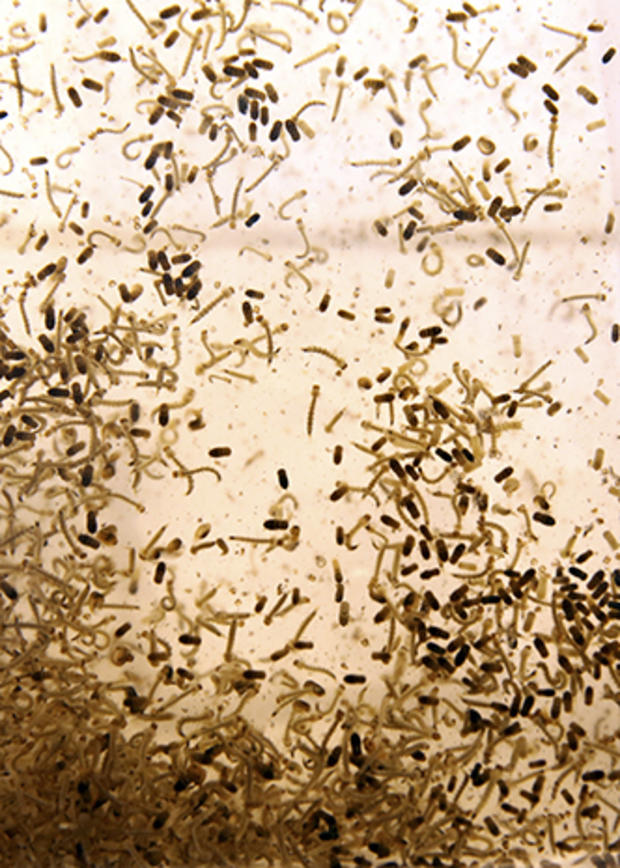
Mosquito pupae are seen at a lab at Pasteur Institute in Nha Trang, Vietnam, Sept. 2, 2013.
Wolbachia also blocks other mosquito-borne diseases such as yellow fever and chikungunya. Similar research is being conducted for malaria, though that's trickier because the disease is carried by several different types of mosquitoes.
Na Son Nguyen/AP
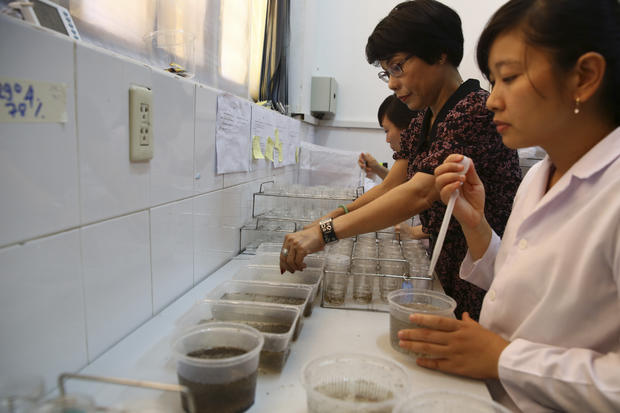
Scientist Nguyen Thi Yen, center, helps her colleagues to collect mosquito pupae at Pasteur Institute in Nha Trang, Vietnam, Sept. 2, 2013.
Na Son Nguyen/AP
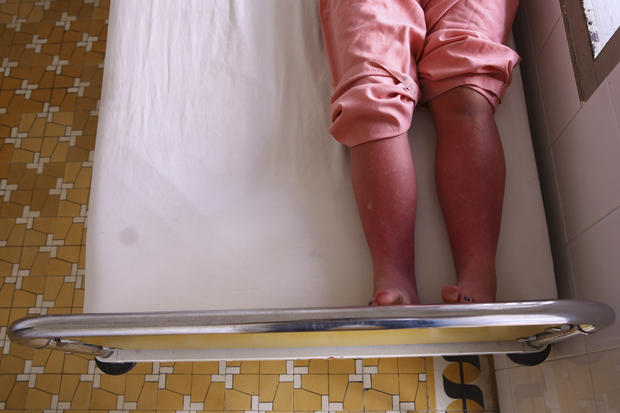
Dang Thi Kim Muon, 21, who has dengue fever, lays on the emergency room at the central hospital of Nha Trang city, Khanh Hoa province, Vietnam, Sept. 3, 2013.
The province has had a record year and is home to the country's highest rate of dengue.
Na Son Nguyen/AP
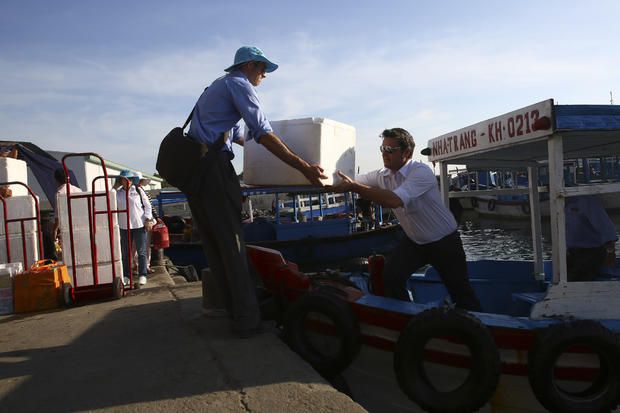
Simon Kutcher, right, project manager of the Eliminate Dengue Vietnam research program, and his colleague load boxes of Aedes aegypti mosquito pupae and young mosquitoes which have all been intentionally infected with bacteria called Wolbachia before transporting them by boat to Tri Nguyen island, in Nha Trang city, Khanh Hoa province, Vietnam, Sept. 3, 2013.
Na Son Nguyen/AP
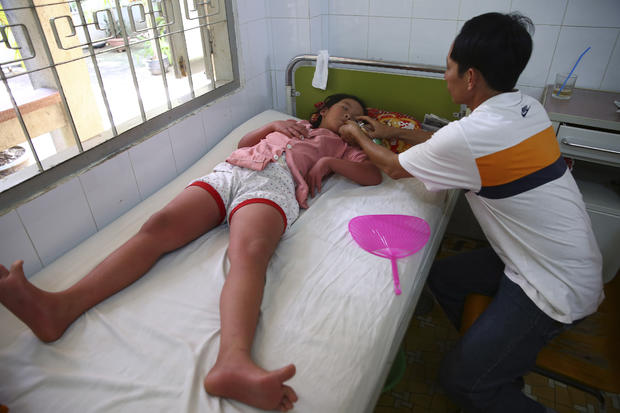
Le Van Minh, 44, takes care of his daughter Le Thi Kim Tho, 9, who has dengue fever at the central hospital of Nha Trang city, Khanh Hoa province, Vietnam, Sept. 3, 2013.
Dengue typically comes in cycles, hitting some areas harder in different years. People remain susceptible to the other strains after being infected with one, and it is largely an urban disease with mosquitoes breeding in stagnant water.

Na Son Nguyen/AP
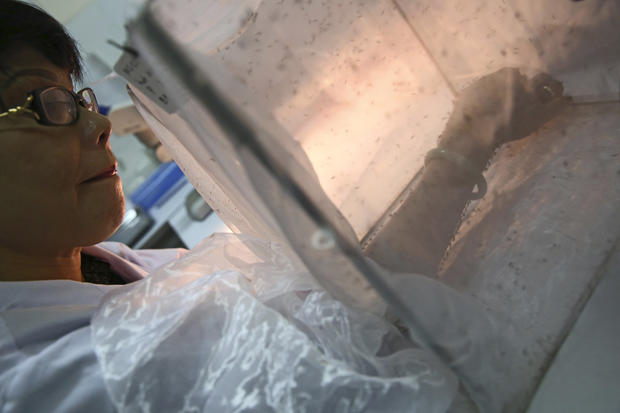
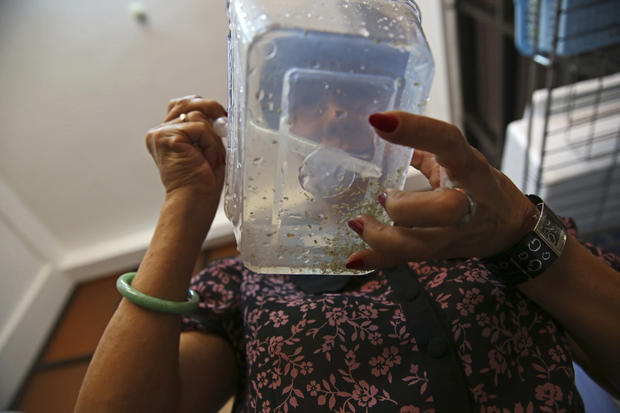
Scientist Nguyen Thi Yen blood feeds a cage of mosquitoes in her lab in Hanoi, Vietnam, Sept. 1, 2013.
Na Son Nguyen/AP
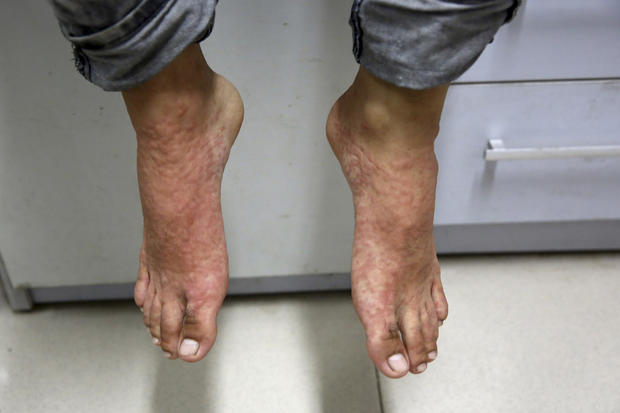
A volunteer's swollen feet are seen after blood feeding a cage of mosquitoes in a lab in Hanoi, Vietnam, Sept. 1, 2013.
Na Son Nguyen/AP
Scientist Nguyen Thi Yen blood feeds a cage of mosquitoes in her lab in Hanoi, Vietnam, Sept. 1, 2013.
Na Son Nguyen/AP
Scientist Nguyen Thi Yen, 58, collects mosquito pupae at Pasteur Institute in Nha Trang, Vietnam, Sept. 2, 2013