Michael Murphy/NSW Office of Environment and Heritage
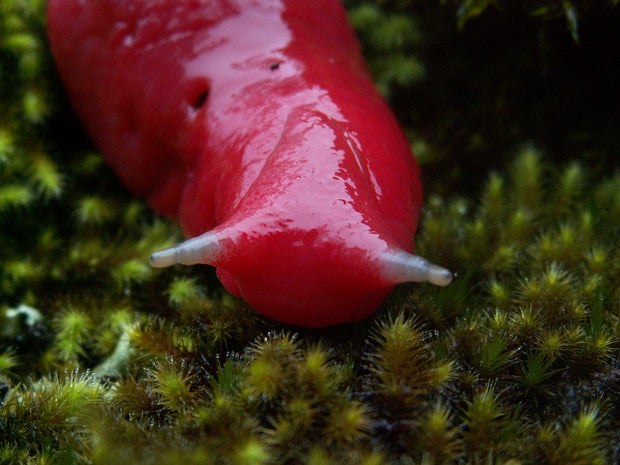
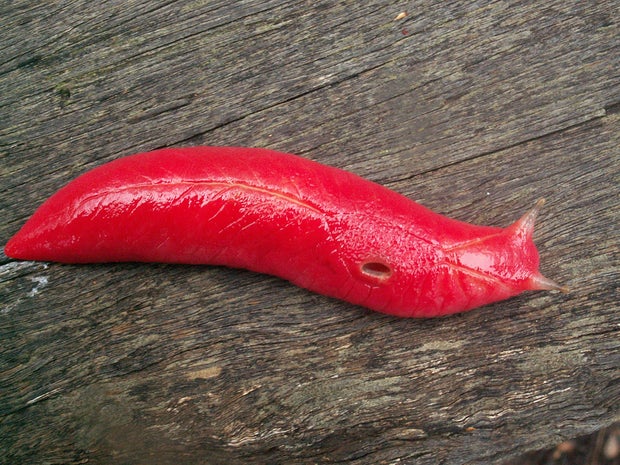
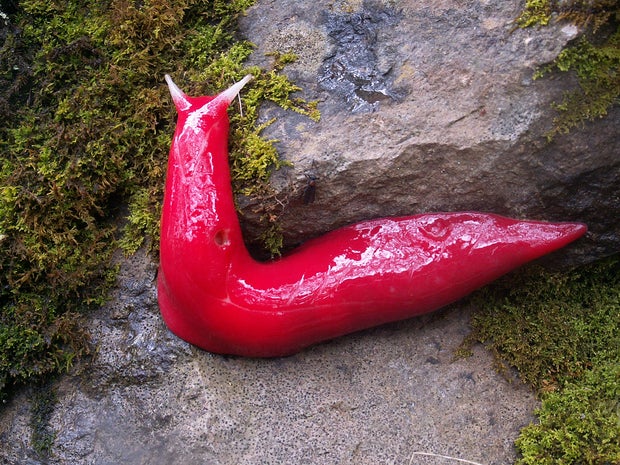
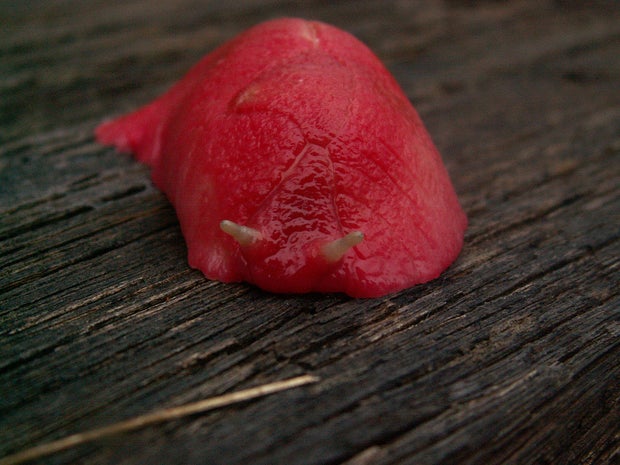
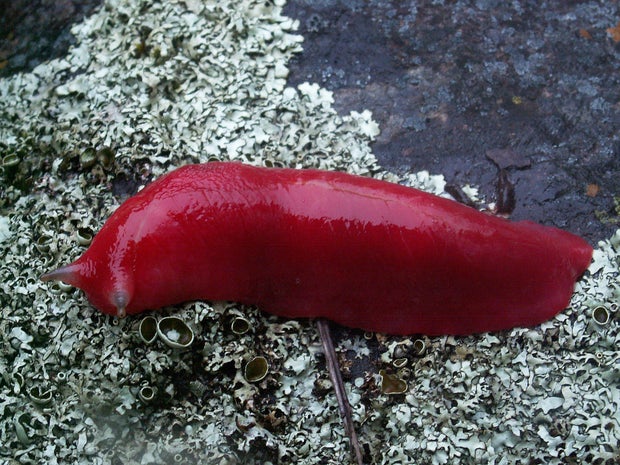
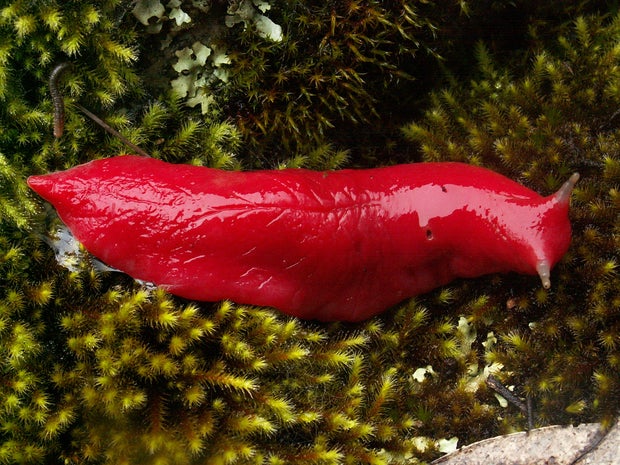
Brilliantly colored Kaputar Pink Slugs live only on the top of Mount Kaputar in New South Wales, Australia, in the protected Mt. Kaputar National Park.
NSW Office of Environment and Heritage
The slugs can reach lengths up to eight inches long.
NSW Office of Environment and Heritage
Millions of years ago, Mount Kaputar was an active volcano, at a time when much of Australia was covered by rainforest. When Australia started to dry out, rainforest areas were contained to pockets along the coast and ranges. Mount Kaputar provided a local refuge for moisture-loving plants and animals.
NSW Office of Environment and Heritage
Mount Kaputar's high elevation makes it cooler than surrounding areas and allows it to support a unique community of native snails and slugs which have evolved in isolation over millions of years.
NSW Office of Environment and Heritage
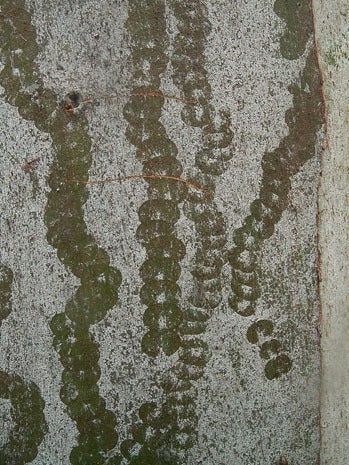
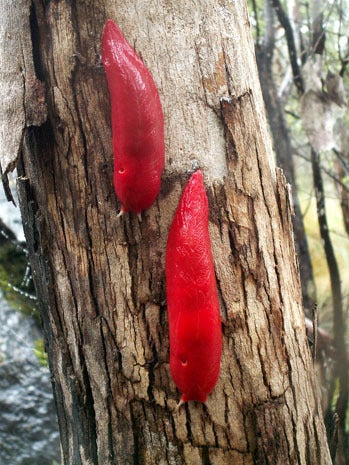
The slugs hide in leaf litter during the day and emerge at night to climb tree trunks to feed on lichens growing on the bark.
NSW Office of Environment and Heritage
The pink slugs are part of a family of slugs that have only one pair of tentacles, while most snails and slugs have two.
NSW Office of Environment and Heritage
Kaputar pink slug feeding trails
NSW Office of Environment and Heritage
The New South Wales Scientific Committee has recently taken steps to have the Mount Kaputar snail and slug community recognized as an endangered ecological community under the NSW Threatened Species Conservation Act.