Reuters
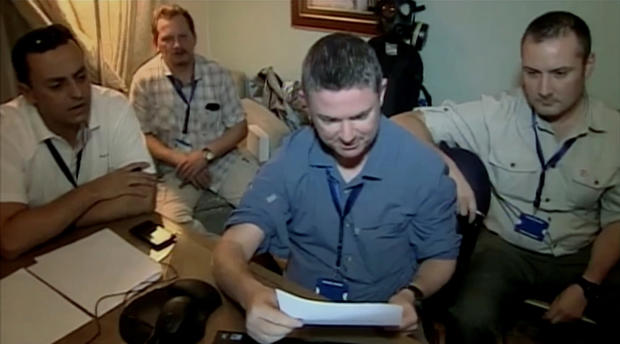
Weapons investigators from the Organization for the Prohibition of Chemical Weapons (OPCW) are seen in a frame grab from video as they read a message inside their Damascus hotel from their director general Ahmet Uzumcu congratulating them after the organization won the Nobel Peace Prize, Oct. 11, 2013.
The global chemical weapons watchdog charged with overseeing destruction of Syria's chemical weapons stockpile during a civil war won the 2013 Nobel Peace Prize.
The OPCW, a relatively small organization with a modest budget, dispatched its experts after a sarin gas attack killed more than 1,400 people in August. Their deployment, supported by the United Nations, helped avert a U.S. strike against President Bashar al-Assad.
OPCW
Guus Schoonewille/AFP/Getty Images
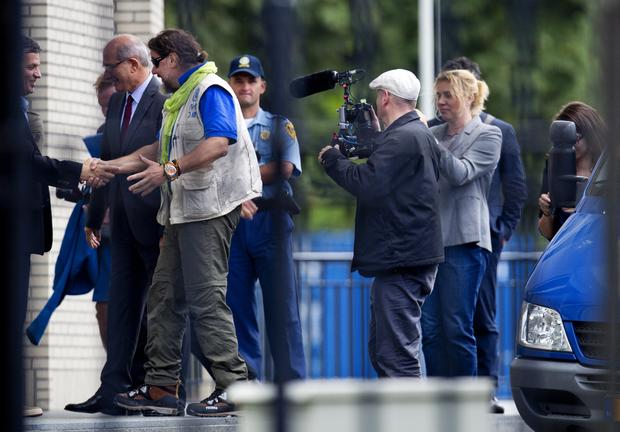
United Nations inspectors arrive at the headquarters of the Organization for the Prohibition of Chemical Weapons (OPCW), in The Hague, on Aug. 31, 2013.
OPCW
Guus Schoonewille/AFP/Getty Images
United Nations inspectors arrive in a van at the headquarters of the Organization for the Prohibition of Chemical Weapons (OPCW), in The Hague, Aug. 31, 2013.
OPCW
Christof Stache/AFP/Getty Images
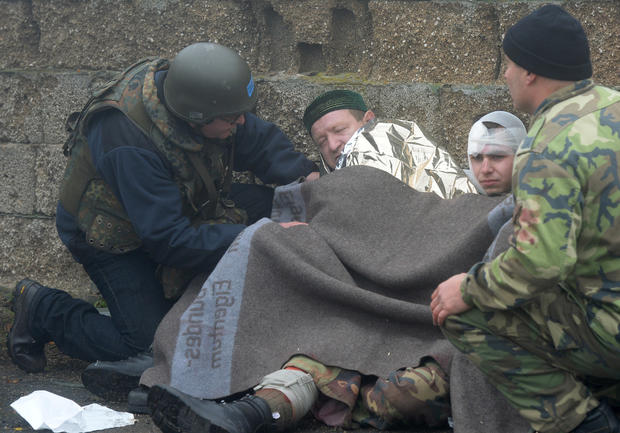
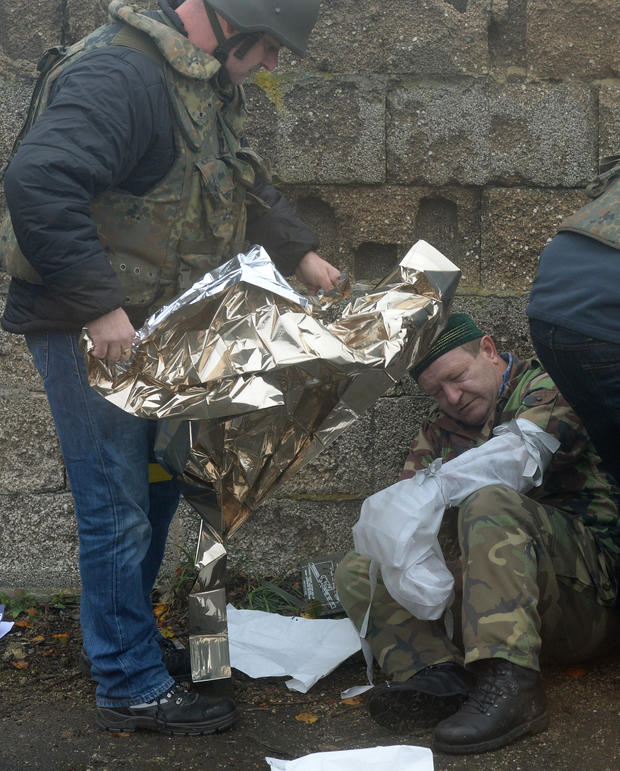
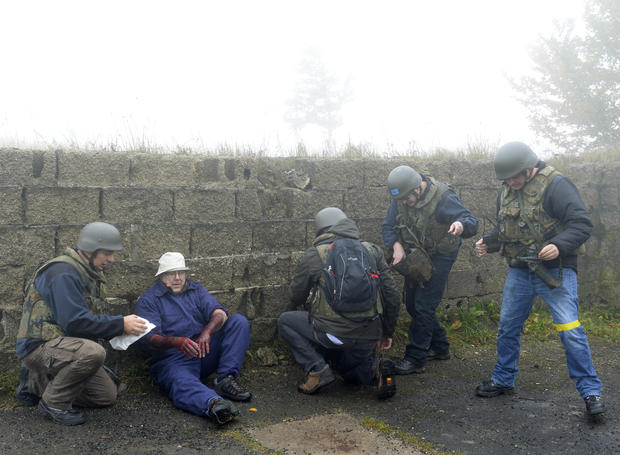
Apprentice chemical weapons inspectors of the United Nations and extras take part in an exercise during the education of OPCW inspectors at the German army Bundeswehr training area in Wildfelecken, southern Germany, Oct. 16, 2013.
OPCW
Christof Stache/AFP/Getty Images
Apprentice chemical weapons inspectors of the United Nations and extras take part in an exercise during the education of OPCW inspectors at the German army Bundeswehr training area in Wildfelecken, southern Germany, Oct. 16, 2013.
OPCW
Christof Stache/AFP/Getty Images
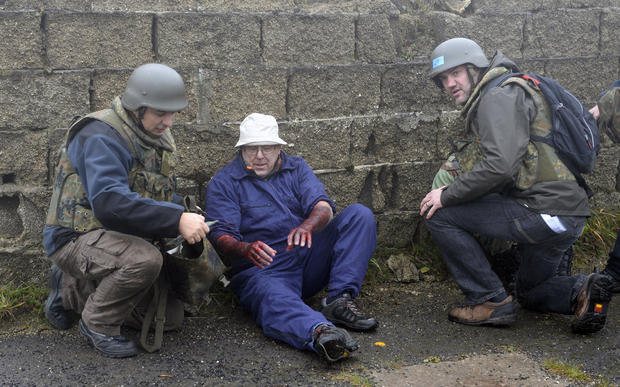
Chemical weapons inspectors of the United Nations take part in an exercise during the education of OPCW inspectors at the German army Bundeswehr training area in Wildfelecken, southern Germany, Oct.16, 2013.
OPCW
Christof Stache/AFP/Getty Images
Apprentice chemical weapons inspectors of the United Nations take part in an exercise during the education of OPCW inspectors at the German army Bundeswehr training area in Wildfelecken, southern Germany, Oct. 16, 2013.
OPCW
Philipp Guelland/AFP/Getty Images
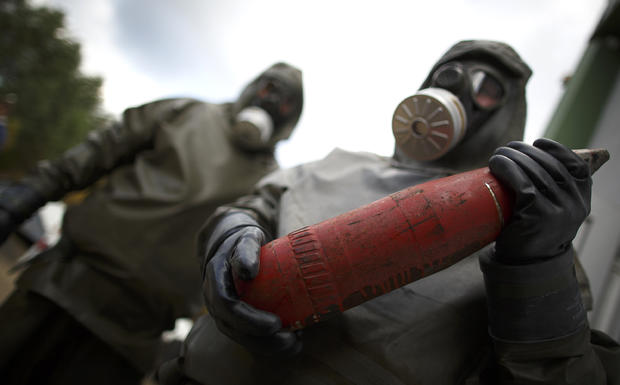
Workers in protective suits hold a dummy grenade during a demonstration in a chemical weapons disposal facility at GEKA, in Munster, northern Germany, Oct. 30, 2013.
OPCW
Philipp Guelland/AFP/Getty Images
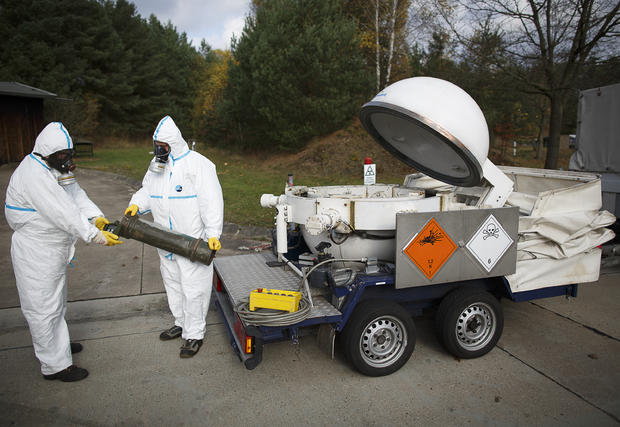
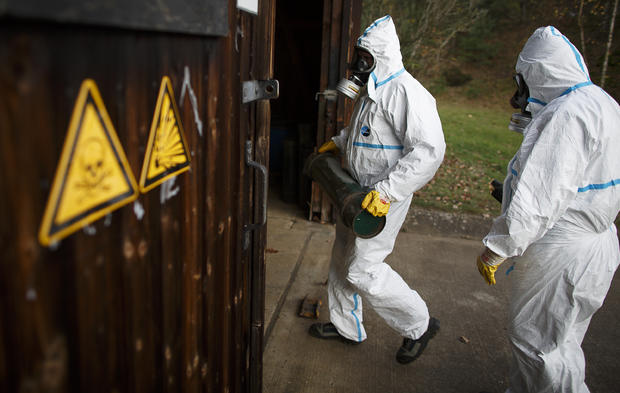
Employees in protective clothing unload a dummy grenade during a demonstration in a chemical weapons disposal facility at GEKA, in Munster, northern Germany, Oct. 30, 2013.
OPCW
Philipp Guelland/AFP/Getty Images
Employees in protective clothing carry a dummy grenade during a demonstration in a chemical weapons disposal facility at GEKA, in Munster, northern Germany, Oct. 30, 2013.
OPCW
Philipp Guelland/AFP/Getty Images
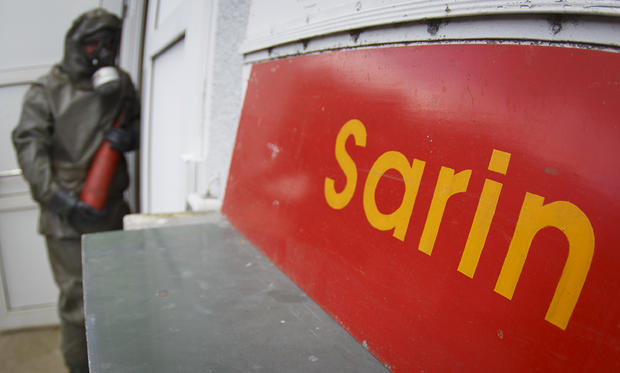
An employee in protective gear prepares to dismantle a dummy grenade next to a warning sign reading "Sarin," which was put up for illustrational purposes, during a demonstration in a chemical weapons disposal facility at GEKA, in Munster, northern Germany, Oct. 30, 2013.
OPCW
Philipp Guelland/AFP/Getty Images
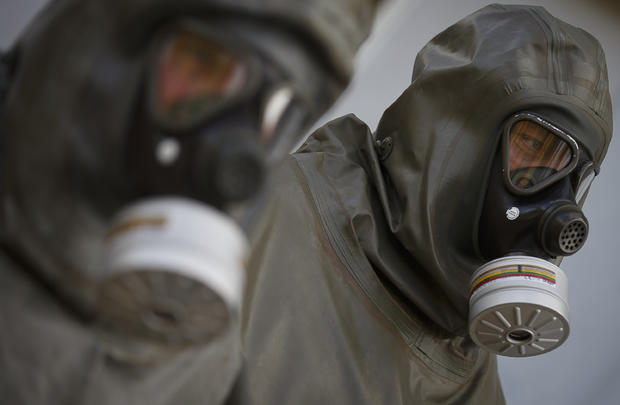
Employees in protective gear are seen during a demonstration in a chemical weapons disposal facility at GEKA, in Munster, northern Germany, Oct. 30, 2013.
OPCW
Philipp Guelland/AFP/Getty Images
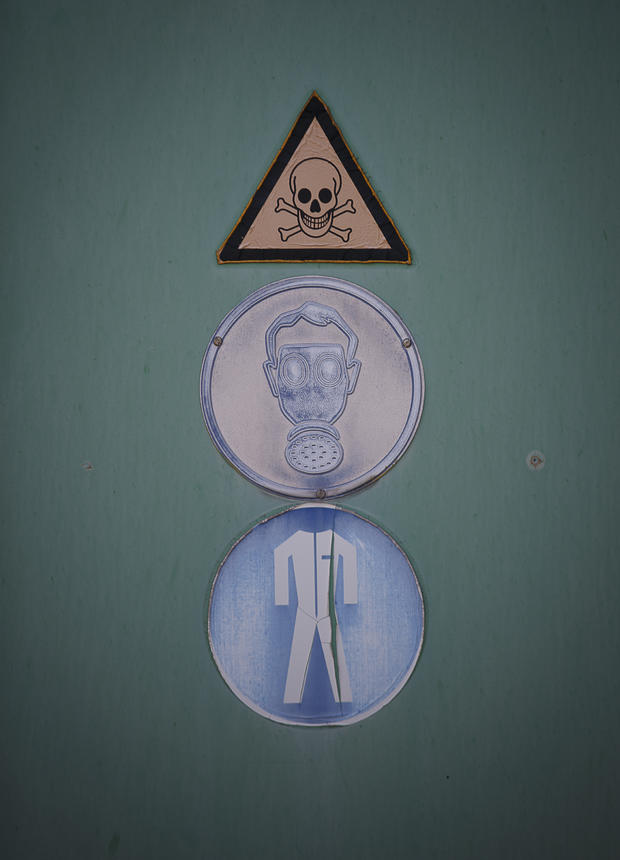
Warning sign are seen on a door during a demonstration in a chemical weapons disposal facility at GEKA, in Munster, northern Germany, Oct. 30, 2013.
OPCW
Philipp Guelland/AFP/Getty Images
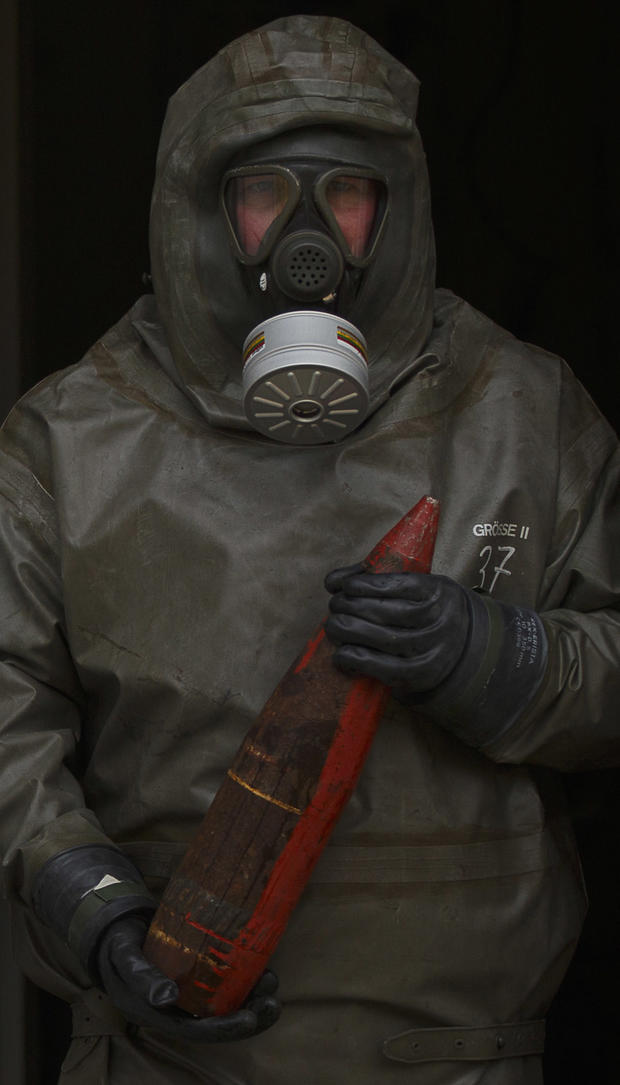
An employee in protective clothing holds a dummy grenade during a demonstration in a chemical weapons disposal facility at GEKA (Gesellschaft zur Entsorgung von chemischen Kampfstoffen und Ruestungsaltlasten) in Munster, northern Germany, on October 30, 2013. The state-owned GEKA is a reference laboratory for the Organsation for the Prohibition of Chemical Weapons (OPCW).
OPCW
Phillip Guelland/AFP/Getty Images
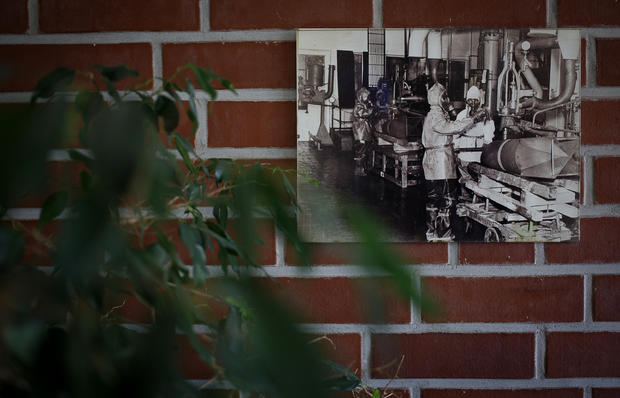
A historical photograph showing the dismantling of chemical weapons is seen during a demonstration in a chemical weapons disposal facility at GEKA (Gesellschaft zur Entsorgung von chemischen Kampfstoffen und Ruestungsaltlasten) in Munster, northern Germany, on October 30, 2013. The state-owned GEKA is a reference laboratory for the Organsation for the Prohibition of Chemical Weapons (OPCW).
OPCW
Phillip Guelland/AFP/Getty Images
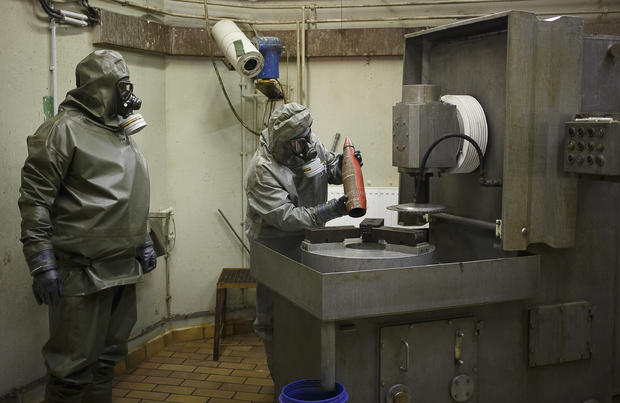
Employees in protective gear prepare to dismantle a dummy grenade during a demonstration in a chemical weapons disposal facility at GEKA (Gesellschaft zur Entsorgung von chemischen Kampfstoffen und Ruestungsaltlasten) in Munster, northern Germany, on October 30, 2013. The state-owned GEKA is a reference laboratory for the Organsation for the Prohibition of Chemical Weapons (OPCW).
OPCW
Fabrizio Bensch/Reuters
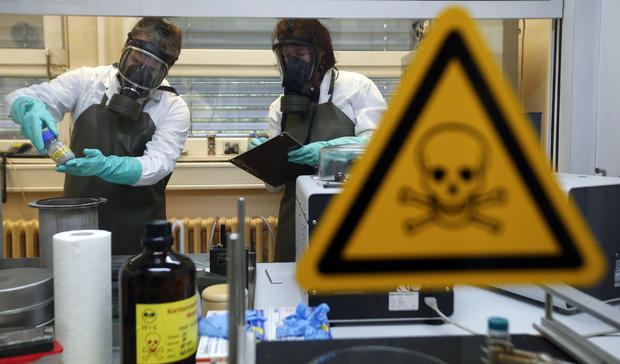
Employees of the Research Institute for Protective Technologies, Nuclear, Biological and Chemical Protection (WIS) inspect a dummy sample which is contaminated with a substance similar to the chemical weapon Sarin, during a demonstration in Munster October 15, 2013. The state-owned WIS is a reference laboratory for the Organisation for the Prohibition of Chemical Weapons (OPCW). Picture taken October 15, 2013.