Submarine Ring of Fire 2006 Exploration, NOAA Vents Program
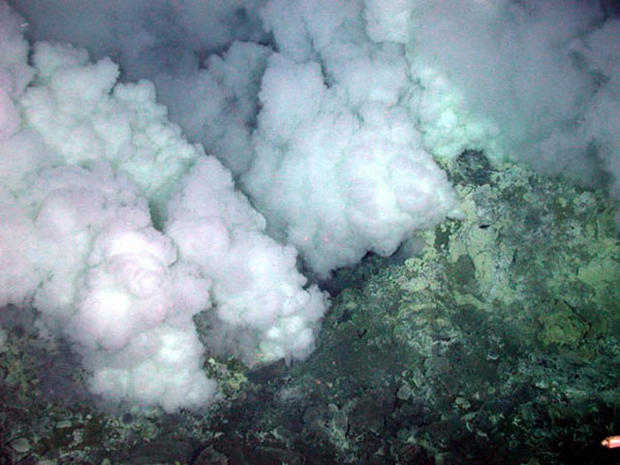
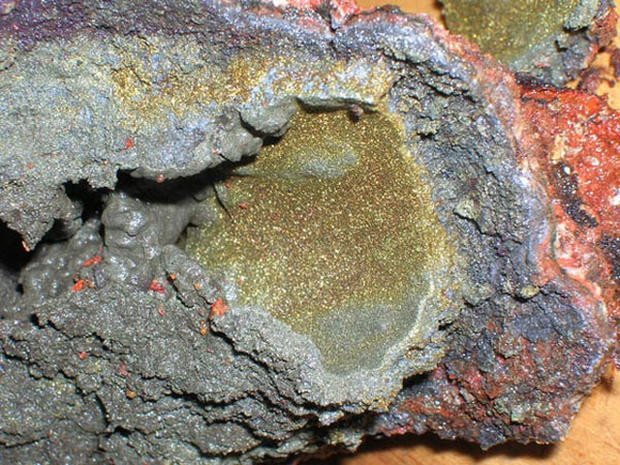
Small chimneys on the floor of Nikko caldera in the Mariana Trench.
Submarine Ring of Fire 2006 Exploration, NOAA Vents Program
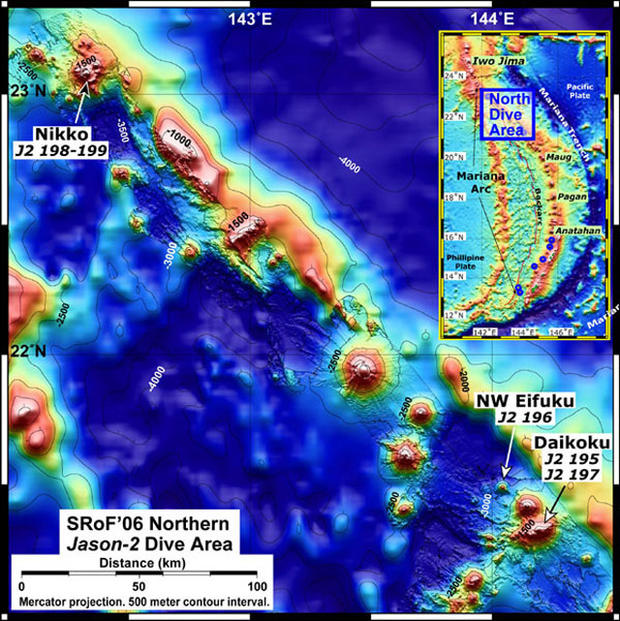
The northern Mariana arc submarine volcanoes. The Mariana Trench, located south of Japan and east of the Philippines, is the deepest part of the world's oceans, Marine scientists estimate its depth at around 36,201 feet.
Getty Images
Producer James Cameron is building a manned submersible that will film in the Mariana Trench. The footage may wind up used in the sequel to "Avatar."
Wikipedia
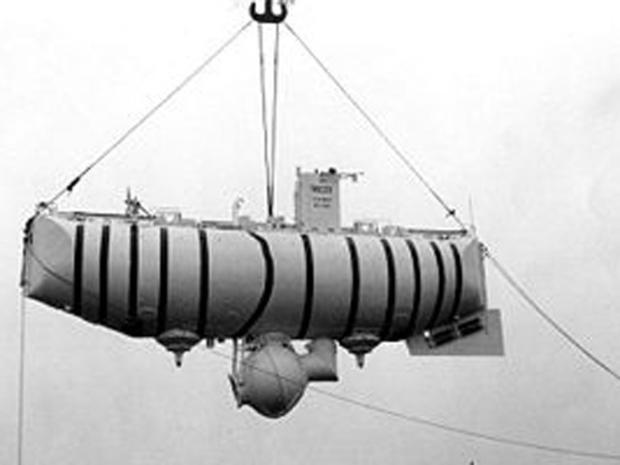
With its two-man crew of Don Walsh and Jacques Piccard, the Trieste reached the deepest point in the Mariana Trench - some 35,797 feet below the surface on January 23, 1960. It remains the only manned vessel to achieve that feat.
Fryer and Hussong (Proceedings of the Deep Sea Drilling Project
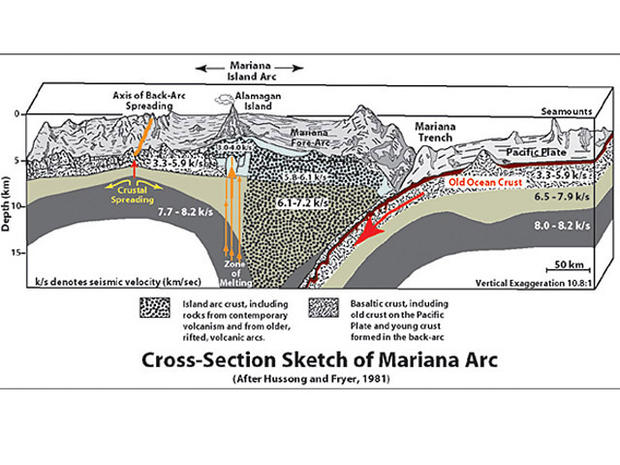
3-D sketch shows a cross-section of the Mariana Arc with some of its main structures and features. How deep is the trench? Consider this: If you dropped Mount Everest, the highest mountain on Earth, into the deepest part of the Mariana Trench, it would still be nearly 7,000 feet under water.
Submarine Ring of Fire 2006 Exploration, NOAA Vents Program
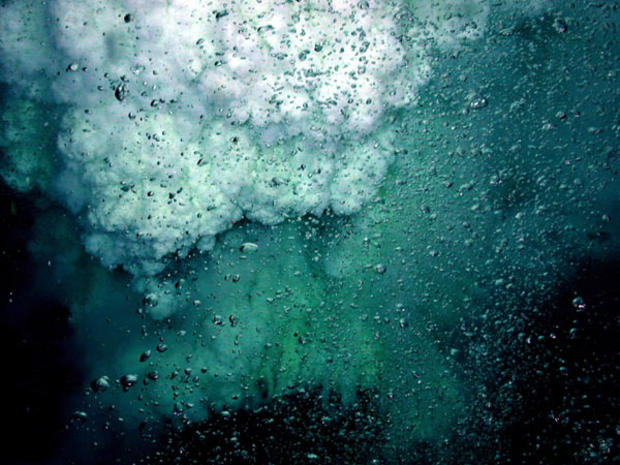
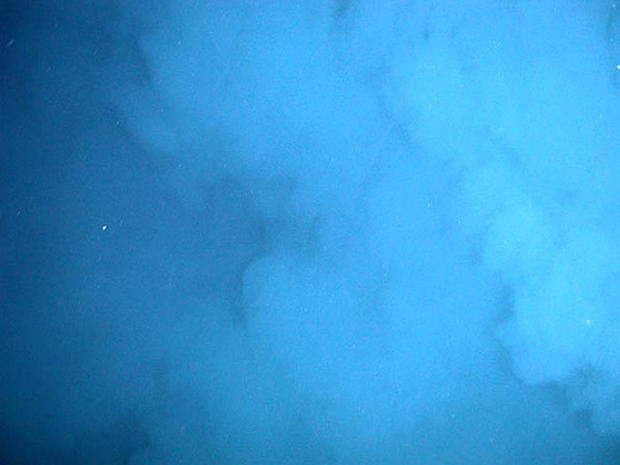
Underwater bubbles, probably carbon dioxide, released from a volcano in the Mariana Trench. Yellow parts of the plume are believed to contain droplets of molten sulfur.
Submarine Ring of Fire 2006 Exploration, NOAA Vents Program
Liquid carbon dioxide bubbles rise from the sea floor.
Submarine Ring of Fire 2006 Exploration, NOAA Vents Program
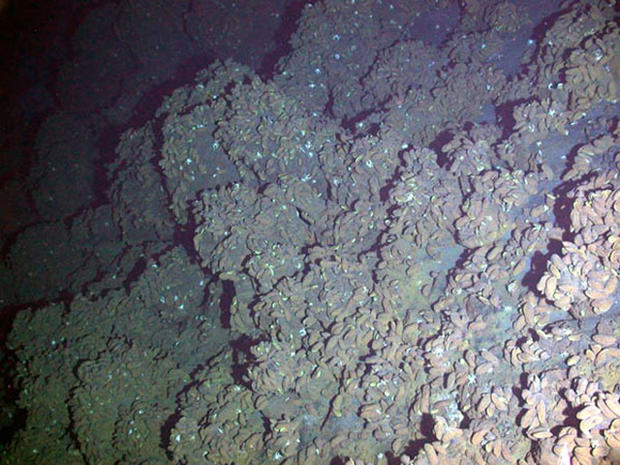
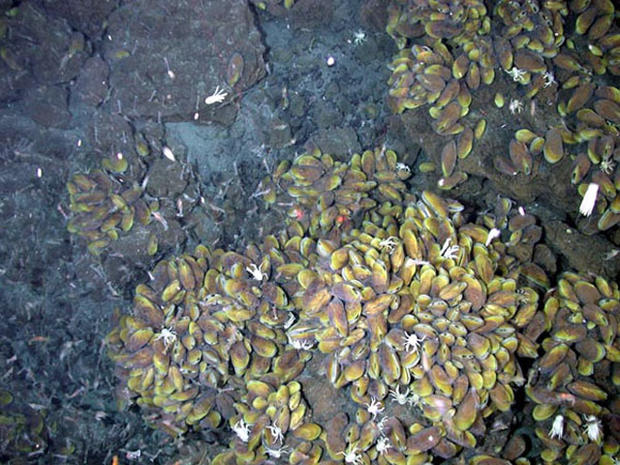
Scientists study the effect of lowered pH from volcanic CO2 emission on mussel communities that live on rocky ridges near acid-producing vents.
Submarine Ring of Fire 2006 Exploration, NOAA Vents Program
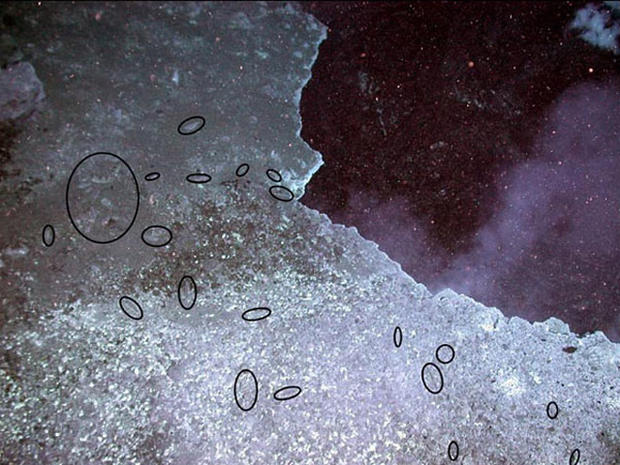
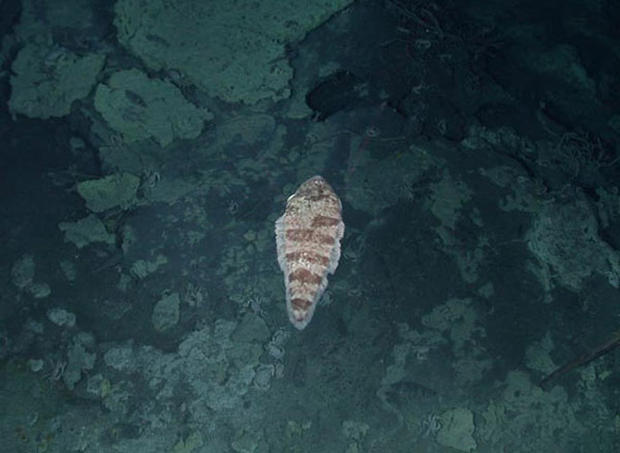
Tonguefish at the edge of the Sulfur Cauldron at Daikoku volcano.
Submarine Ring of Fire 2006 Exploration, NOAA Vents Program
A remotely operated vehicle photographed a tonguefish swimming in front of the camera (in the foreground).
Submarine Ring of Fire 2006 Exploration, NOAA Vents Program
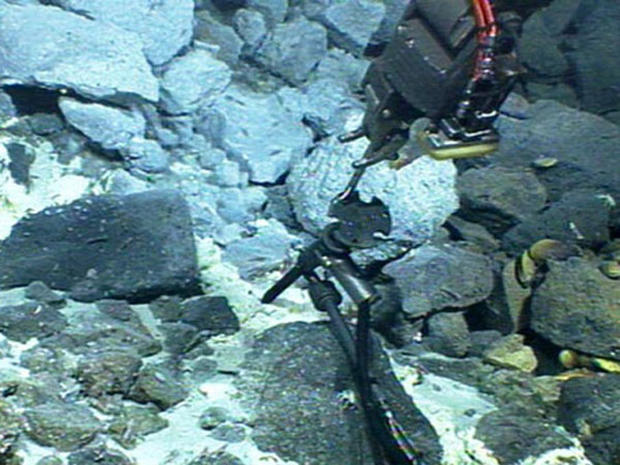
Marine biologists use hydrothermal fluid and particle sampler to sample hydrothermal water and microbes at NW Eifuku on the remotely operated vehicle.
Submarine Ring of Fire 2006 Exploration, NOAA Vents Program
Shells of dead mussels dissolve very quickly, but the community maintains a high density. Squat lobster and shrimp are also abundant at NW Eifuku.
Submarine Ring of Fire 2006 Exploration, NOAA Vents Program
Submarine Ring of Fire 2006 Exploration, NOAA Vents Program
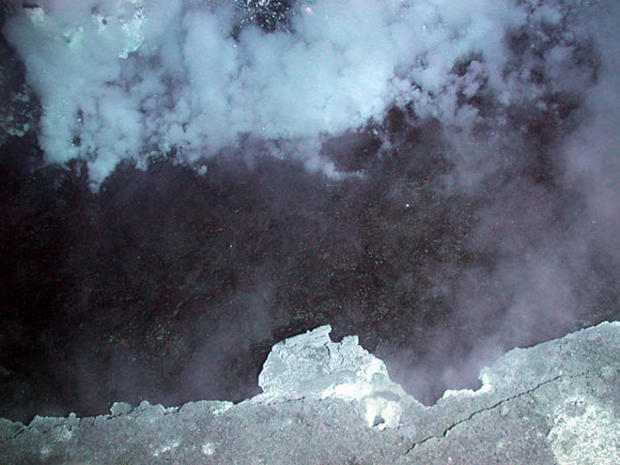
One of the craters at the summit of Daikoku is more than 325 ft deep and about 260 ft in diameter. A large plume of white fluid slowly rises out of it
Submarine Ring of Fire 2006 Exploration, NOAA Vents Program
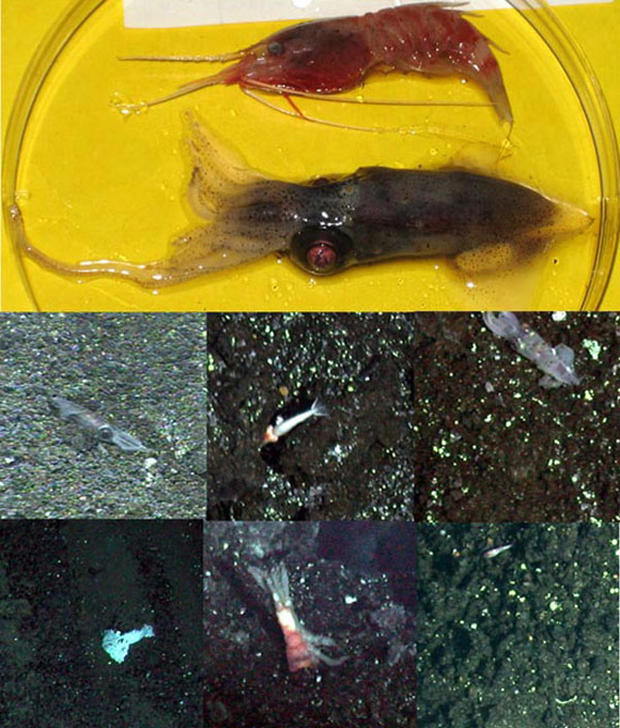
A collage of some of the dead animals on the sea floor, killed by volcanic plume which contained high amounts of sulfur. The top petri dish holds a squid and a open water shrimp - these are not vent species. The bottom images are the dead animals (shrimp, fish, and squid) on the sea floor
Submarine Ring of Fire 2006 Exploration, NOAA Vents Program
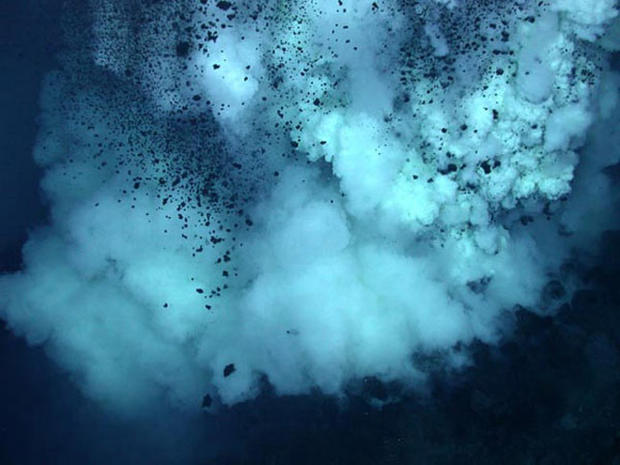
Called Brimstone Pit, the pressure of 1,837 feet of water over the site reduces the power of the explosive bursts. Also, the water quickly slows down the rocks and ash that are violently thrown out of the vent.
Submarine Ring of Fire 2006 Exploration, NOAA Vents Program
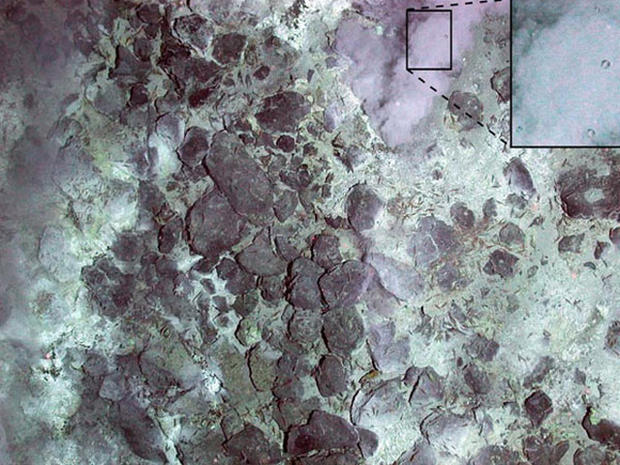
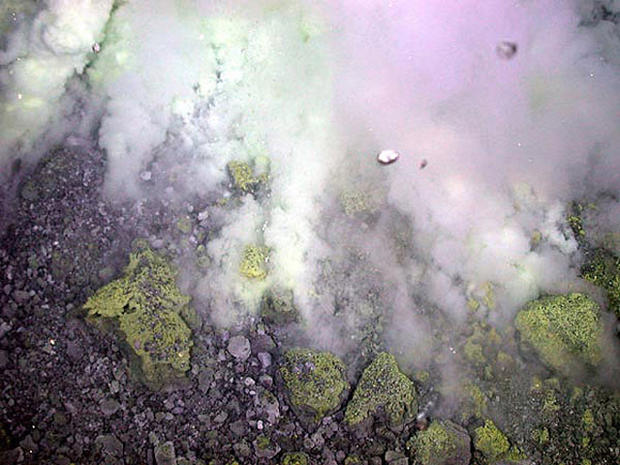
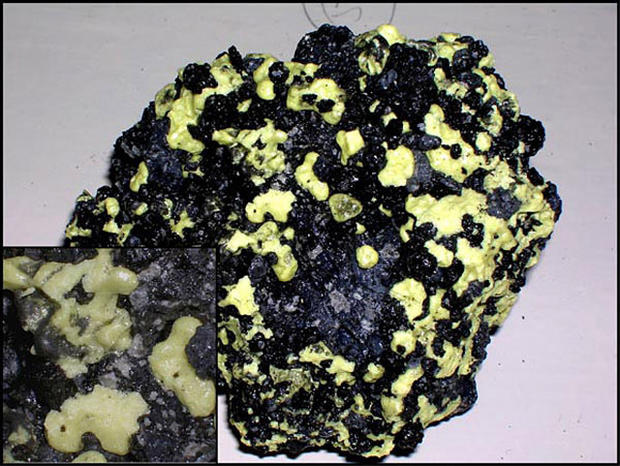
Close up of the front edge of lava flow. Note the large pieces of sulfur in the foreground, which have enveloped pieces of lava.
Submarine Ring of Fire 2006 Exploration, NOAA Vents Program
Newly-formed lava near Brimstone Pit
Verena Tunnicliffe. University of Victoria, Canada
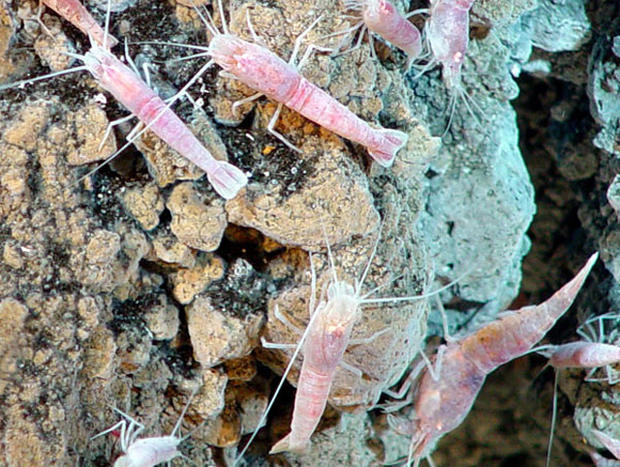
A species of shrimp found on the NW Rota-1 volcano has also been identified at the Loihi seamount, located off the coast of Hawaii
Submarine Ring of Fire 2006 Exploration, NOAA Vents Program
Don't get too close. This pond of molten sulfur was discovered at Daikoku volcano; the temperature of the molten sulfur was measured at 369 degrees Fahrenheit.
Submarine Ring of Fire 2006 Exploration, NOAA Vents Program
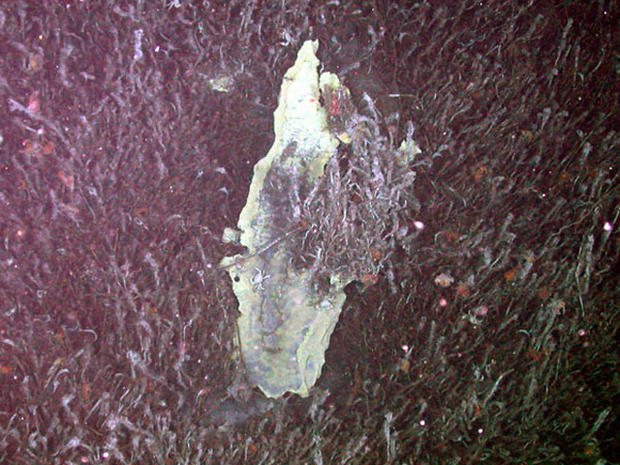
Inactive ornamented sulfur chimneys. This one is sitting on end in the middle of a huge field of tubeworms.
Submarine Ring of Fire 2006 Exploration, NOAA Vents Program
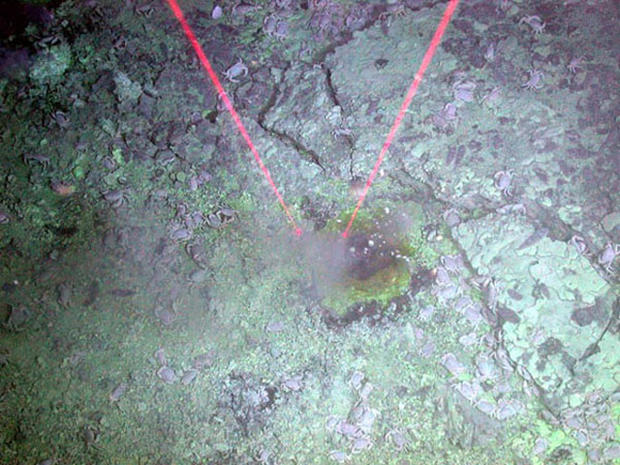
A pot of molten sulfur bubbles out of the sea floor in this area of sheets of sulfur crust. The red laser beam dots are about 4 inches apart.
Submarine Ring of Fire 2006 Exploration, NOAA Vents Program
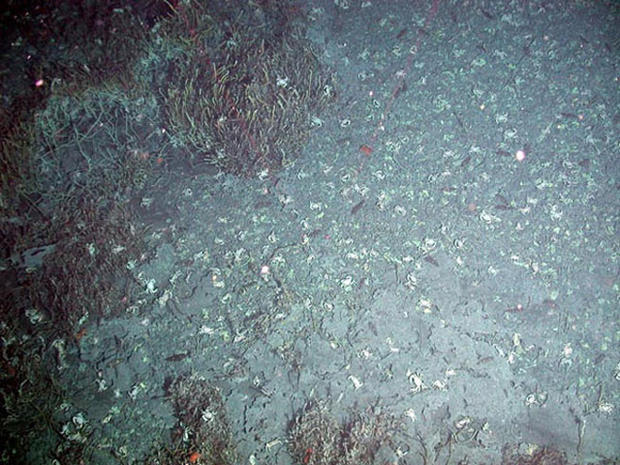
Tubeworm "bushes" hug the edge of the sulfur crust, which is covered with crabs and flatfish.
Submarine Ring of Fire 2006 Exploration, NOAA Vents Program
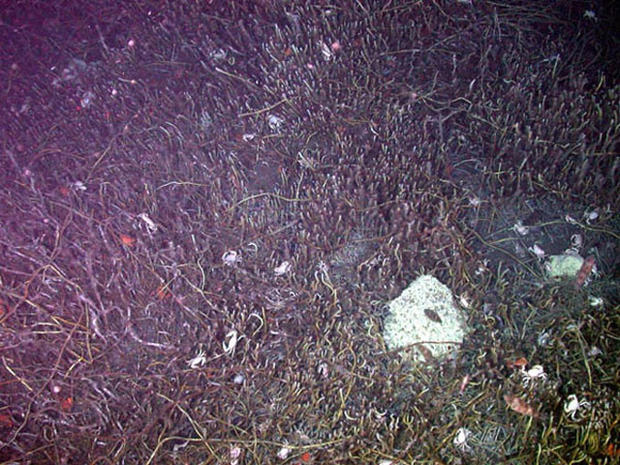
The sea floor in the summit crater is mostly covered by lush bushes of tubeworms in association with white crabs, flatfish, and shrimps.
Submarine Ring of Fire 2006 Exploration, NOAA Vents Program
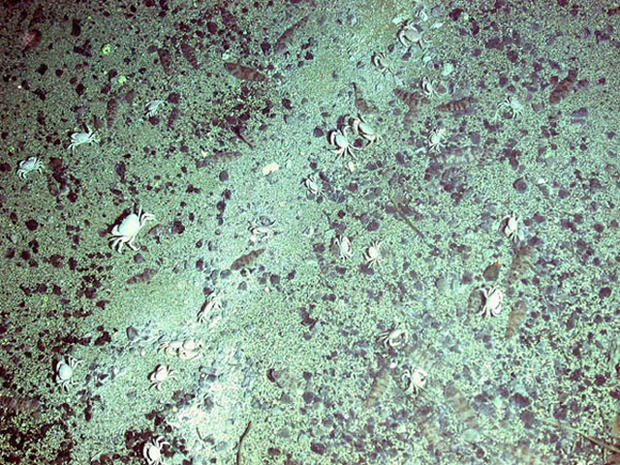
Tonguefish and crabs, which seems to thrive around the hydrothermal vents of the Mariana volcanoes, cover the sea floor in some areas.