AP/Junji Kurokawa
In Japan, March 11 marks the second anniversary of the earthquake and tsunami which devastated the northeastern Pacific coast of the country in 2011.
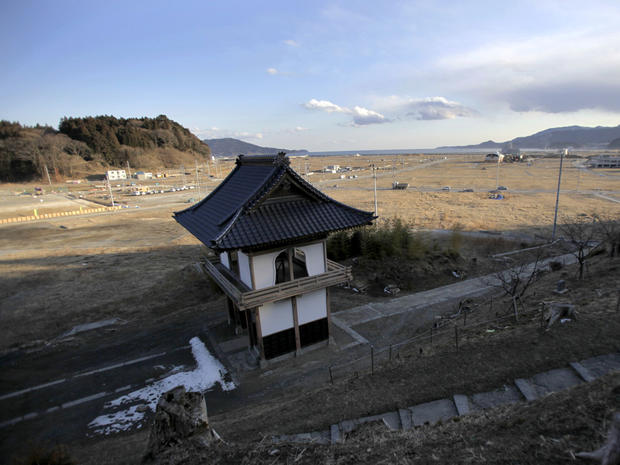
In this Feb. 22, 2013, photograph, a temple gate stands in Rikuzentakata, Iwate Prefecture, Japan, an area that was devastated by the 2011 disaster.
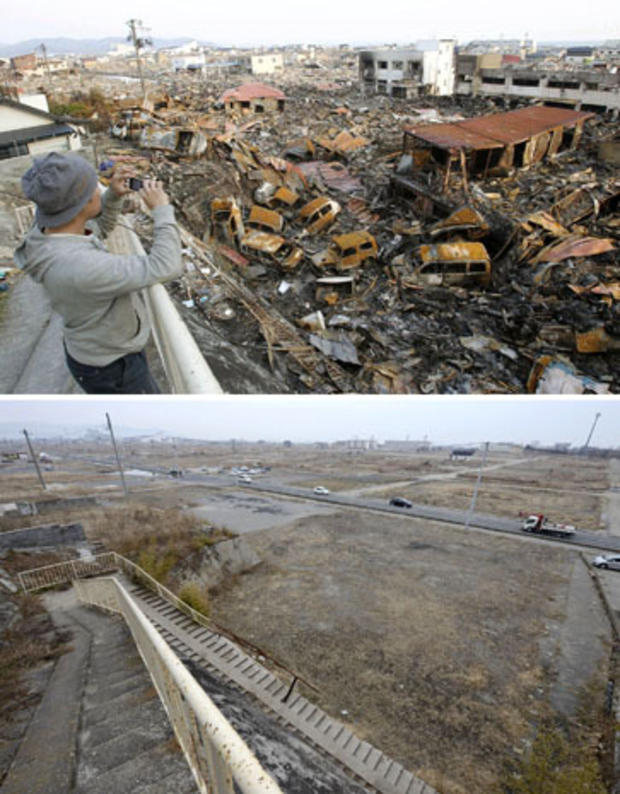
Japan's progress of rebuilding from the tsunami that thundered over coastal sea walls, sweeping entire communities away, is mainly measured in barren foundations and empty spaces. Clearing of forests on higher ground due to be leveled to make space for relocating survivors has barely begun.
AP/Kyodo News
This combination photo shows a view of Ishinomaki, Miyagi Prefecture, Japan, March 19, 2011, top, and March 1, 2013, bottom.
AP/Junji Kurokawa
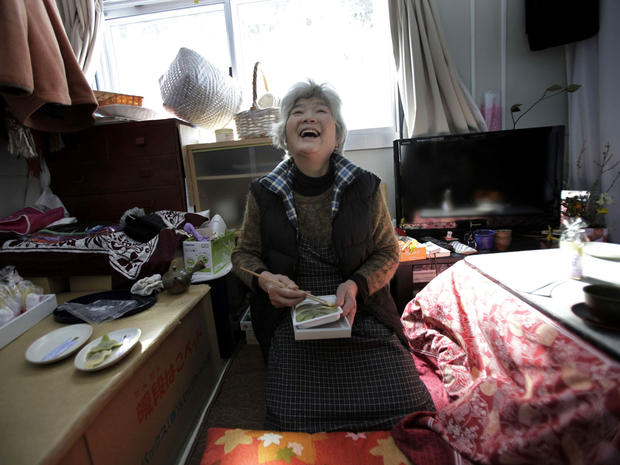
Hide Sato, 83, a survivor of the 2011 earthquake and tsunami, smiles as she sits inside her room at a temporary housing complex in Rikuzentakata, Iwate Prefecture, Japan, Feb. 23, 2013. Like tens of thousands of other Japanese who lost everything in the tsunami that pulverized much of Japan's northeastern coast, Sato is living in one-room temporary housing.
AP/Kyodo News
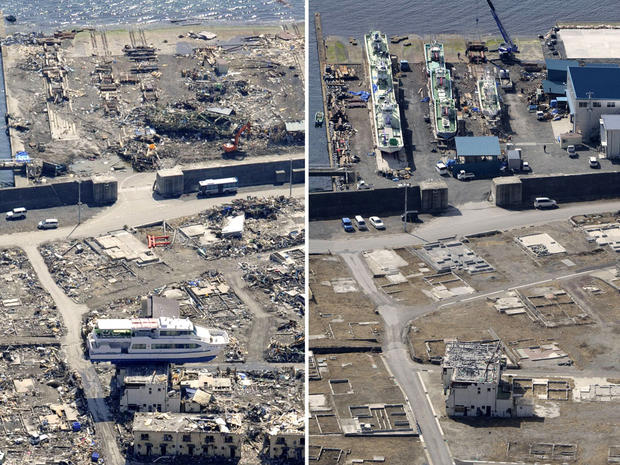
This combination photo shows an aerial view of Otsuchi, Iwate Prefecture, Japan, April 10, 2011, left, and March 4, 2013, right.
AP/Issei Kato
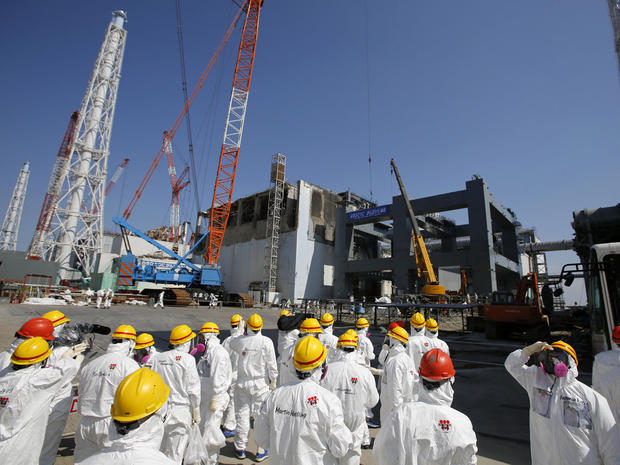
Journalists wearing protective gear are escorted to the damaged No. 4 reactor building and a foundation under construction that will store the reactor's melted fuel rods, at Tokyo Electric Power Co.'s crippled Fukushima Dai-ichi nuclear power plant in Okuma, Fukushima Prefecture, Japan, March 6, 2013.
Some 110,000 people living around the nuclear plant were evacuated after the massive March 11, 2011, earthquake and tsunami knocked out the plant's power and cooling systems, causing meltdowns in three reactors and spewing radiation into the surrounding air, soil and water.
AP/Issei Kato
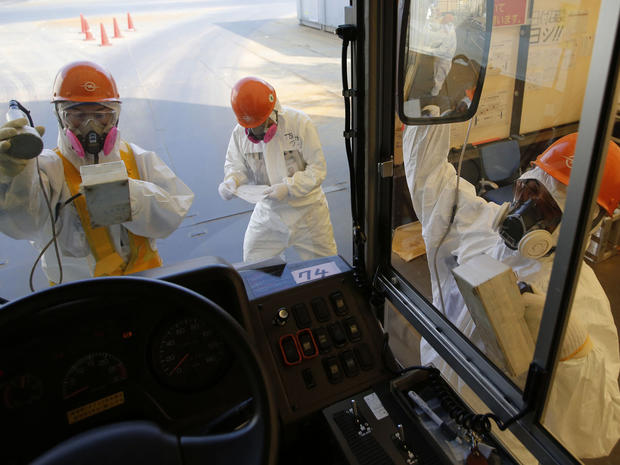
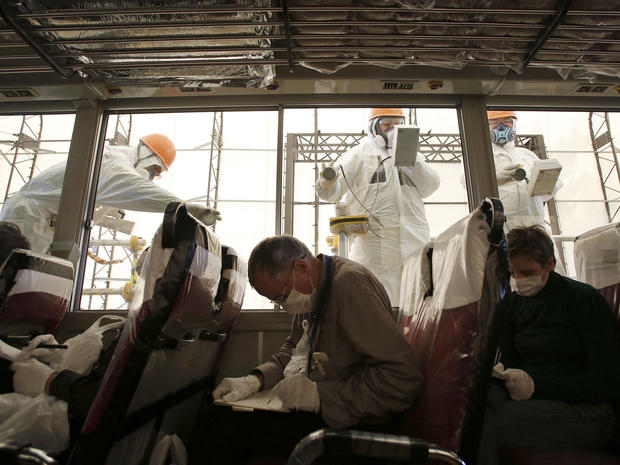
Workers carry out radiation screening on a bus for a media tour at the tsunami-crippled Fukushima Dai-ichi nuclear power plant March 6, 2013.
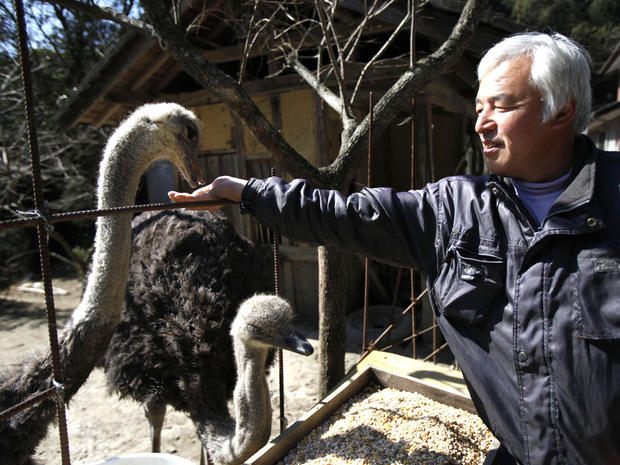
Farmer Naoto Matsumura feeds ostriches at his farm in Tomioka, inside the nuclear exclusion zone surrounding the Fukushima Dai-ichi nuclear plant, March 6, 2013. Matsumura is the only resident to have stayed in Tomioka for the two years since an earthquake and tsunami caused the plant to spew radiation into the air, contaminating a large area surrounding it.
AP/Junji Kurokawa
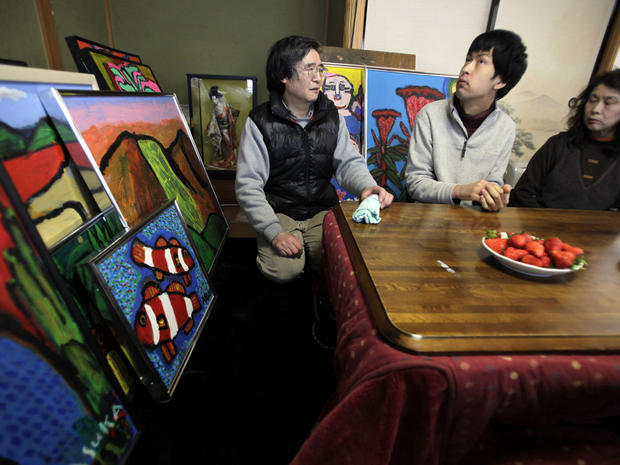
Artist Minoru Tasaki, his disabled son Asuka, center, and wife Mieko sit together with Asuka's paintings in Rikuzentakata, Iwate Prefecture, Japan, Feb. 23, 2013. Tasaki and Asuka's works were swept away by the tsunami. For now, their work is on hold as they prepare to move from their temporary rented hillside home to another district.
AP/Issei Kato
Workers carry out radiation screening on a bus for a media tour at the tsunami-crippled Fukushima Dai-ichi nuclear power plant March 6, 2013.
AP/Kyodo News
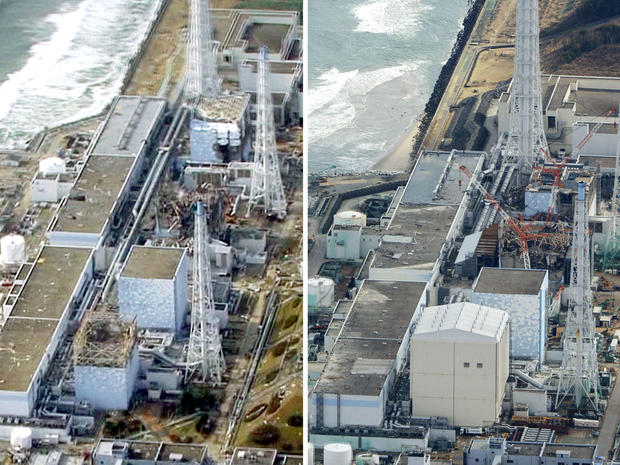
This combination photo shows reactor buildings in the tsunami-ravaged Fukushima Dai-ichi nuclear power plant April 26, 2011, left, and March 3, 2013, right.
AP/Junji Kurokawa
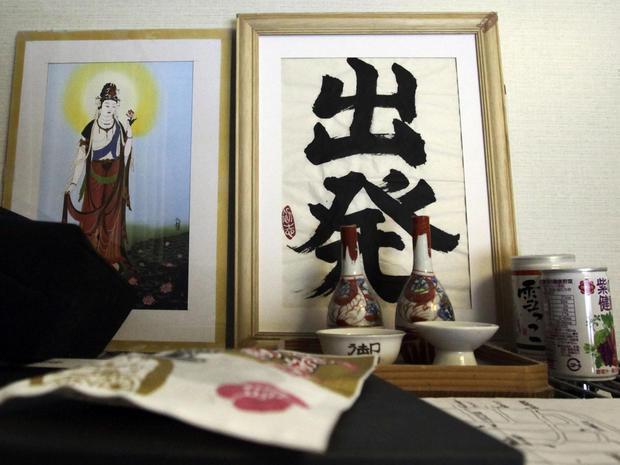
A picture of the Deity of Mercy, left, and calligraphy reading "Departure," are displayed in tsunami survivor Hide Sato's room at a temporary housing complex in Rikuzentakata, Iwate Prefecture, Japan, Feb. 23, 2013.
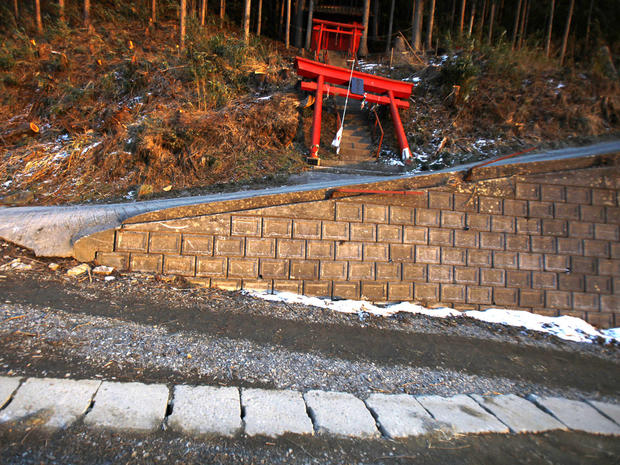
A broken shrine gate, damaged in the 2011 earthquake and tsunami which devastated the area, lays untouched in Minamisanriku, Miyagi Prefecture, Japan, Feb. 21, 2013.
AP/Junji Kurokawa
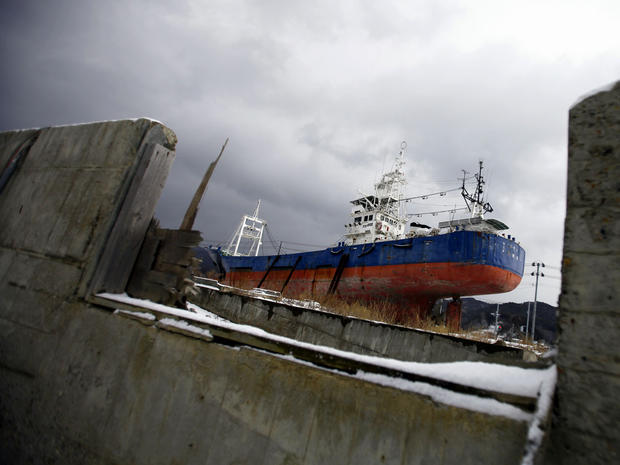
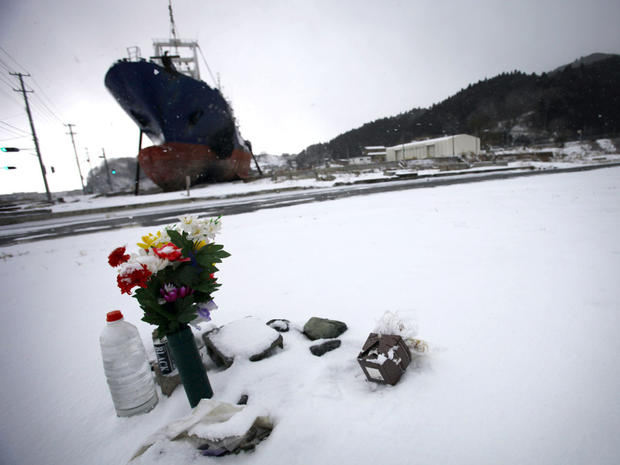
A fishing boat that washed ashore during the March 11, 2011, earthquake and tsunami sits in Kesennuma Feb. 24, 2013.
AP/Issei Kato
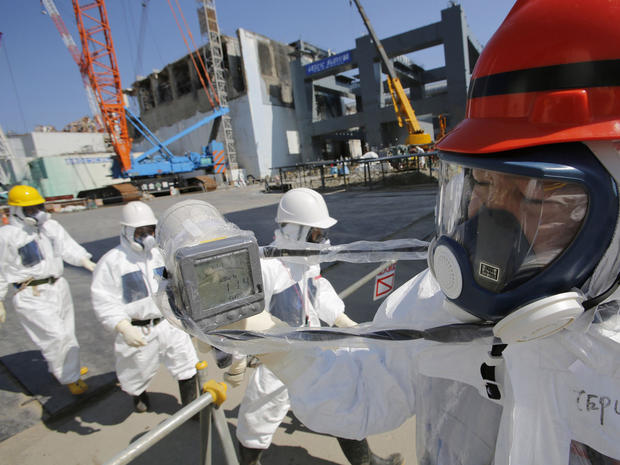
A radiation monitor indicates 114.00 microsieverts per hour near the building that houses the No. 4 reactor at the tsunami-crippled Fukushima Dai-ichi nuclear power plant in Okuma, Fukushima Prefecture, Japan, March 6, 2013.
AP/Issei Kato
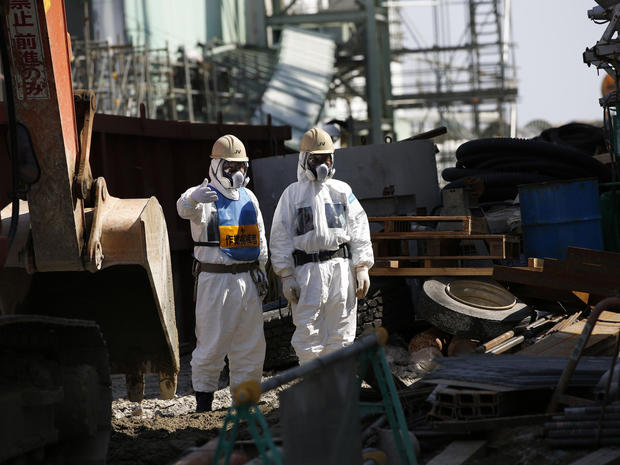
Workers wearing protective suits and masks stand near the No. 4 reactor at the tsunami-crippled Fukushima Dai-ichi nuclear power plant March 6, 2013.
AP/Kyodo News
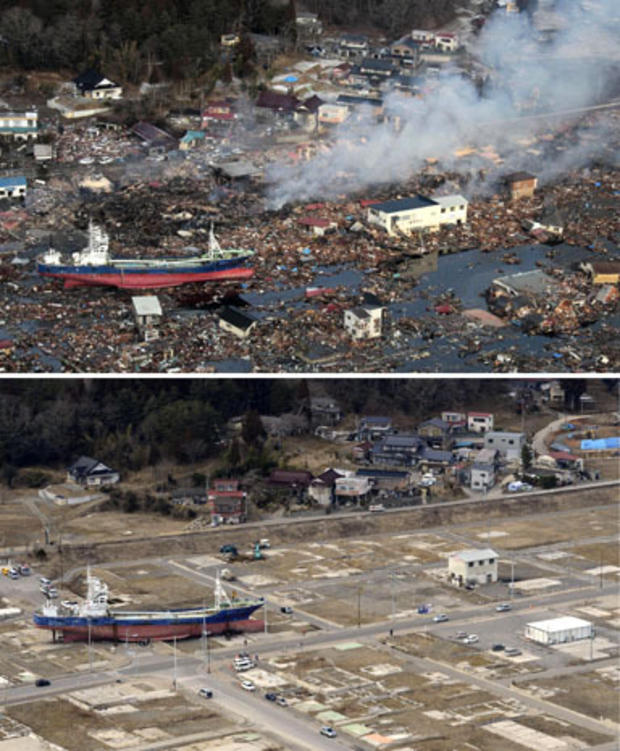
This combination photo shows an aerial view of Kesennuma, Miyagi Prefecture, Japan, March 12, 2011, top, and March 4, 2013, bottom. On the left is the No. 18 Kyotokumaru fishing vessel that was swept away from a port by the tsunami.
AP/Junji Kurokawa
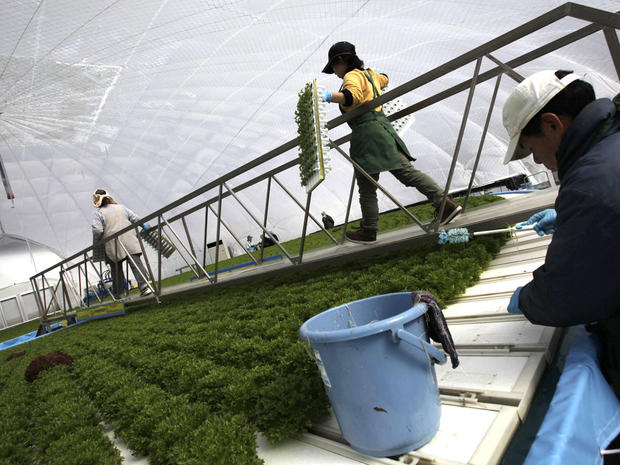
Workers who survived the earthquake and tsunami take lettuce seedlings to plant at a domed greenhouse in Rikuzentakata, Iwate Prefecture, Japan, Feb. 22, 2013. Few businesses have rebuilt in the worst-hit areas of the disaster zone and uncertainty over prospects for reconstruction is deterring most outsiders from considering investments there. Granpa Farms, one of few companies to start here, is an agrotechnology company from Kanagawa that has built eight dome-shaped high-tech greenhouses for hydroponic farming of lettuce and other greens.
Flowers and a bottle of water are placed to pay tribune to the victims of the 2011 earthquake and tsunami near a fishing boat that was washed ashore in Kesennuma, Japan, Feb. 24, 2013.