Stanford (and caption credits)
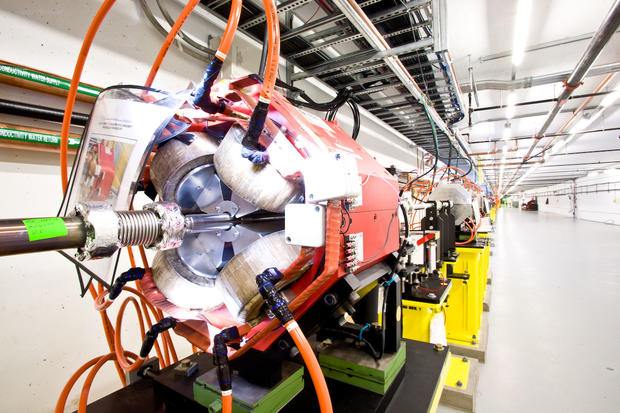
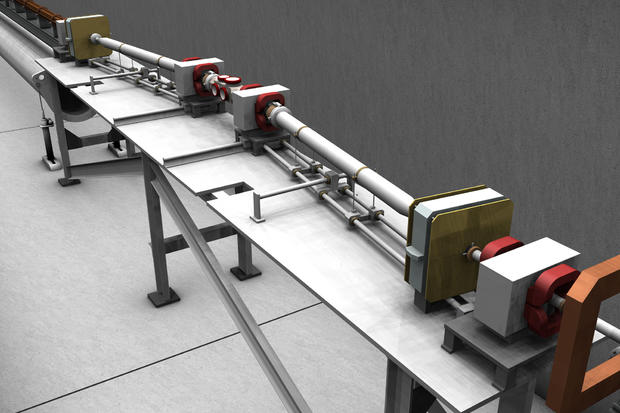
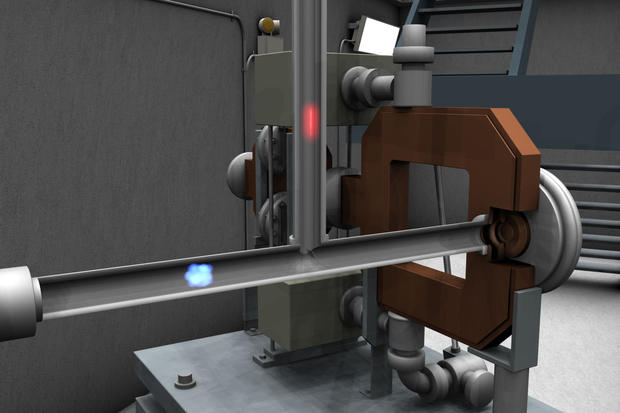
The quadruple magnet helps the electron beam maintain its precise shape before it enters the undulator magnet.
Stanford (and caption credits)
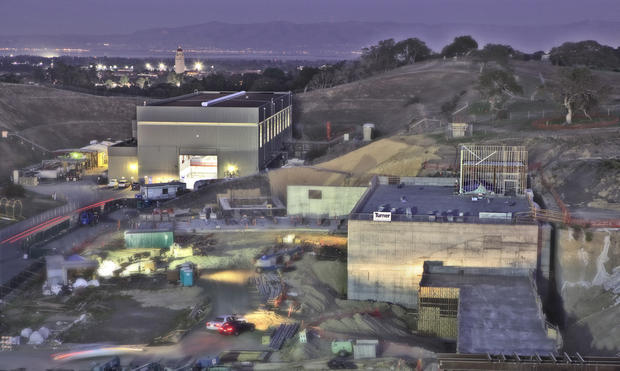
LCLS construction site, with lights of San Francisco on the horizon.
Stanford (and caption credits)
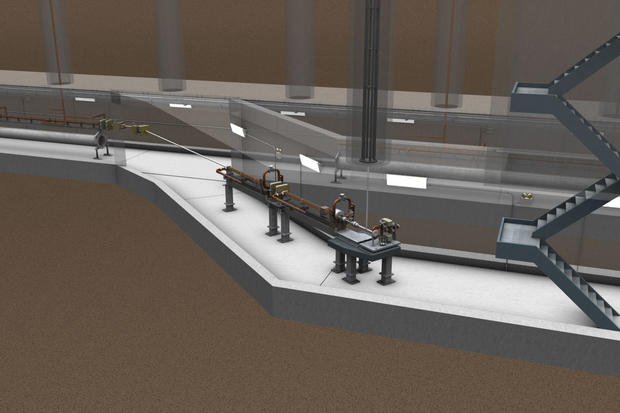
The Front End Enclosure that later housed diagnostic equipment for monitoring the x-ray beam.
Stanford (and caption credits)
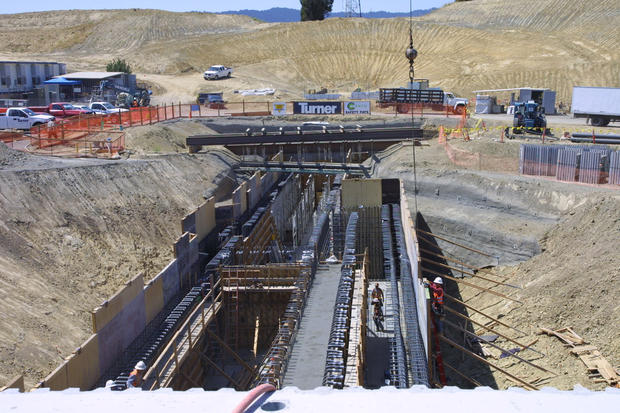
: Meter-thick concrete walls used in the construction to shield humans from x-rays.
Stanford (and caption credits)
LCLS injector which provides a pulse for the firing of the injector gun.
Stanford (and caption credits)
Together, the injector gun and the accelerator section combine to create x-ray laser light.
Stanford (and caption credits)
Before x-rays can be generated, the LCLS uses "bunch compressors" to focus, or tighten, the electron beam.
Stanford (and caption credits)
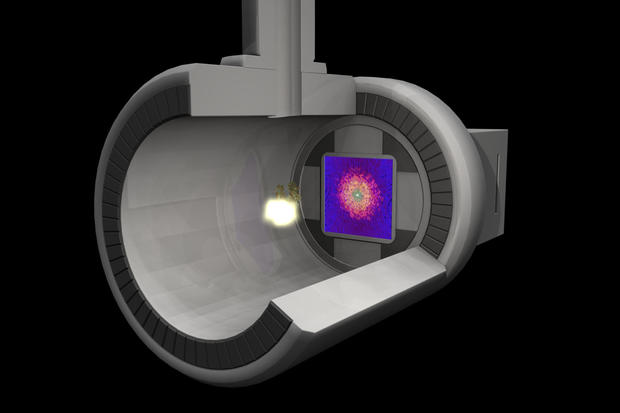
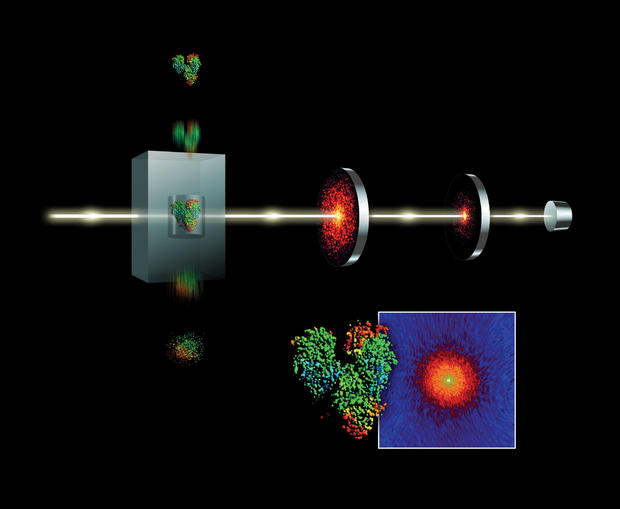
Artist's conception of device that could take holographic images of single molecules.
Stanford (and caption credits)
A pulse of ultra-violet light (in red) from the main laser bounces off a mirror and onto the surface of the cathode gun. That produces a pulse of electrons (in blue).
Stanford (and caption credits)
3-D Holographic images of single molecules will get produced using ultrafast pulses of very intense hard x-rays.
Stanford (and caption credits)
An array of high-precision undulator magnets where x-ray beams are produced.
Stanford (and caption credits)
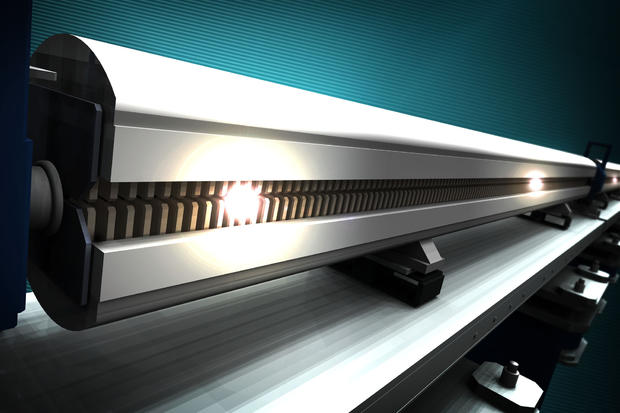
Rendering of single undulator magnet, which is about 2 meters long and weighs one ton.
Stanford (and caption credits)
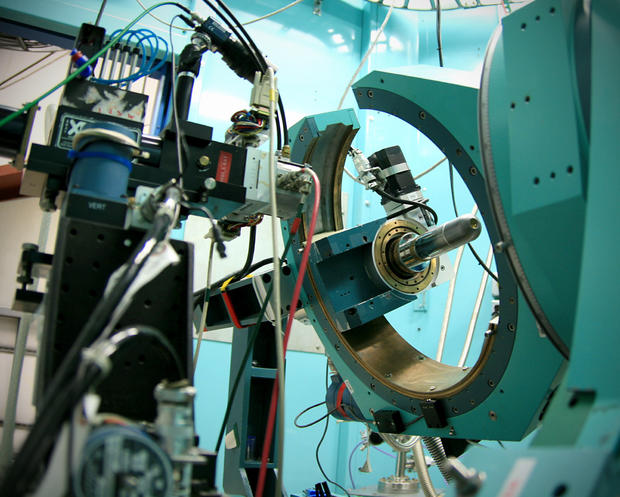
Sample holder mounted with a gonometer similar to the devices which will be used at the LCLS.
Stanford (and caption credits)
Stanford (and caption credits)
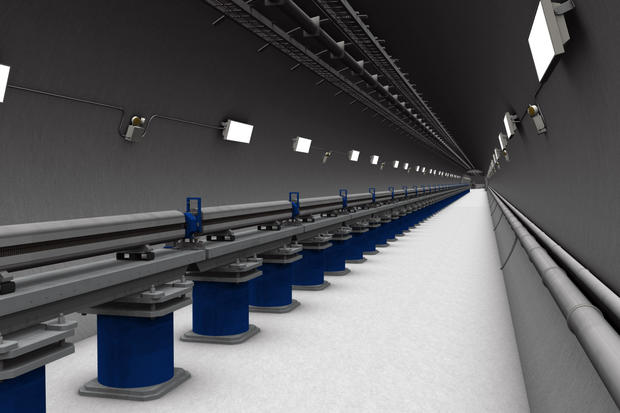
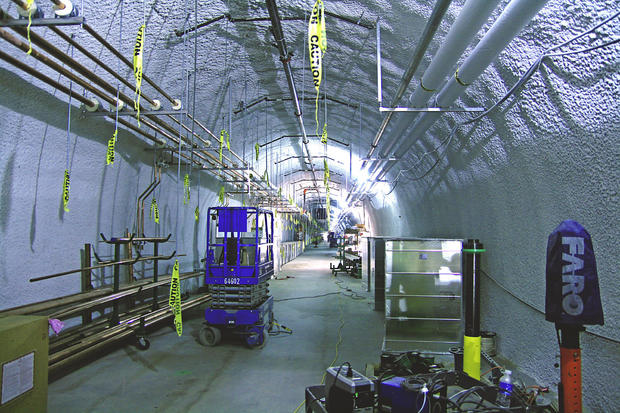
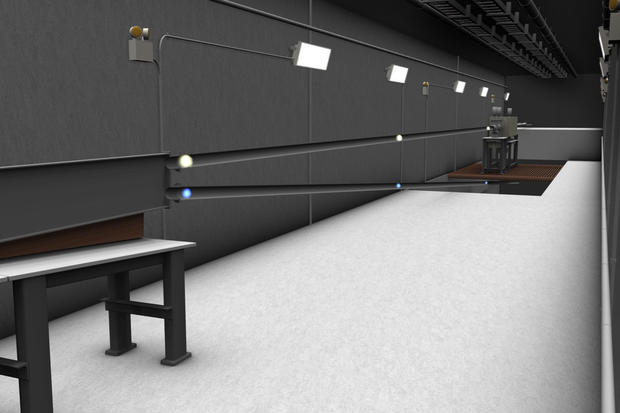
A look inside the Undulator Hall prior to installation of the undulator magnets.
Stanford (and caption credits)
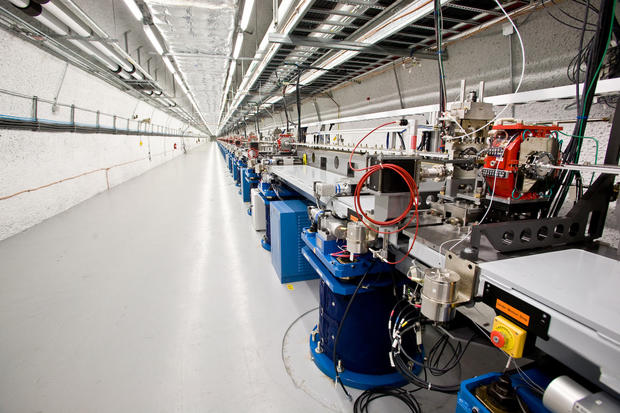
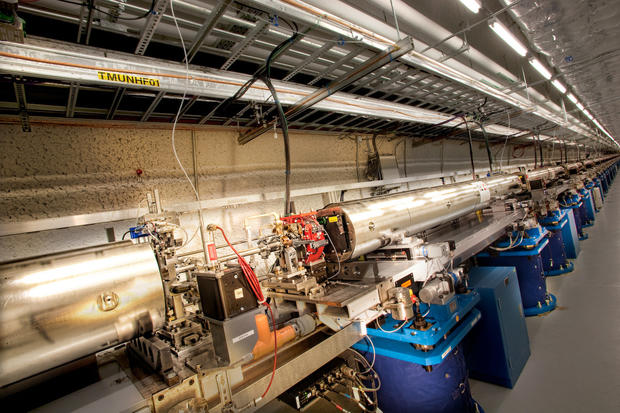
Only 12 of the 33 undulator magnets (silver-tone oblongs) were needed to create the first pulses of laser light
Stanford (and caption credits)
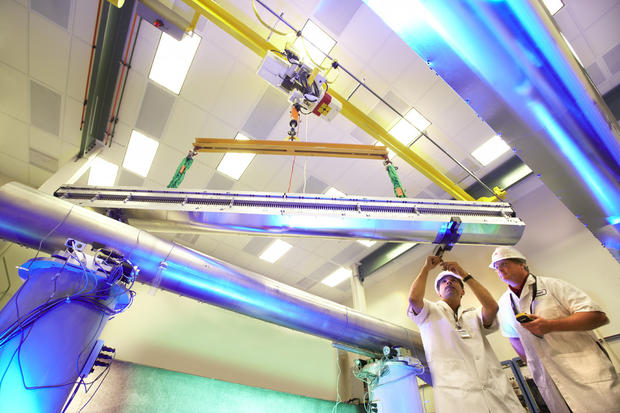
Engineers measure and calibrate the LCLS undulator magnets.
Stanford (and caption credits)
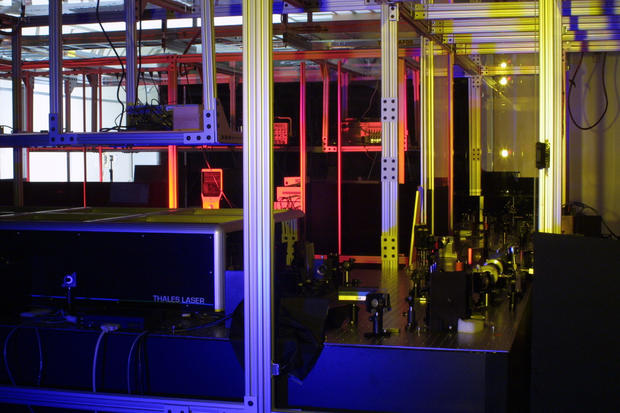
The main laser bay, which creates an initial pulse of ultraviolet light that gets converted to an electron beam by the injector gun housed 30 feet below.
Stanford (and caption credits)
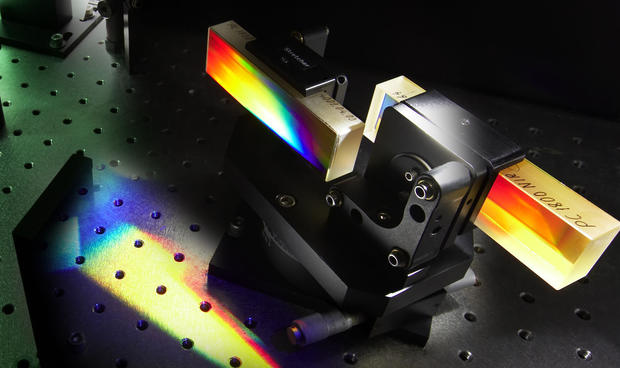
Example of laser setup experiment that LCLS can help conduct.
Stanford (and caption credits)
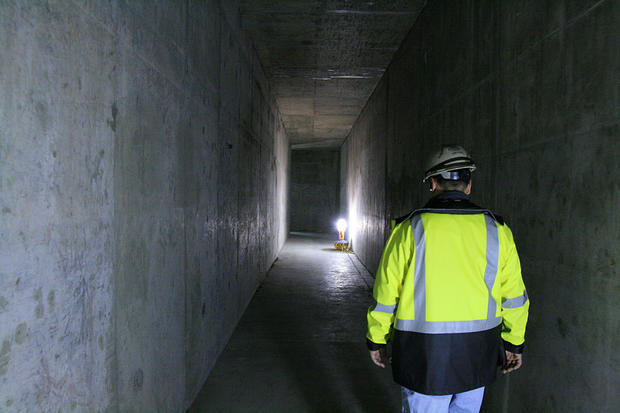
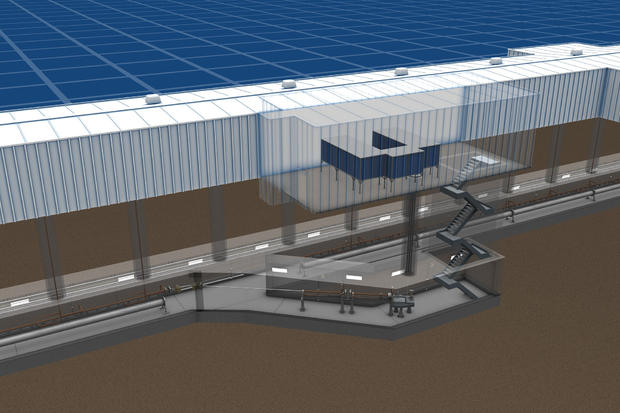
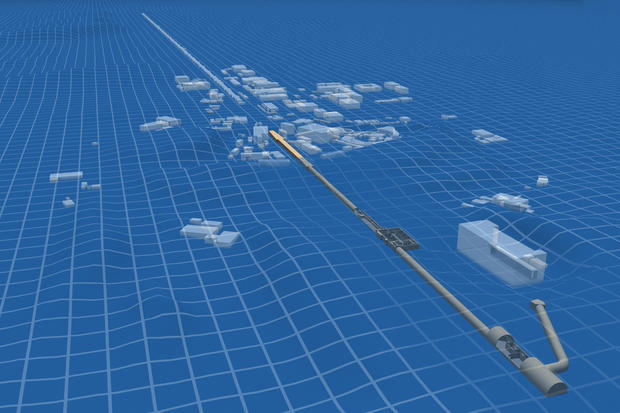
The LCLS construction project extends SLAC's original two-mile Linac by an additional half mile, which includes x-ray transport tunnels and two experimental halls.
Stanford (and caption credits)
Artists depiction of the electron beam and x-ray photon beam being separated. The electrons are discarded in the Beam Dump, and the x-ray pulse travels through to a suite of diagnostic equipment and focusing optics before entering the experimental areas.