AP Photo/Bela Szandelszky
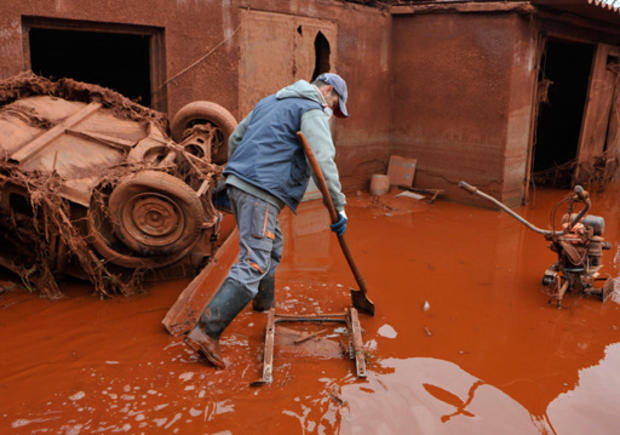
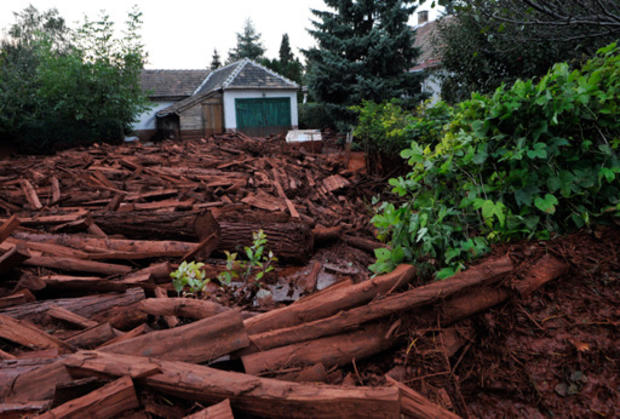
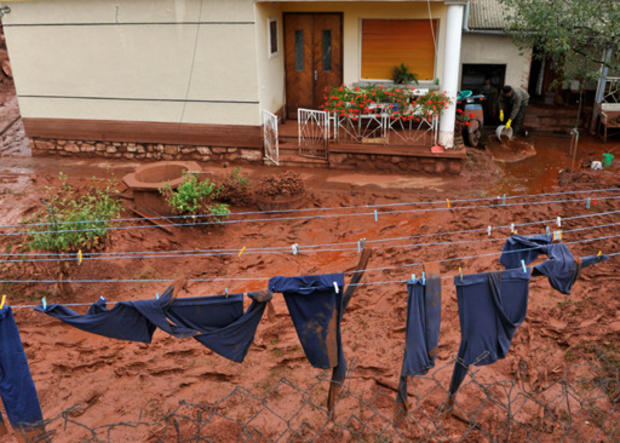
A villager checks his yard flooded by toxic mud in Kolontar, Hungary, Tuesday, Oct. 5, 2010. Monday's flooding was caused by the rupture of a red sludge reservoir at an alumina plant in western Hungary and has affected seven towns near the Ajkai Timfoldgyar plant, 100 miles southwest of Budapest. The flood of toxic mud killed a yet unknown number of people, injured more than hundred, while some are still missing.
AP Photo/Bela Szandelszky
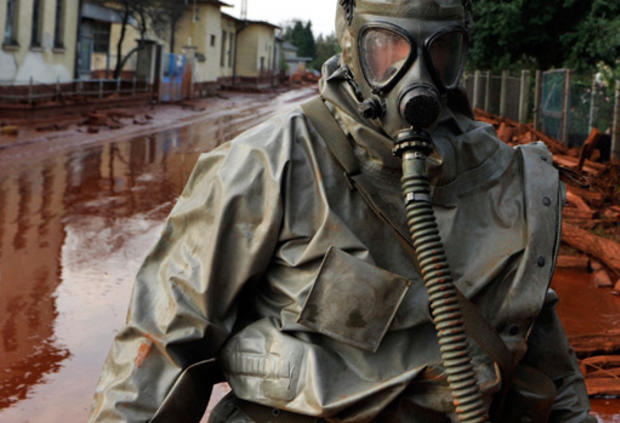
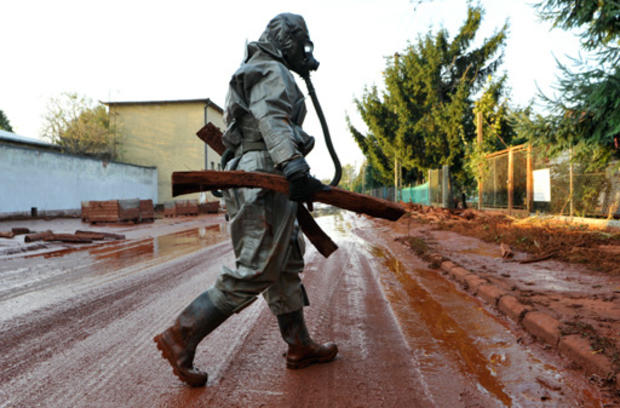
A Hungarian soldier wearing a chemical protection gear walks through a street flooded by toxic in the town of Devecser, Hungary, Tuesday, Oct. 5, 2010. Monday's flooding was caused by the rupture of a red sludge reservoir at an alumina plant in western Hungary and has affected seven towns near the Ajkai Timfoldgyar plant in the town of Ajka, 100 miles southwest of Budapest.
AP Photo/MTI, Gyoergy Varga
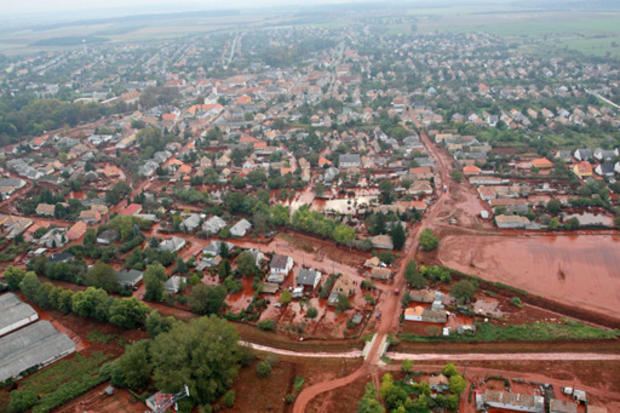
An aerial view of the red mud covered streets and neighborhood of Kolontar, 100 miles southwest of Budapest, taken on Tuesday, Oct. 5, 2010, after the rupture of a red sludge reservoir at an alumina plant in nearby Ajka broke. Over one million cubic meters of the poisonous chemical sludge inundated several villages. The flood of toxic mud killed a yet unknown number of people, injured more than hundred, while some are still missing.
AP Photos/MTI, Lajos Nagy
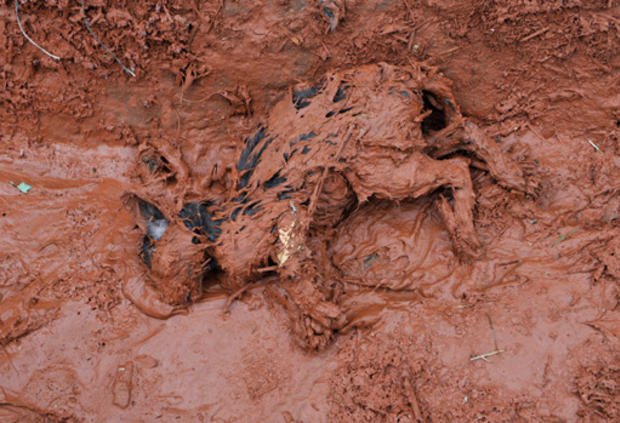
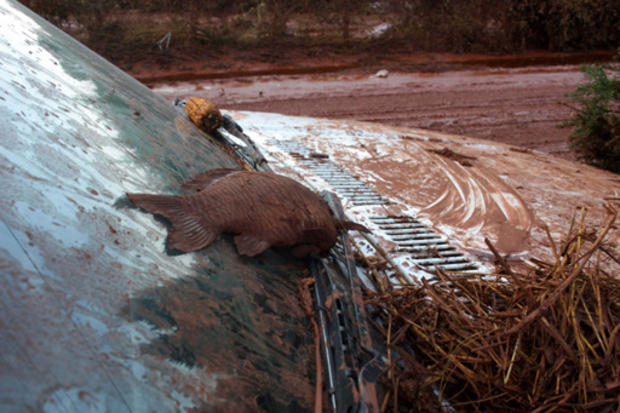
A dead fish sticks on the windscreen of a car damaged by the red, toxic mud from the reservoir that burst of a nearby Ajka alumina factory in Devecser, 100 southwest of Budapest, Hungary, on Tuesday, Oct. 5, 2010.
AP Photo/Bela Szande
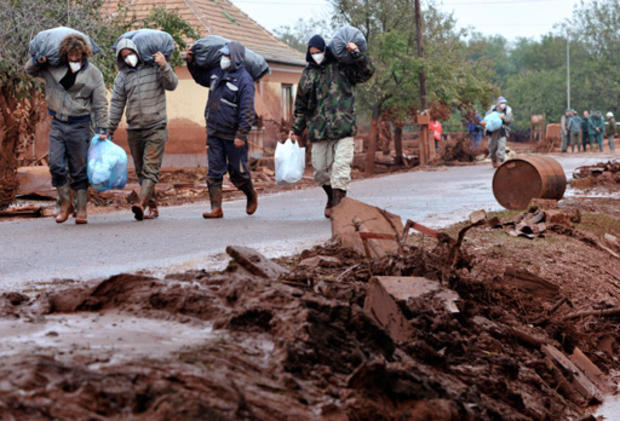
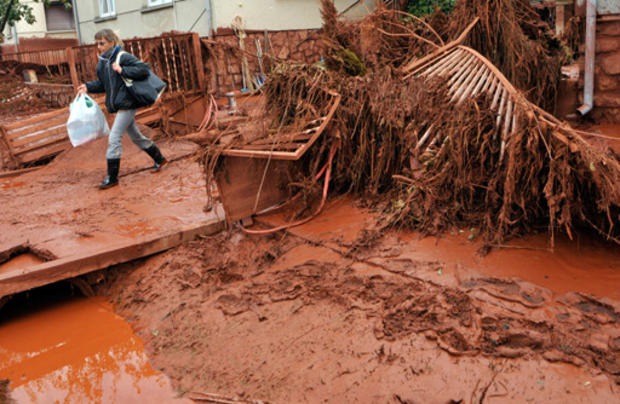
People save belongings from their homes flooded by toxic mud in Kolontar, Hungary, Tuesday, Oct. 5, 2010. Monday's flooding was caused by the rupture of a red sludge reservoir at an alumina plant in western Hungary and has affected seven towns near the Ajkai, 100 miles southwest of Budapest.
AP Photo/Bela Szandelszky
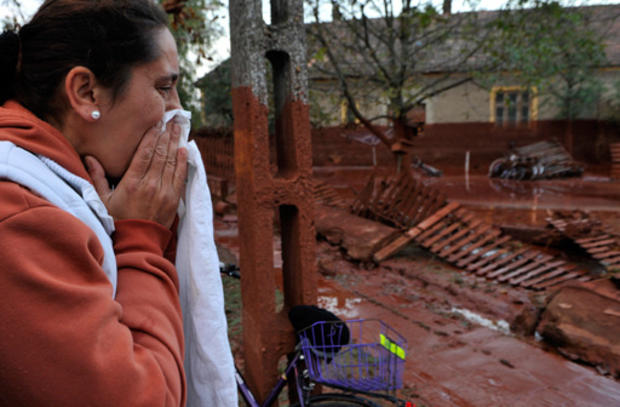
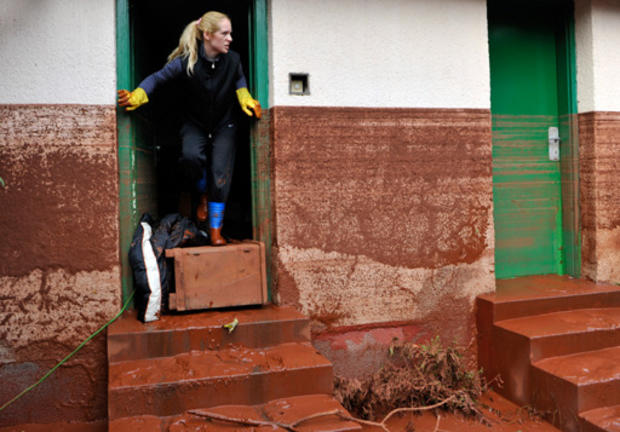
A villager saves belongings from her home flooded by toxic mud in Kolontar, Hungary, Tuesday, Oct. 5, 2010. Monday's flooding was caused by the rupture of a red sludge reservoir at an alumina plant in western Hungary and has affected seven towns near Ajkai, 100 miles southwest of Budapest.
AP Photo/Bela Szandelszky
A Hungarian soldier, wearing chemical protection gear, cleans a street flooded by toxic sludge in the town of Devecser, Hungary, Tuesday, Oct. 5, 2010. Monday's flooding was caused by the rupture of a red sludge reservoir at an alumina plant in western Hungary and has affected seven towns near the Ajkai Timfoldgyar plant, 100 miles southwest of Budapest. The flood of toxic mud killed a yet unknown number of people, injured more than hundred, while some are still missing.
AP Photo/Bela Szandelszky
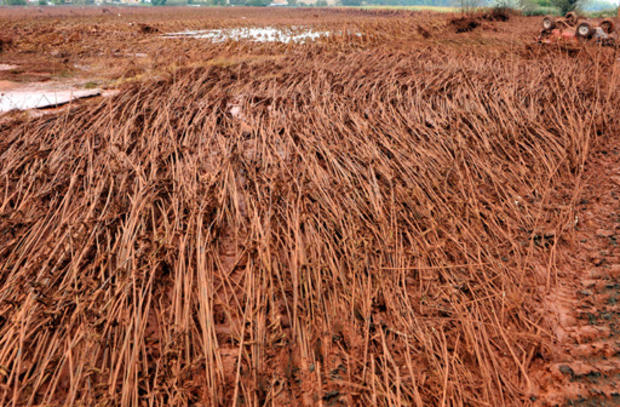
A grain field is flooded by toxic mud outside the village of Kolontar, Hungary, Tuesday, Oct. 5, 2010. Monday's flooding was caused by the rupture of a red sludge reservoir at an alumina plant in western Hungary and has affected seven towns near the Ajkai Timfoldgyar plant, 100 miles southwest of Budapest. The flood of toxic mud killed a yet unknown number of people, injured more than hundred, while some are still missing.
AP Photo/Bela Szandelszky
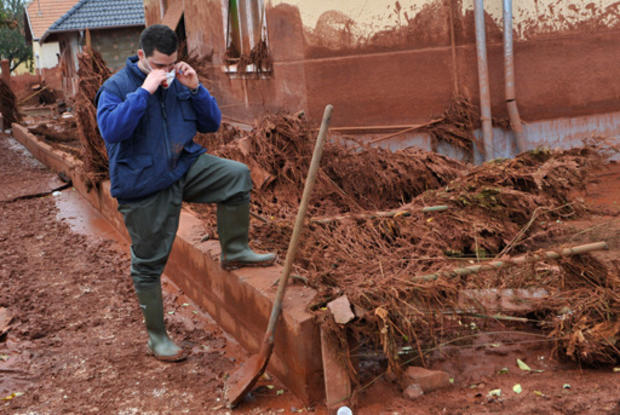
A villager puts on a protective mask in front of his house, flooded by toxic mud in Kolontar, Hungary, Tuesday, Oct. 5, 2010. Monday's flooding was caused by the rupture of a red sludge reservoir at an alumina plant in western Hungary and has affected seven towns near the Ajkai Timfoldgyar plant, 100 miles southwest of Budapest. The flood of toxic mud killed a yet unknown number of people, injured more than hundred, while some are still missing.