TORU YAMANAKA/AFP/Getty Images
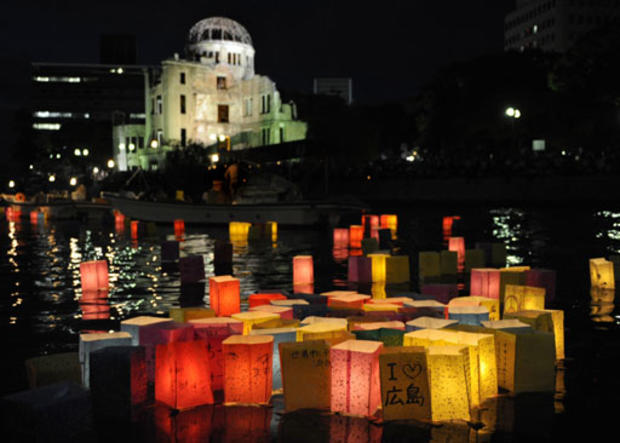
Paper lanterns float in the Motoyasu River in front of the Atomic Bomb Dome in Hiroshima on Aug. 6, 2010, to mark the 65th anniversary of the World War II atomic bombing. Representatives from more than 70 nations, including for the first time the United States, joined tens of thousands at the emotional event.
Kiyoshi Ota/Getty Images
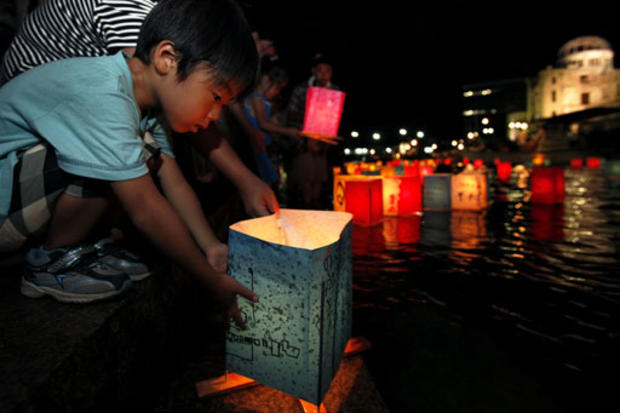
A young boy releases a paper lantern onto the Motoyasu River to commemorate the atomic bomb victims and pray for world peace beside the A-Bomb Dome on Aug. 6, 2010, in Hiroshima, Japan, on the day of the 65th anniversary of the Hiroshima atomic bombing. The world's first atomic bomb was dropped on Hiroshima by the United States during World War II, killing an estimated 70,000 people instantly with many thousands more dying over the following years from the effects of radiation. Three days later, another atomic bomb was dropped on Nagasaki.
AP Photo/Shuji Kajiyama
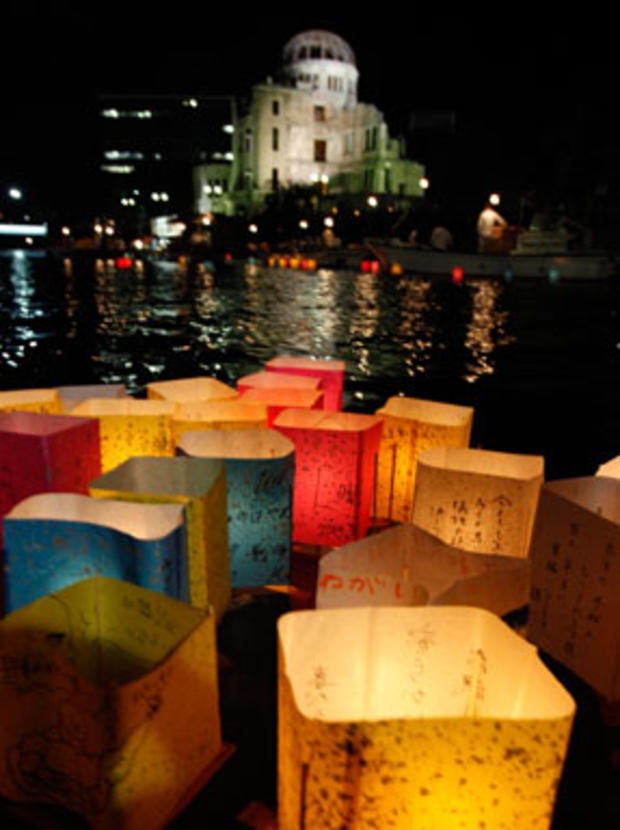
With the gutted Atomic Bomb Dome in the background, paper lanterns float on the Motoyasu River for a memorial service of the atomic bomb victims in Hiroshima, western Japan, Friday, Aug. 6, 2010.
TORU YAMANAKA/AFP/Getty Images
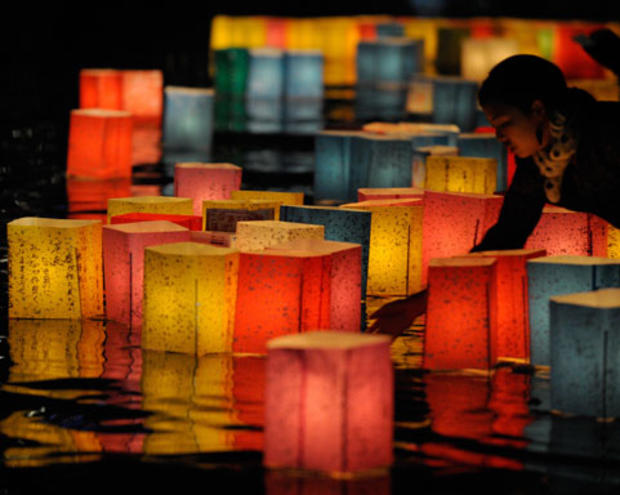
A woman floats a paper lantern on the Motoyasu River in Hiroshima, Japan, on Aug. 6, 2010, to mark the 65th anniversary of the World War II atomic bombing.
AP Photo/Shuji Kajiyama
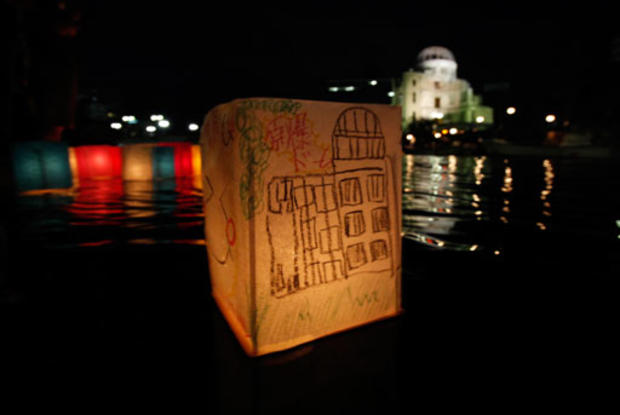
A paper lantern bearing the drawing of the Atomic Bomb Dome floats past the dome on the Motoyasu River during a memorial service for the atomic bomb victims in Hiroshima, western Japan, Friday, Aug. 6, 2010. Hiroshima marks the 65th anniversary of the the world's first atomic bomb attack that devastated the western Japanese city in the closing days of World War II.
TORU YAMANAKA/AFP/Getty Images
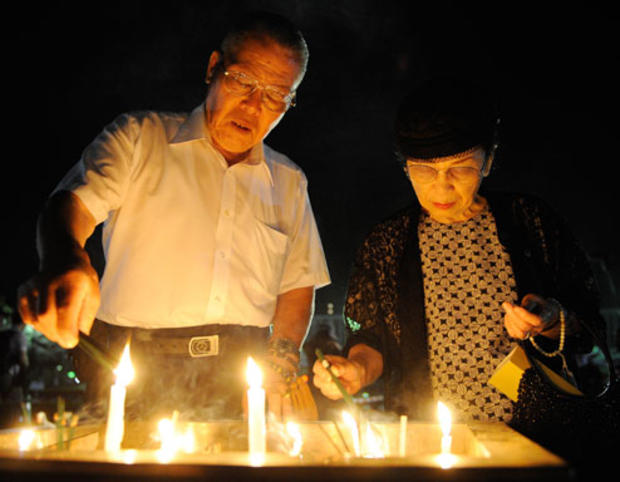
An elderly man and woman burn incense to mourn victims of the 1945 atomic bombing in front of the altar before dawn at Peace Memorial Park in Hiroshima on Aug. 6, 2010. The western Japanese city marked the 65th anniversary of the world's first atomic attack on Aug. 6, 1945.
AP Photo/Shuji Kajiyama
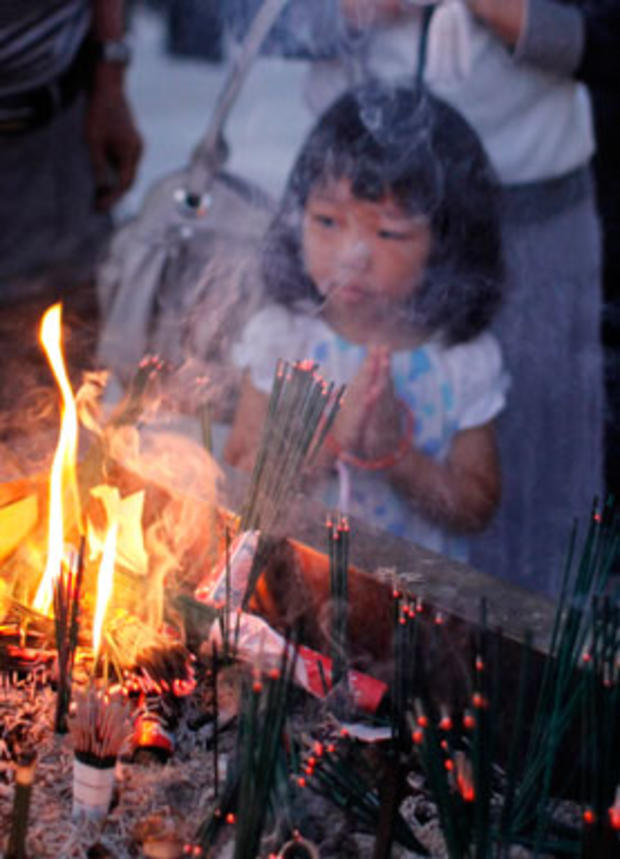
A girl prays with her family members for atomic bomb victims at the Peace Memorial Park in Hiroshima, western Japan, Friday, Aug. 6, 2010.
TORU YAMANAKA/AFP/Getty Images
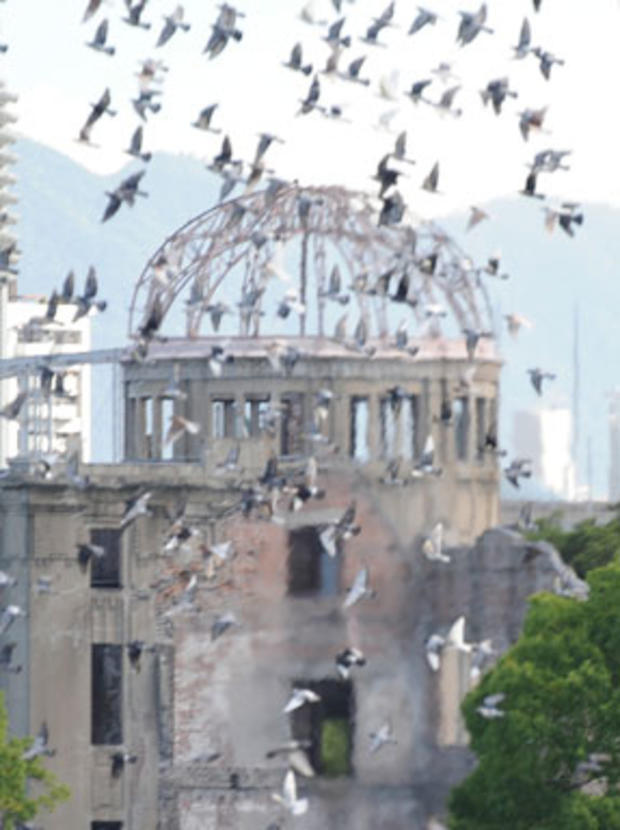
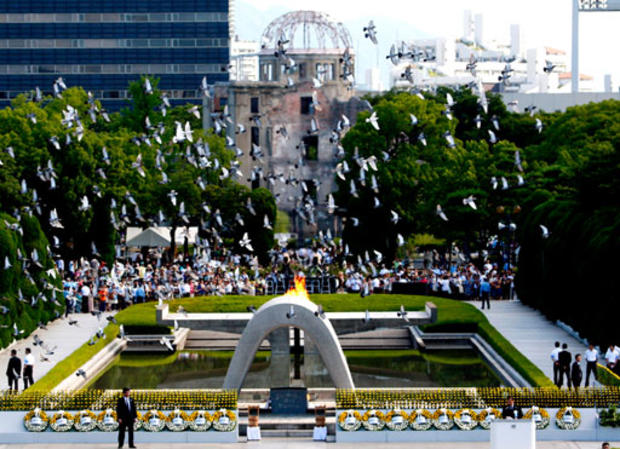
Doves fly around the Atomic Bomb Dome at the Peace Memorial Park after their release during the memorial ceremony in Hiroshima, Japan, on Aug. 6, 2010.
AP Photo/Shuji Kajiyama
With the gutted Atomic Bomb Dome as a backdrop, doves fly over the cenotaph of the Peace Memorial Park at Hiroshima, western Japan, Friday, Aug. 6, 2010. Hiroshima marked the 65th anniversary of the the world's first atomic bomb attack that devastated the western Japanese city in the closing days of World War II.
TORU YAMANAKA/AFP/Getty Images
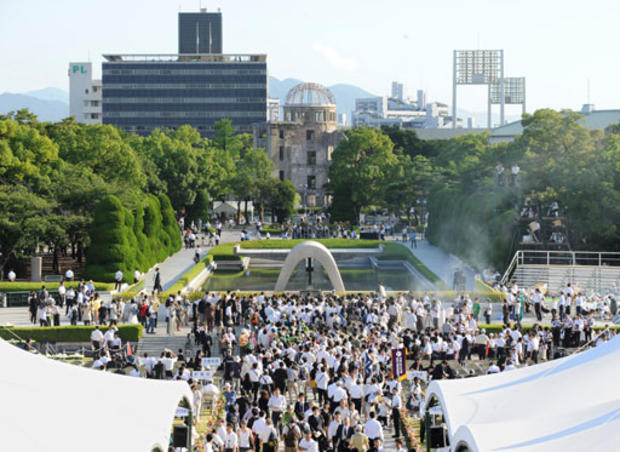
People gather around the altar to pray for victims of the 1945 atomic bombing before the memorial service at Peace Memorial Park in Hiroshima on Aug. 6, 2010.
AP Photo/Shuji Kajiyama
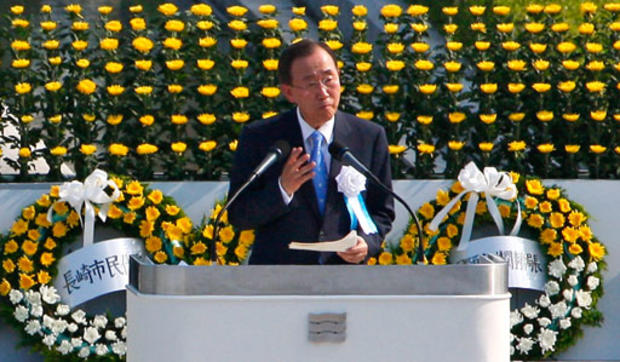
U.N. Secretary-General Ban Ki-moon delivers a speech during the 65th anniversary of the 1945 atomic bombing at the Peace Memorial Park at Hiroshima, western Japan, Friday, Aug. 6, 2010. "Life is short, but memory is long," Ban said. "For many of you, that day endures ... as vivid as the white light that seared the sky, as dark as the black rains that followed." Ban added that the time has come to move from "Ground Zero, to Global Zero" - a world without any nuclear arms.
AP Photo/Kyodo News, Shigeyuki Inakuma
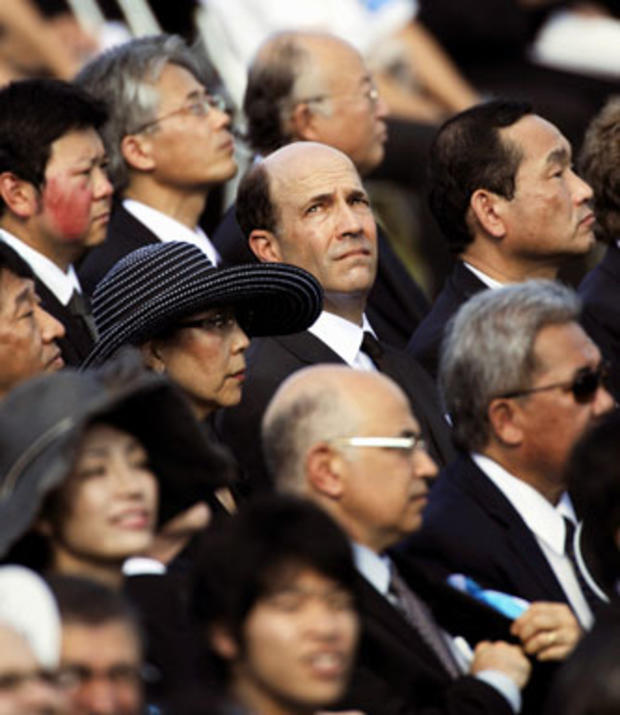
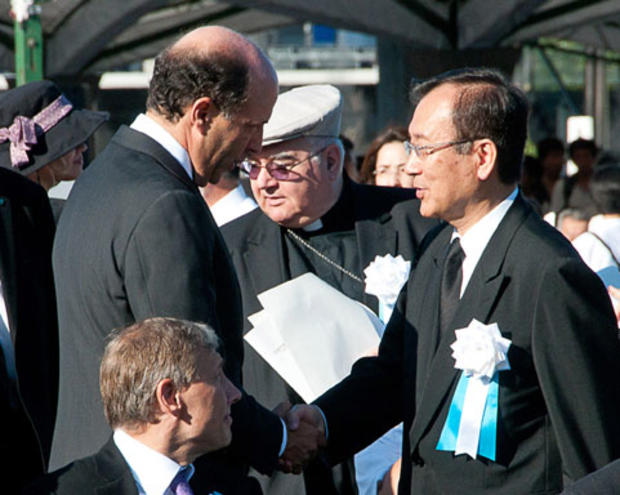
U.S. Ambassador to Japan John Roos, looking upward, takes part in the 65th anniversary of the world's first atomic bombing in the Hiroshima Peace Memorial Park in Hiroshima, western Japan, Friday, Aug. 6, 2010. The United States sent its first ever delegation to the ceremony marking the anniversary of the attacks.
AP Photo/City of Hiroshima
U.S. Ambassador to Japan John Roos, left, greets Hiroshima city's Mayor Tadatoshi Akiba on his arrival at the Hiroshima Peace Memorial Park to attend the 65th anniversary of the world's first atomic bombing in Hiroshima, western Japan, Friday, Aug. 6, 2010. The United States sent its first ever delegation to the ceremony marking the anniversary of the attacks.
TORU YAMANAKA/AFP/Getty Images
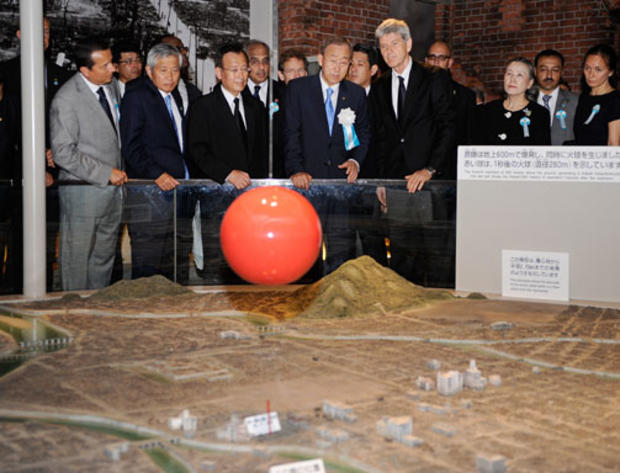
Secretary-General of the United Nations Ban Ki-Moon, center, looks at a model site of the 1945 atomic bombing in Hiroshima, Japan, at the Peace Memorial Museum on Aug. 6, 2010. Ban is the first UN secretary-general to attend a Hiroshima Peace Memorial Ceremony.
TORU YAMANAKA/AFP/Getty Images
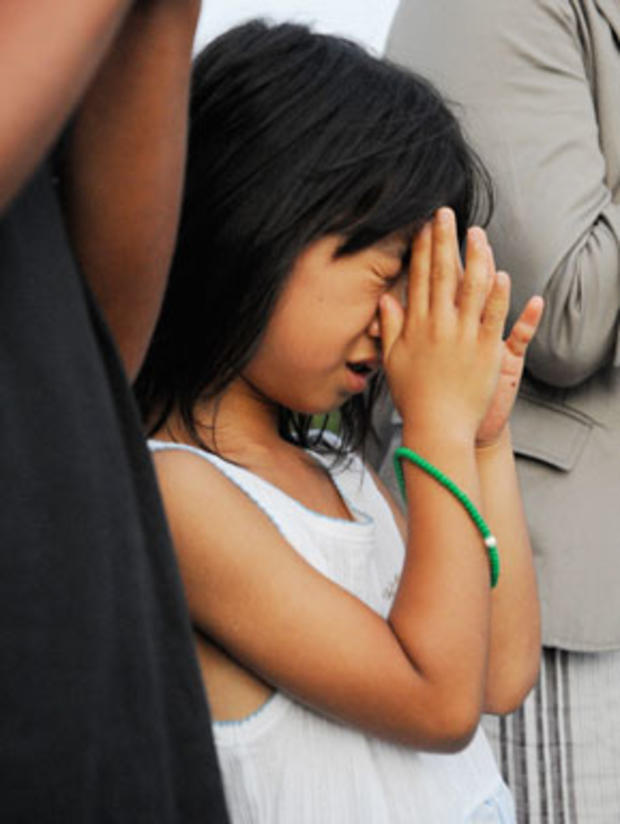
A little girl prays for victims of the 1945 atomic bombing in front of the altar at Peace Memorial Park in Hiroshima, Japan, on Aug. 6, 2010.
Kiyoshi Ota/Getty Images
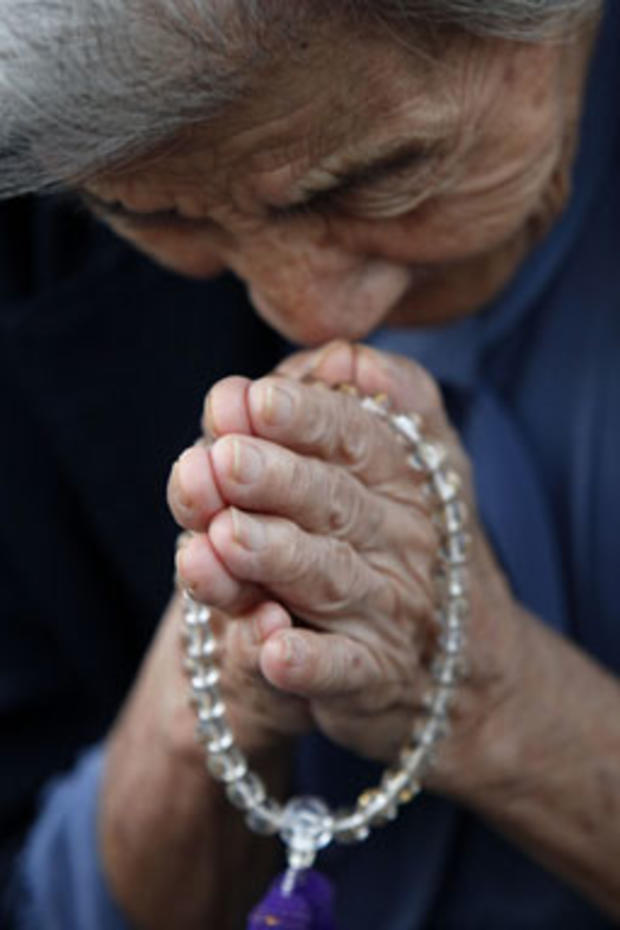
A woman prays for the atomic bomb victims in front of a cenotaph at Hiroshima Peace Memorial Park on Aug. 6, 2010, in Hiroshima, Japan, on the day of the 65th anniversary of the Hiroshima atomic bombing. The world's first atomic bomb was dropped on Hiroshima by the United States during World War II, killing an estimated 70,000 people instantly with many thousands more dying over the following years from the effects of radiation. Three days later, another atomic bomb was dropped on Nagasaki.
Photo by Kiyoshi Ota/Getty Images
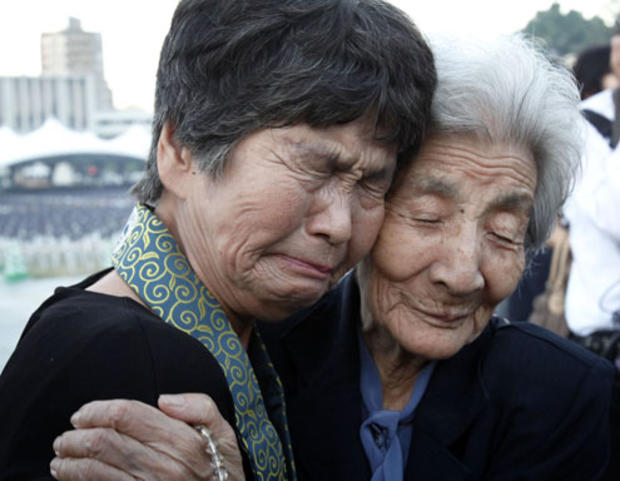
People comfort each other after praying for the atomic bomb victims in front of a cenotaph at Hiroshima Peace Memorial Park on Aug. 6, 2010, in Hiroshima, Japan, on the day of the 65th anniversary of the Hiroshima atomic bombing.
AP Photo/Shuji Kajiyama
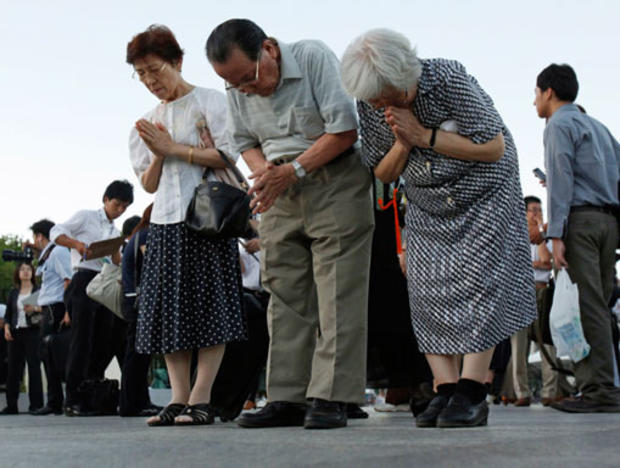
People pray for the atomic bomb victims in front of the cenotaph at the Peace Memorial Park in Hiroshima, western Japan, Friday, Aug. 6, 2010. Hiroshima marked the 65th anniversary of the the world's first atomic bomb attack that devastated the western Japanese city in the closing days of World War II.
Kiyoshi Ota/Getty Images
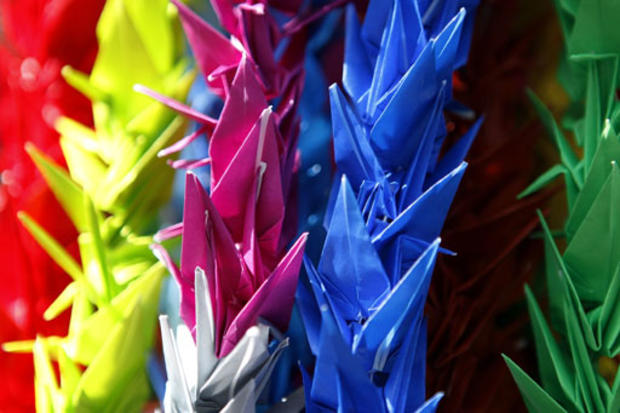
Paper cranes are displayed near the Children's Peace Monument at Hiroshima Peace Memorial Park on Aug. 6, 2010, in Hiroshima, Japan, on the day of the 65th anniversary of the Hiroshima atomic bombing.