istockphoto
Health insurance stories hit the news every day. People are denied coverage - fairly or not - and must struggle to pay medical expenses on their own. In fact, 60 percent of people who go bankrupt are pushed over the edge by mounting medical bills.
Sometimes these denials are due to preexisting conditions, or to experimental or unnecessary procedures. Some are more controversial.
From our friends at Health.com, here are some of those stories.
istockphoto
Alex Lange, a 4-month-old, was denied health insurance because he is in the 99th percentile for height and weight for a baby his age, making him technically obese, according to pediatric guidelines.
(Some insurers consider obesity a preexisting condition for which they can limit or deny coverage, but the guidelines only apply to children ages 2 and older.)
The breast-fed infant from Colorado was born at a normal 8 1/4 pounds and grew to 17 pounds in just a few months.
After media attention, the insurance company reversed its decision and decided it would cover all healthy babies, no matter their weight.
istockphoto
Nataline Sarkisyan was diagnosed with leukemia at age 14. The disease had gone into remission, but following a relapse and a subsequent bone-marrow transplant, her liver failed due to a blood-clotting complication.
She died at 17, mere hours after her insurance company, Cigna, announced that it would cover a liver transplant, which it had previously rejected as being "experimental, investigational, and unproven."
Her family, claiming the company had wrongfully denied coverage for the transplant, sued Cigna for damages, but in 2009 a federal court in California threw out the lawsuit.
istockphoto
Insurers can cancel coverage if you provide false or incomplete information - an anti-fraud policy called rescission. But misunderstandings and unwitting mistakes on a confusing application can also trigger rescission.
That happened to Robin Beaton, who was diagnosed with breast cancer in June 2008. Days before her double mastectomy, Blue Cross Blue Shield (BCBS) said they would not pay, Beaton told a Congressional committee earlier this year.
A dermatologist she consulted about acne in May 2008 had made a note on her chart that BCBS interpreted as referring to a precancerous condition, Beaton said in her testimony. This triggered a review of her medical records, and BCBS rescinded her policy.
Beaton's tumor nearly doubled in size before the issue was resolved.
istockphoto
New Mexico attorney Jody Neal-Post says she was beaten and choked by her ex-husband in 2002.
Following the incident, she was treated with counseling and Valium. When she tried to get health insurance in 2006, she was rejected because of this medical history, according to a Kaiser Health News report.
Many states prohibit insurance companies from denying coverage due to past abuse, but eight states and Washington, D.C., do not. While Neal-Post was lucky to live in New Mexico, advocates worry that victims may become even more afraid to speak up about abuse if they have the additional worry of losing their health insurance.
Afurse
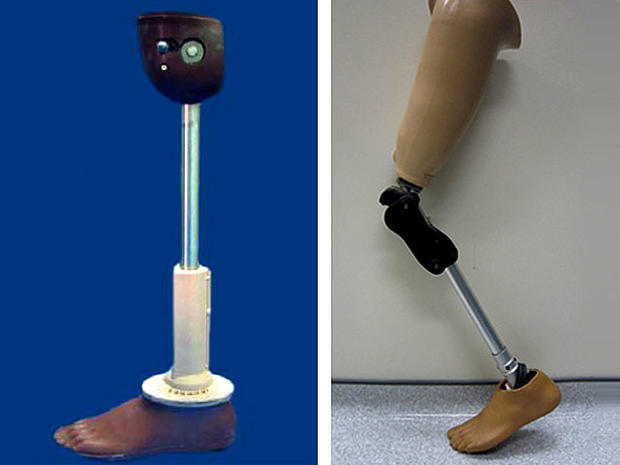
John Woodson, a 51-year-old contractor from Oklahoma who was featured on ABC's 20/20 in 2009, lost an eye and a leg when the truck he was driving hit a roadside bomb in Iraq. He is covered by an AIG government benefits program for employees of U.S. contractors working in Iraq and Afghanistan.
But AIG refused to provide him with the new plastic leg his doctor had ordered, and even fought against paying for a wheelchair and glasses for his remaining eye. (He has only 30 percent vision in his remaining eye.)
The insurance company eventually provided him with a better artificial limb made of replacement parts, but not the one his doctor ordered, according to ABC.
istockphoto
In 2001, Jacqueline Ruess underwent laparoscopic surgery for a growth her gynecologist thought could be ovarian cancer.
Four months later she faced a bill of more than $15,000 because of a lone mention in her file of "dysfunctional uterine bleeding," according to a 2008 article in "Self" magazine.
The insurance company deemed this diagnosis - a technical term for irregular periods - evidence of a preexisting condition.
Since the irregular periods (between 10 percent and 30 percent of women experience them at some point) weren't related to any underlying medical problem, Ruess told "Self," she never thought to mention them on her health insurance application.
istockphoto
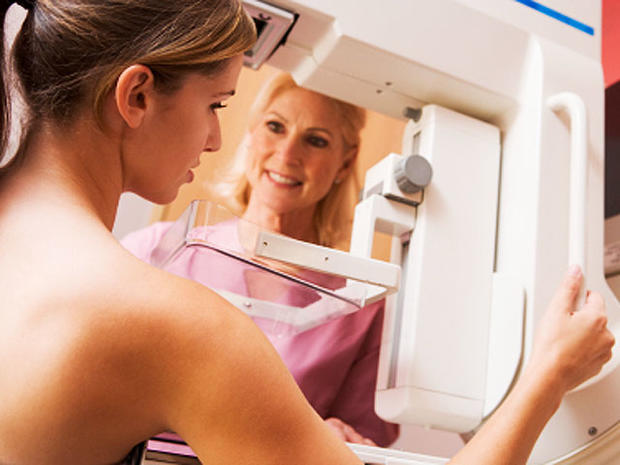
Rosalinda Miran-Ramirez woke up with her shirt soaked in blood. Leaking blood from her nipple, she rushed to the emergency room. Doctors discovered a benign tumor.
Her insurance company originally agreed to pay the emergency room claim, but later changed its mind and sent her a bill for almost $3,000, because after reviewing the claim, the company decided Miran-Ramirez should have realized there was no emergency.
In health insurance company speak, does a bleeding breast mean all's well? After Miran Ramirez's story was featured on a local TV news station in San Francisco, the insurance company decided to cover the cost after all.