NASA/MSFC/D. Higginbotham
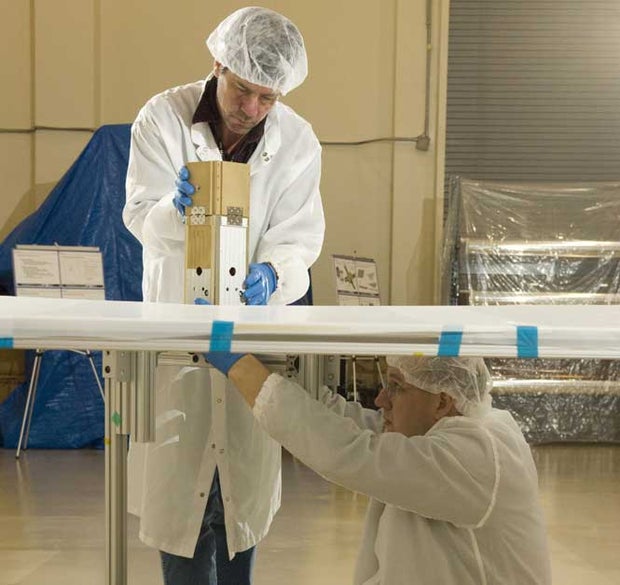
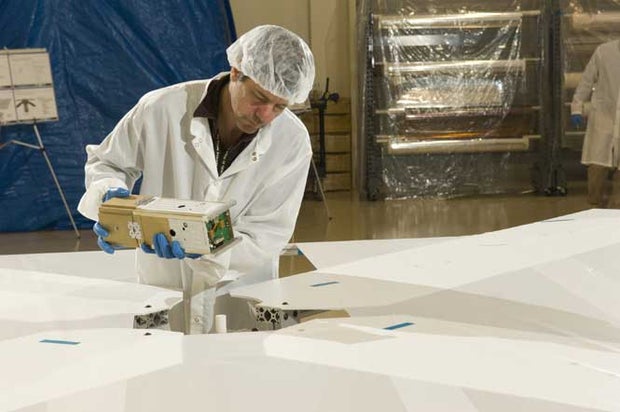
Research technicians make final adjustments to NanoSail-D prior to configuring the satellite for deployment testing. The spacecraft measures 4 inches wide, 4 inches deep and 13 inches long, roughly the size of a loaf of bread, and weighing about 9 pounds.
NASA/MSFC/D. Higginbotham
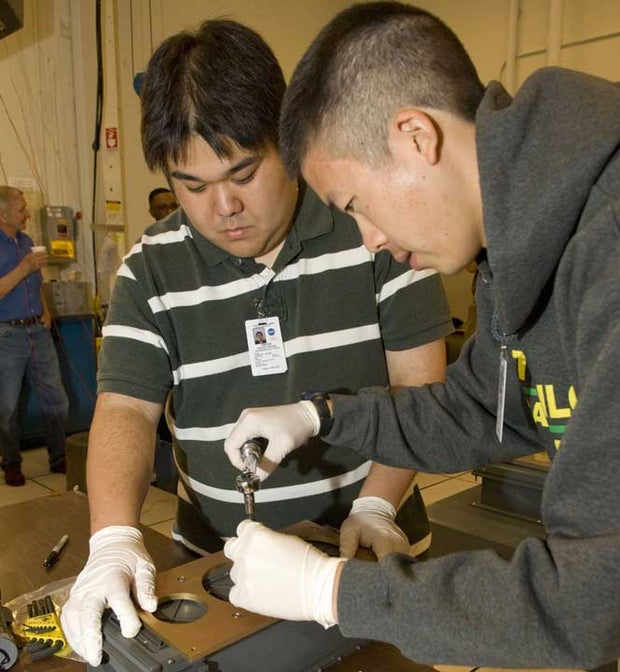
Students at California Polytechnic State University bolt an adapter plate to the bottom of the Poly Picosatellite Orbital Deployer to prepare the spacecraft for vibration testing at the Marshall Space Flight Center.
NASA/MSFC/D. Higginbotham
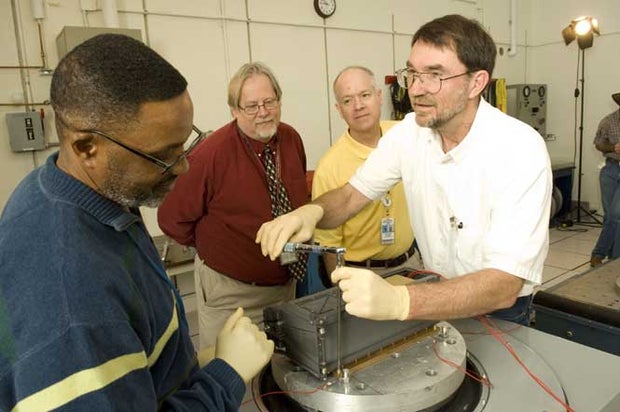
Test engineers at Marshall, attach the NanoSail-D satellite to the vibration test table. A successful vibration test also verifies the structural integrity of the satellite, and gauges how the satellite will endure the harsh launch environment.
NASA/MSFC/D. Higginbotham
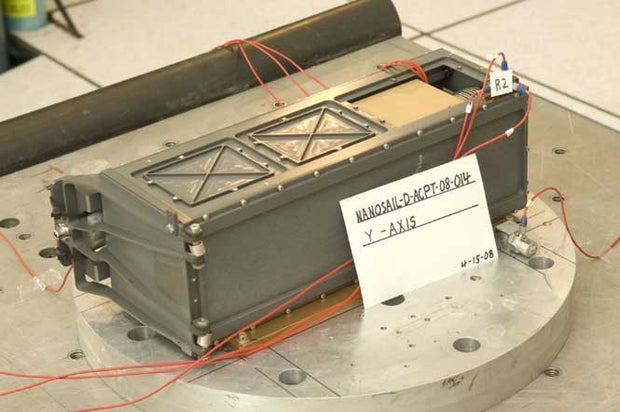
Marshall and Cal Poly technicians wire the spacecraft to accelerometers, instruments which measure vibration response during simulated launch conditions.
NASA/MSFC/D. Higginbotham
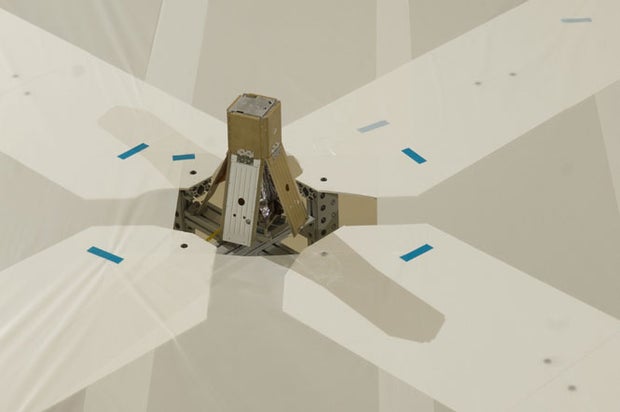
The NanoSail-D satellite gets set on a specially constructed surface designed for deployment testing.
NASA/MSFC/D. Higginbotham
NanoSail-D deployment: Shortly after launch of the SpaceX Falcon-1, NanoSail will be ejected from the launch vehicle. Three days into flight, the spacecraft will open four hinged doors, allowing the square sail to deploy.
NASA
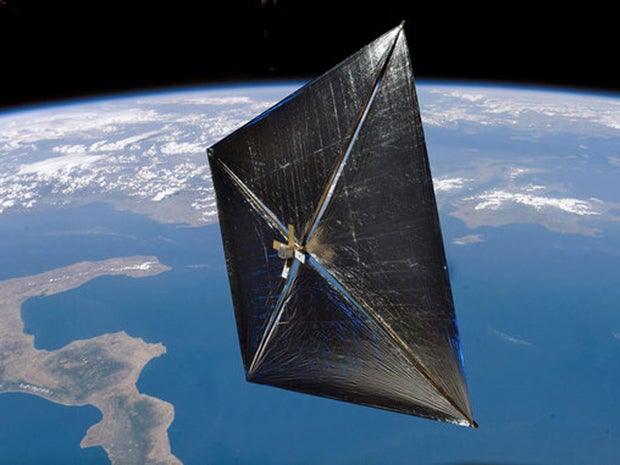
NASA's NanoSail-D soars in Earth orbit in this artist's illustration.