MTA New York City Transit/Leonard Wiggins
Despite precautionary measures taken as Hurricane Sandy advanced (including blocking off subway entrances and shutting down mass transit), the damage to New York City's subway system was widespread. Many New Yorkers do not own personal vehicles and depend on public transportation. In 2011, 1.6 billion people rode the NYC subway.
Officials began to assess the damage to the nation's largest subway system on Oct. 30, 2012. All 10 tunnels in lower Manhattan, which connect the borough to Brooklyn and parts of Queens, were flooded in what MTA chairman Joe Lhota told WCBS-TV was the "most devastating" event in the system's 108-year history.
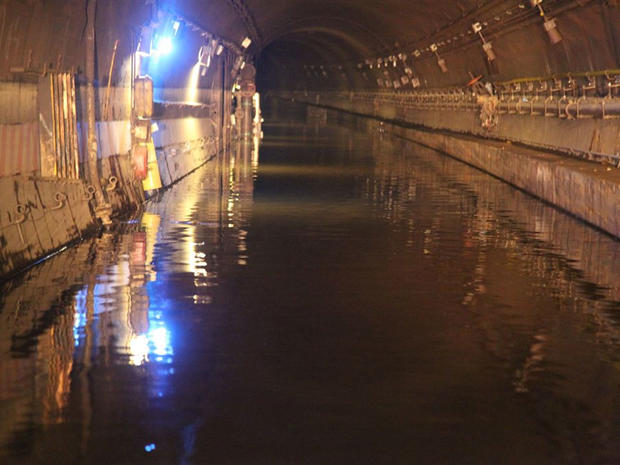
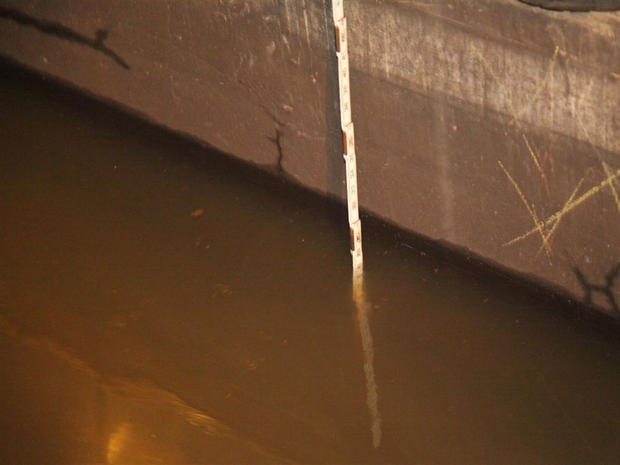
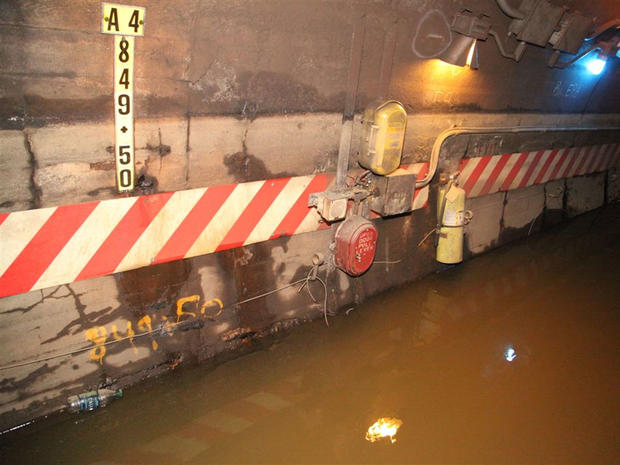
Left: The original water line in the Cranberry Street Tunnel, which carries the A and C trains between Brooklyn and Manhattan underneath the East River, after the events of superstorm Sandy on Nov. 2, 2012.
TIMOTHY A. CLARY/AFP/Getty Images
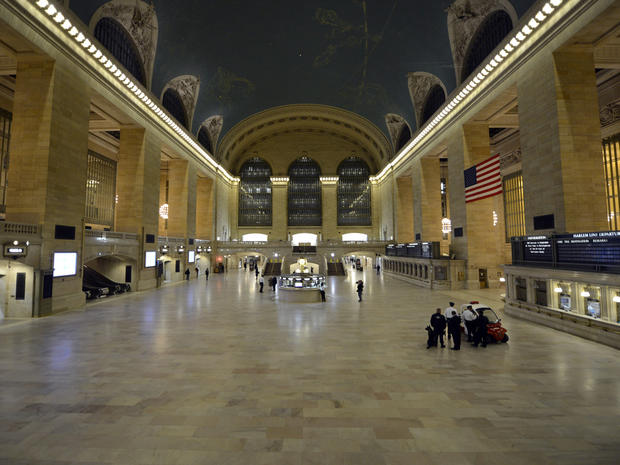
MTA Police watch over as the last people are cleared out of Grand Central Station in New York on Oct. 28, 2012 as the MTA has been began an orderly shutdown of commuter rail and subway service in preparation for Hurricane Sandy.
AP Photo/Craig Ruttle
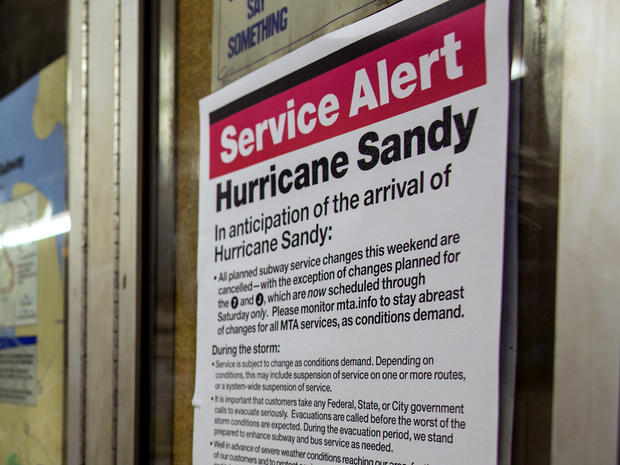
A sign informs subway riders of changes in service in the hours before the arrival of Hurricane Sandy in New York, on Oct. 28, 2012. Trains and buses were halted on Sunday evening as areas in the Northeast prepared for the arrival of the hurricane and a possible flooding storm surge.
Metropolitan Transportation Authority/Adam Lisberg
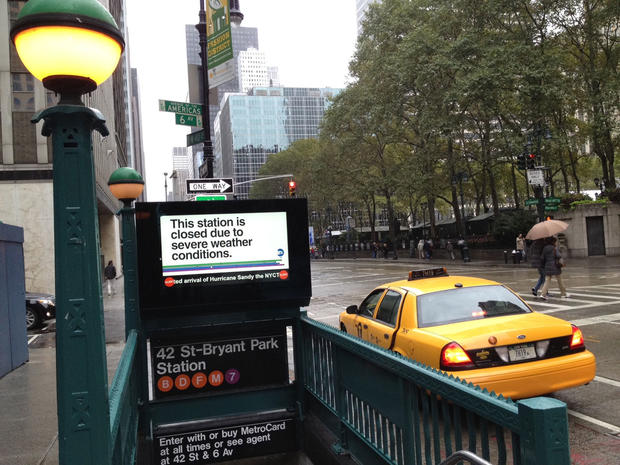
A digital display at subway entrances are known as "urban panels" telling patrons the subway is closed on Oct. 29, 2012. The urban panels can display ads, or during times or service disruptions, they provide information before a rider descends the stairs.
Timothy A. Clary/AFP/Getty Images
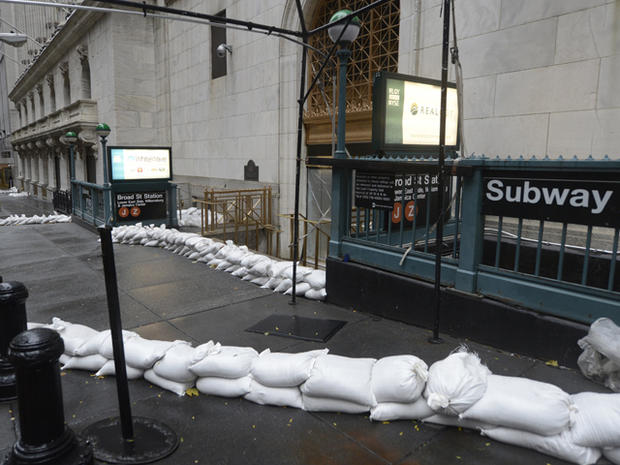
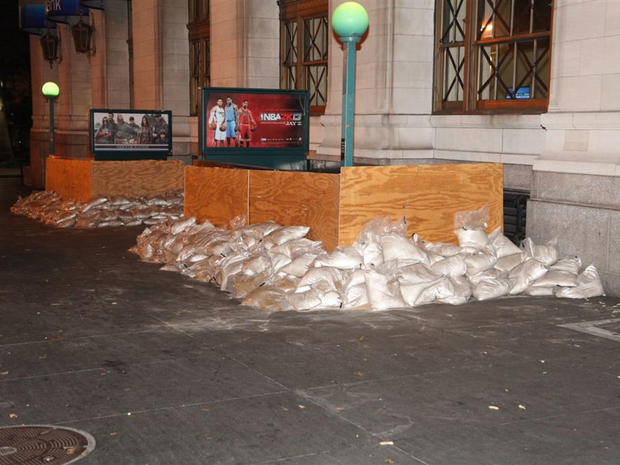
Sandbags are piled in front of the New York Stock Exchange and a close-by subway entrance October 29, 2012 as New Yorkers prepare for Sandy.
AP Photo/Mary Altaffer
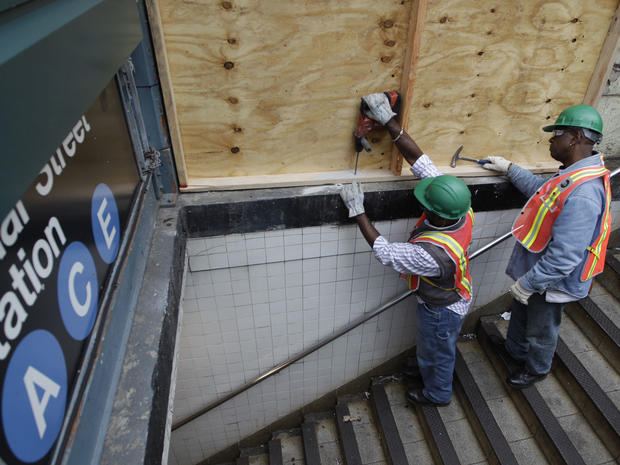
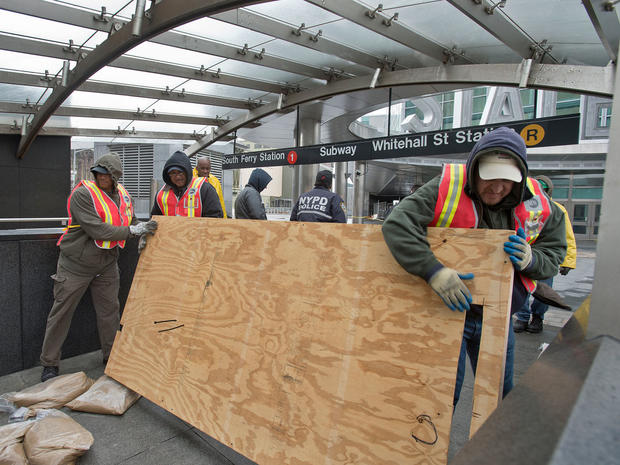
Metropolitan Transportation Authority workers cover an entrance to the Canal Street A, C, and E station with plywood to help prevent flooding, on Oct. 28, 2012, in New York. As Hurricane Sandy approached the New York region, residents of some flood-prone areas were told to evacuate.
Metropolitan Transportation Authority/Adam Lisberg
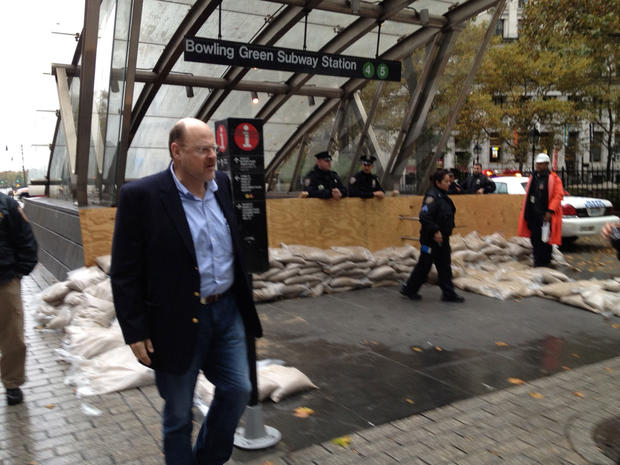
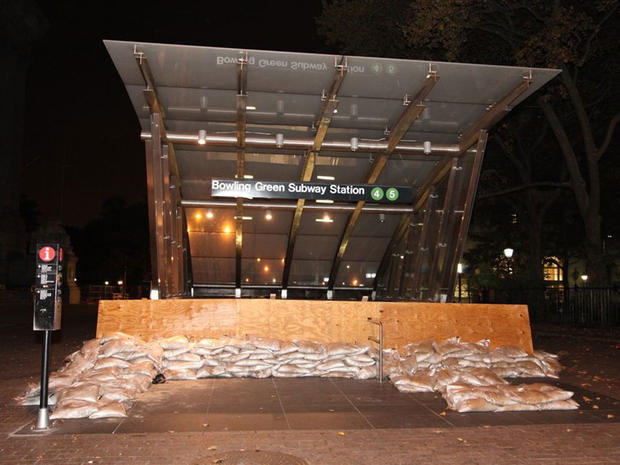
MTA Chairman Joseph J. Lhota stopped by the entrance to the Bowling Green station in Lower Manhattan to see MTA storm prep work on Oct. 29, 2012.
MTA New York City Transit / Leonard Wiggins
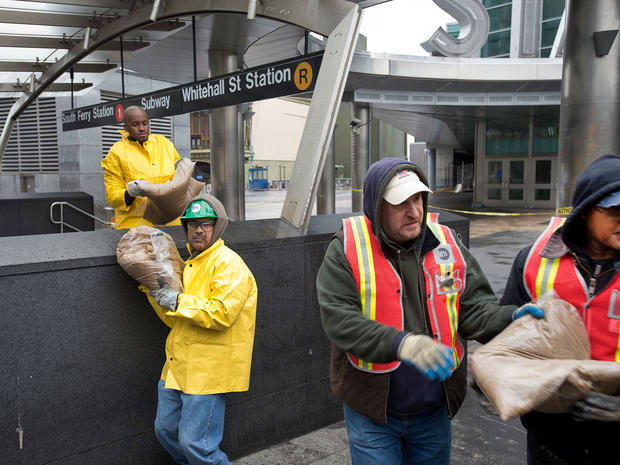
MTA New York City Transit prepares for Hurricane Sandy by placing sandbags at the Bowling Green Station entrances, on Oct. 29, 2012.
MTA New York City Transit / Leonard Wiggins
MTA New York City Transit prepares for Hurricane Sandy by placing sandbags at the Bowling Green Station entrances, on Oct. 29, 2012. All New York City public transportation, including subways, was shut down on Oct. 28, 2012 beginning at 7 p.m. to prepare for the storm.
MTA New York City Transit / Leonard Wiggins
MTA New York City Transit prepares for Hurricane Sandy by placing sandbags at the Bowling Green Station entrances, on Oct. 29, 2012.
MTA New York City Transit / Leonard Wiggins
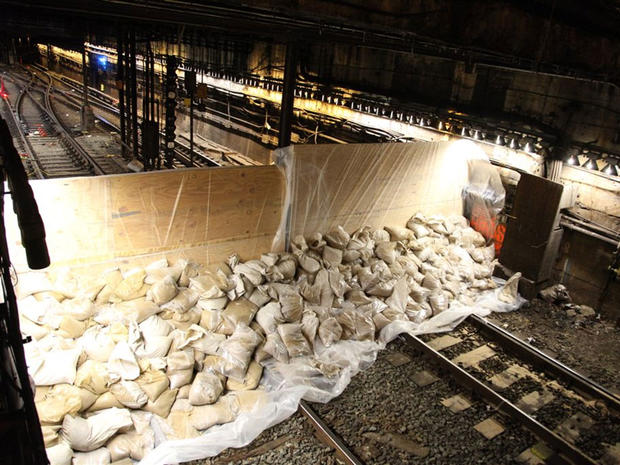
Sandbags are piled in the tunnels of the 148th Street/Lenox terminal stop of the New York City subway, on Oct. 29, 2012. The MTA tried to prevent flooding from superstorm Sandy, but the record-breaking surge - measuring 13 feet at Battery Park - was more than anyone predicted.
MTA New York City Transit / Leonard Wiggins
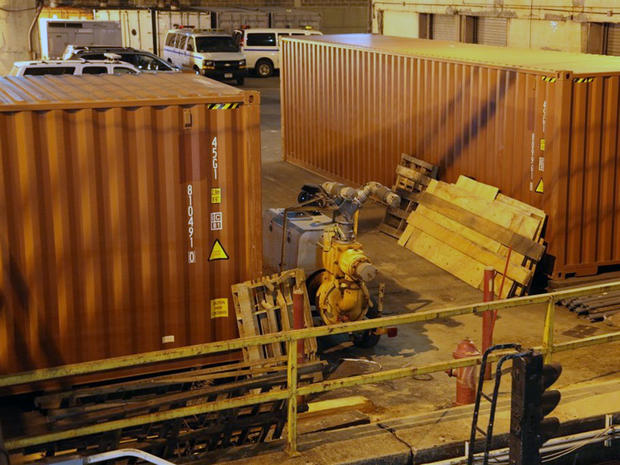
A pump waits outside the 149th street/Lenox terminal stop of the New York City subway, on Oct. 29, 2012.
MTA
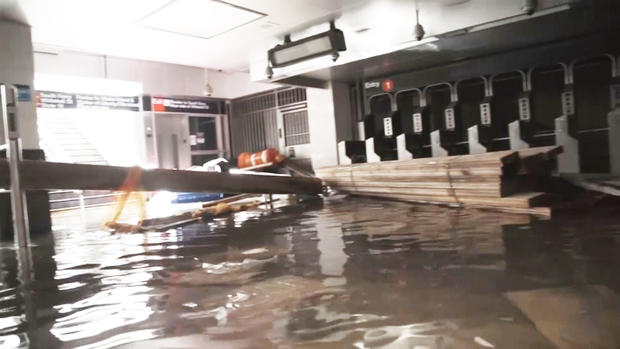
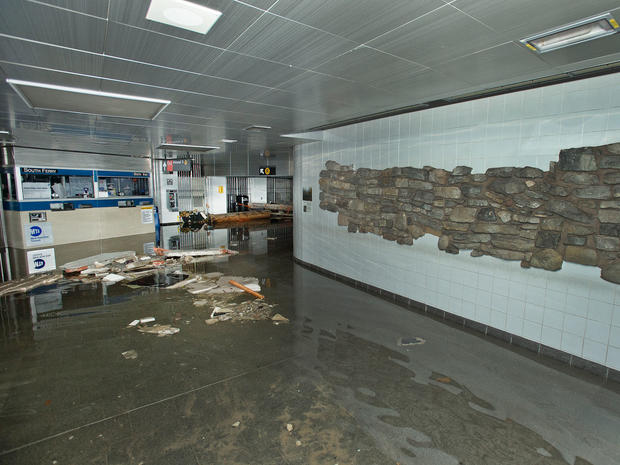
A view of New York City's South Ferry and Whitehall Street Subway station after storm surge from superstorm Sandy flooded the station.
Despite precautionary measures taken, including blocking off subway entrances and shutting down mass transit, the damage to NYC's subway system was widespread. All 10 tunnels in lower Manhattan, which connect the borough to Brooklyn and parts of Queens were flooded in what MTA chairman Joe Lhota told WCBS-TV was the "most devastating" event in the history of the system.
Metropolitan Transportation Authority
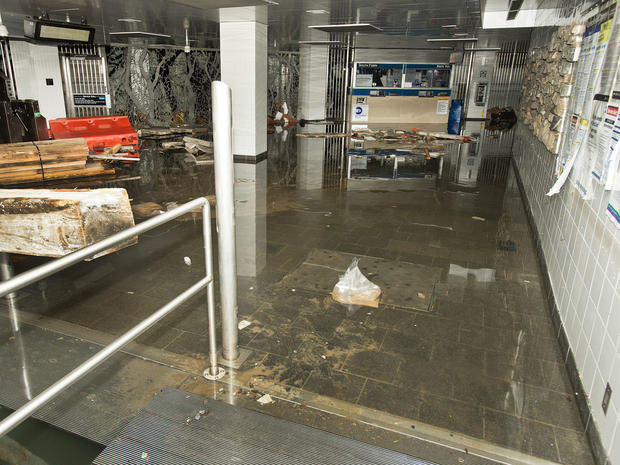
An entrance to the South Ferry subway station on Oct. 30, 2012 after flood waters entered the complex. Officials called the damage from Sandy the biggest disaster to ever hit the New York City transit system.
MTA New York City Transit / Leonard Wiggins
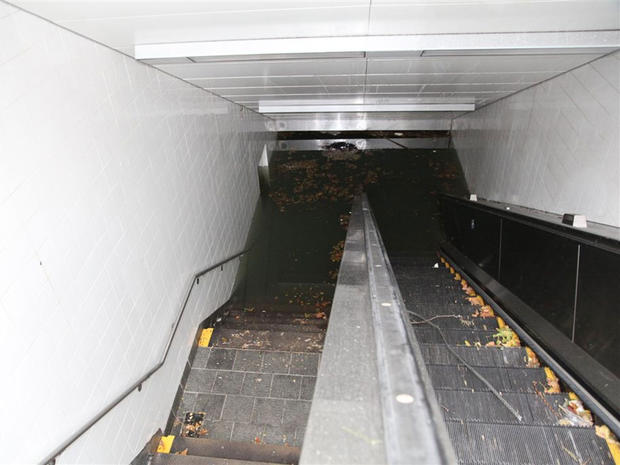
Post-Sandy status of South Ferry subway station in Lower Manhattan on Oct. 30, 2012.
Metropolitan Transportation Authority / Patrick Cashin
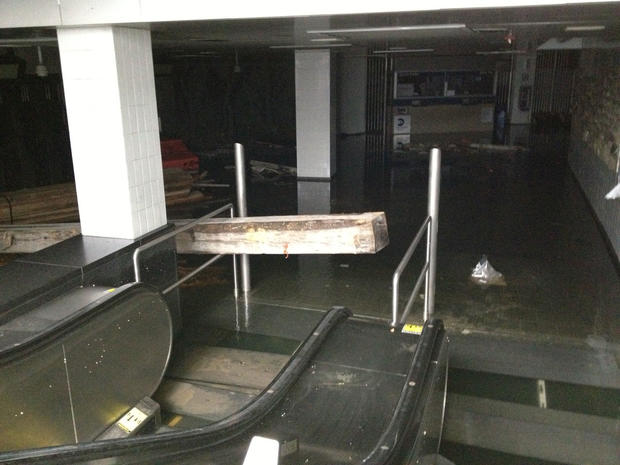
The view inside the South Ferry subway station in Lower Manhattan, on Oct. 30, 2012.
Metropolitan Transportation Authority / Patrick Cashin
The flooded South Ferry subway station in lower Manhattan on Oct. 30, 2012.
Metropolitan Transportation Authority / Patrick Cashin
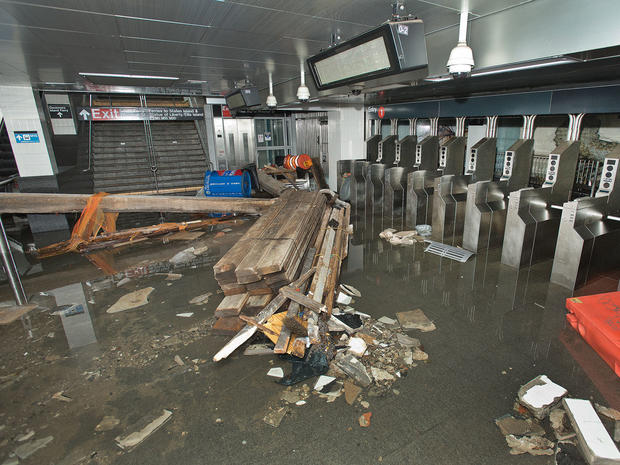
Flood waters from the storm surge due to Sandy entered the South Ferry subway station in lower Manhattan. The damage was surveyed on Oct. 30, 2012.
Metropolitan Transportation Authority
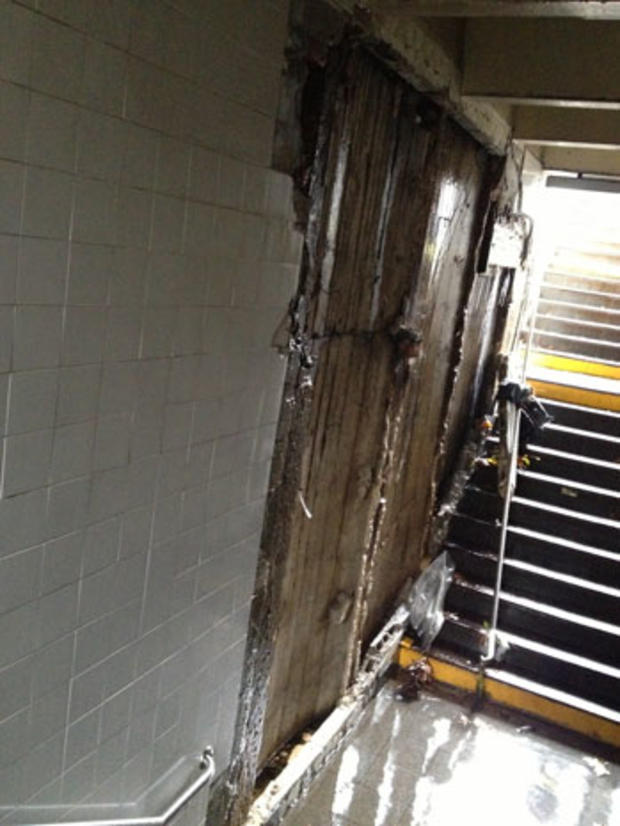
The entrance to Whitehall station in lower Manhattan after superstorm Sandy on Oct. 30, 2012.
Metropolitan Transportation Authority / Patrick Cashin
Employees from MTA New York City Transit worked to restore the South Ferry subway station after it was flooded by seawater during superstorm Sandy.
Metropolitan Transportation Authority / Patrick Cashin
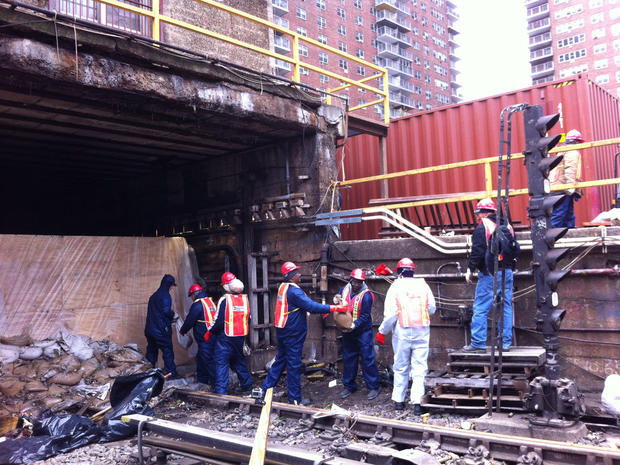
Employees from MTA New York City Transit worked to restore the South Ferry/Whitehall subway station after it was flooded by seawater during Sandy.
MTA New York City Transit / Leonard Wiggins
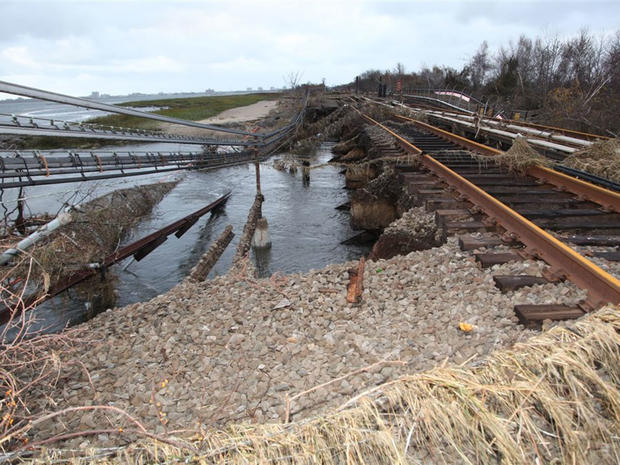
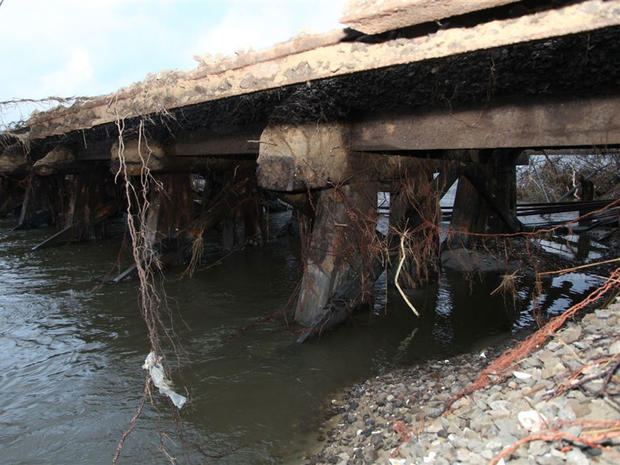
A section of washed out tracks on New York City Subway's Rockaway Line (A train) on Oct. 30, 2012.
MTA New York City Transit / Leonard Wiggins
Damage done by superstorm Sandy to New York City Subway's Rockaway Line (A train), seen on Oct. 30, 2012.
Metropolitan Transportation Authority
Workers try to board up and place sandbags in front of the 148th/Lenox station stop of the NYC Subway on Oct. 29, 2012.
Metropolitan Transportation Authority / Patrick Cashin
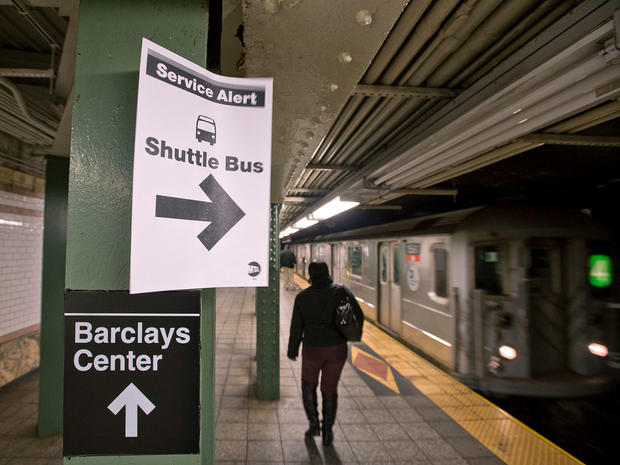
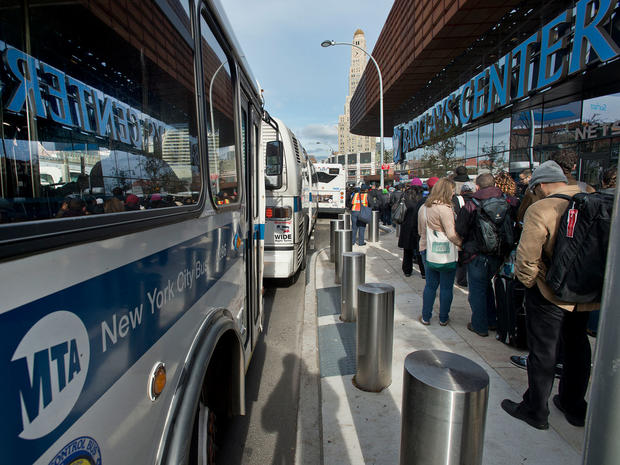
On Nov. 1, 2012, subway tunnels under the East River remained out of service after they were flooded during Hurricane Sandy. As a temporary means to allow people across the East River, 330 shuttle buses connected subway and LIRR customers at Barclays Center, MetroTech, and Hewes St. with destinations in Manhattan.
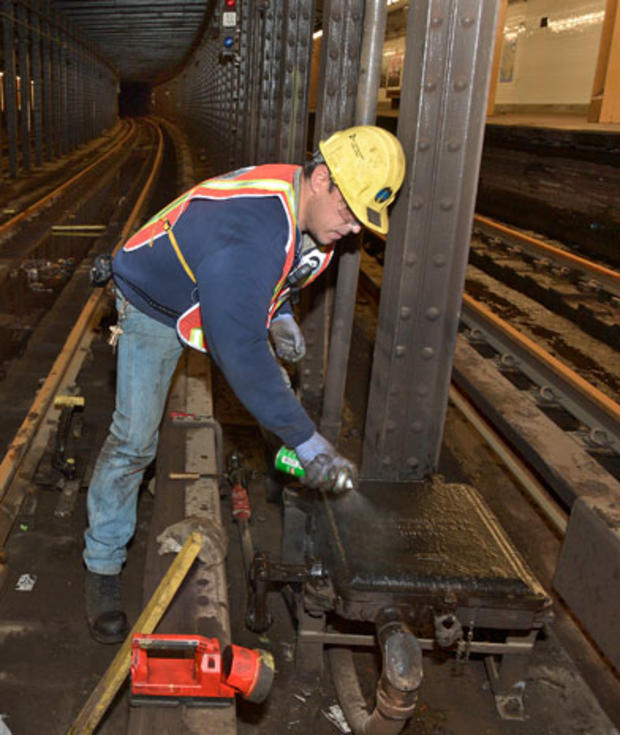
Crews worked 24 hours a day to pump millions of gallons of seawater out the flooded tunnels - then walk the tunnels to inspect the tracks, the third rail and signals, and to make repairs as needed.
Metropolitan Transportation Authority / Patrick Cashin
People wait for shuttle buses outside Barclays Center in Brooklyn, New York on Nov. 1, 2012.
CBS
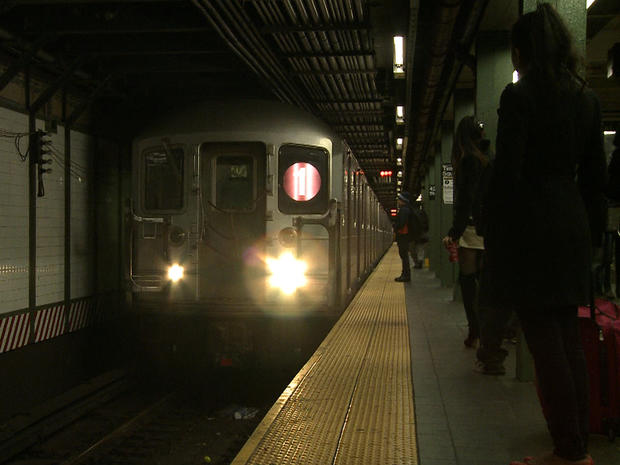
New York City subway trains began partial service after being down for three and a half days, on Nov. 1, 2012.
MTA New York City Transit/Leonard Wiggins
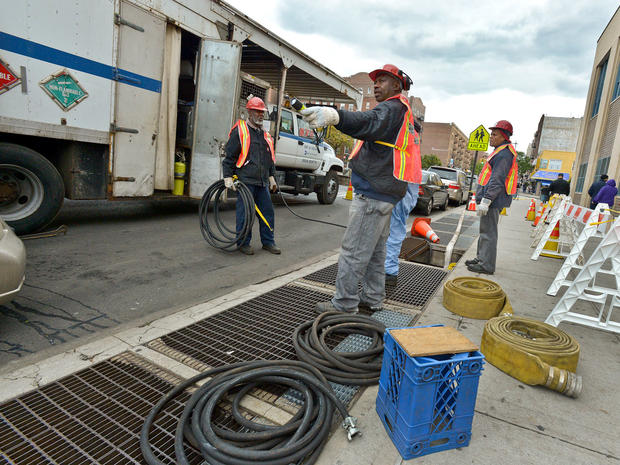
Elsewhere, New York City Transit employees at Dyckman Street worked to pump water out of upper Manhattan's section of the A Line on Nov. 1, 2012.
Metropolitan Transportation Authority / Patrick Cashin
New York City Transit employees at Dyckman Street pumped water out of Upper Manhattan's section of the A Line, on Nov. 1, 2012.
Metropolitan Transportation Authority / Patrick Cashin
New York City Transit employees at Dyckman Street inspect parts of the Manhattan's section of the A Line, on Nov. 1, 2012.
Metropolitan Transportation Authority / Patrick Cashin
A New York City Transit employees directs people near upper Manhattan's section of the A Line, on Nov. 1, 2012. Superstorm Sandy brought an unexpected surge of flood water that rendered New York City's subway system inoperable for days.
Metropolitan Transportation Authority / Patrick Cashin
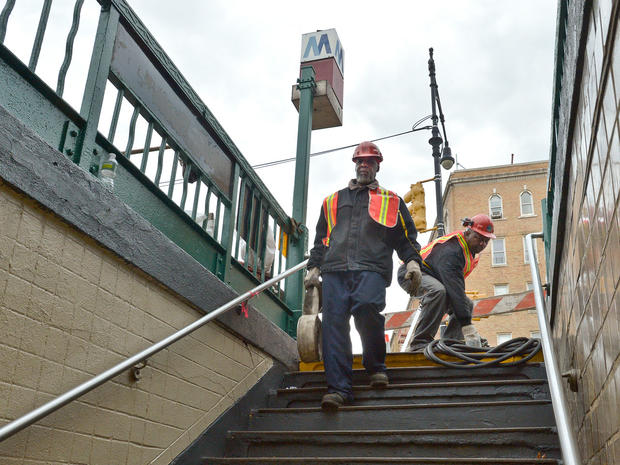
New York City Transit employees enter a subway station on upper Manhattan's section of the A Line to pump out water, on Nov. 1, 2012.
Metropolitan Transportation Authority/Patrick Cashin
New York City Transit employees pump out water from Manhattan's section of the A Line, on Nov. 1, 2012.
Metropolitan Transportation Authority/Patrick Cashin
A worker uses a water pump to remove water from part of the flooded A Line tunnel near Dyckman street in upper Manhattan, on Nov. 1, 2012.
MTA New York City Transit/Leonard Wiggins
New York City Transit employees at Dyckman Street pumped water out of Upper Manhattan's section of the A Line on Nov. 1, 2012.
MTA New York City Transit/Leonard Wiggins
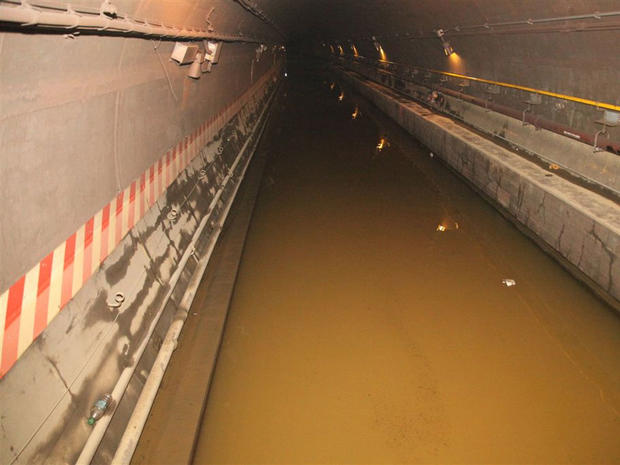
Water inside the Cranberry Street Tunnel, which carries the A and C trains between Brooklyn and Manhattan underneath the East River, on Nov. 1, 2012 after superstorm Sandy.
MTA New York City Transit/Leonard Wiggins
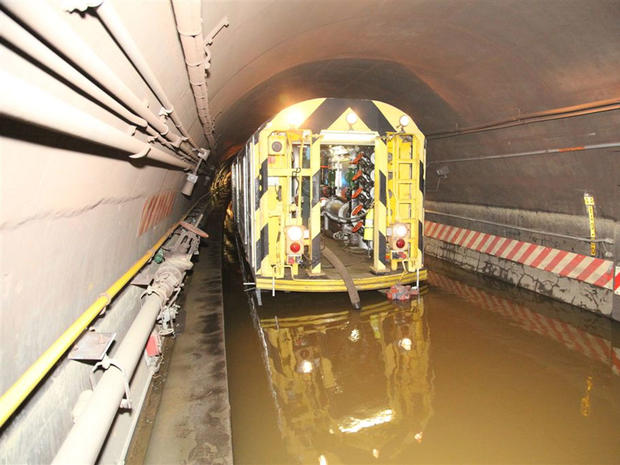
The water was 28 inches deep in the Cranberry Street Tunnel, on Nov. 2, 2012. Despite precautions, superstorm Sandy flooded the subway tunnel, and crews had to work around the clock to pump the water out.
Metropolitan Transportation Authority/Patrick Cashin
New York City Transit employees pump water out of the flooded A Line tunnel near Dyckman Street in upper Manhattan, on Nov. 2, 2012.
MTA New York City Transit/Leonard Wiggins
Water floods the inside of the Cranberry Street Tunnel, which carries the A and C trains between Brooklyn and Manhattan underneath the East River.
MTA New York City Transit/Leonard Wiggins
New York City Transit employees are pumping water out of the Cranberry Street Tunnel, which carries the A and C trains between Brooklyn and Manhattan underneath the East River.
MTA New York City Transit/Leonard Wiggins
An undated look inside the Cranberry Street Tunnel, which carries the A and C trains between Brooklyn and Manhattan underneath the East River after the events of superstorm Sandy.
MTA New York City Transit/Leonard Wiggins
New York City Transit employees are pumping water out of the Cranberry Street Tunnel, which carries the A and C trains between Brooklyn and Manhattan underneath the East River in this undated photo.
MTA New York City Transit/Leonard Wiggins
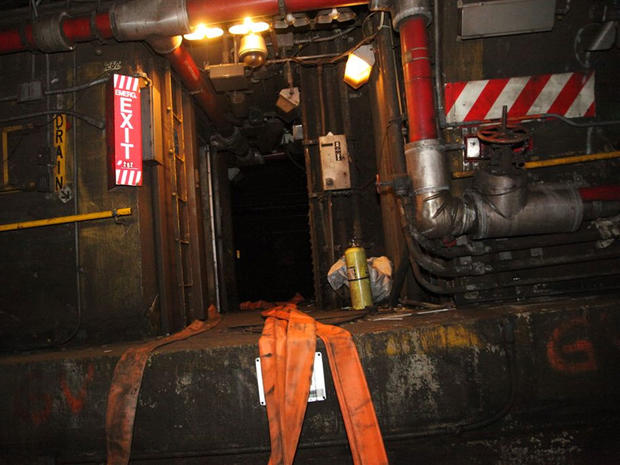
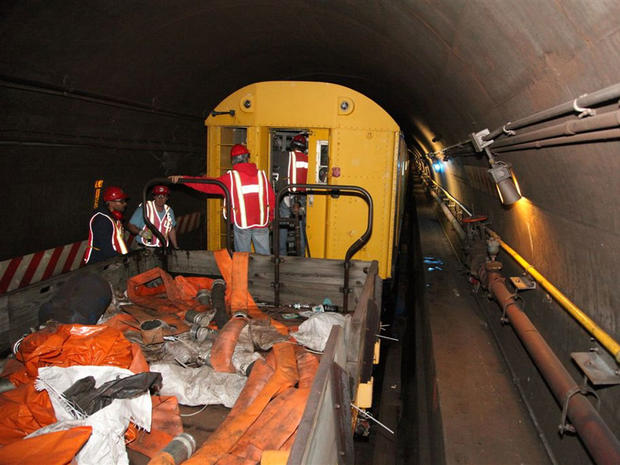
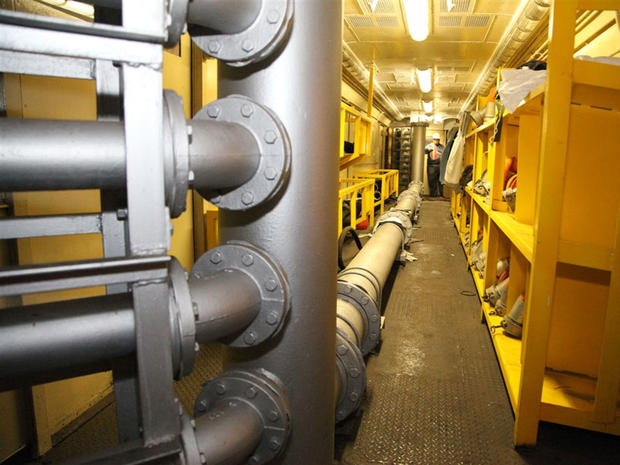
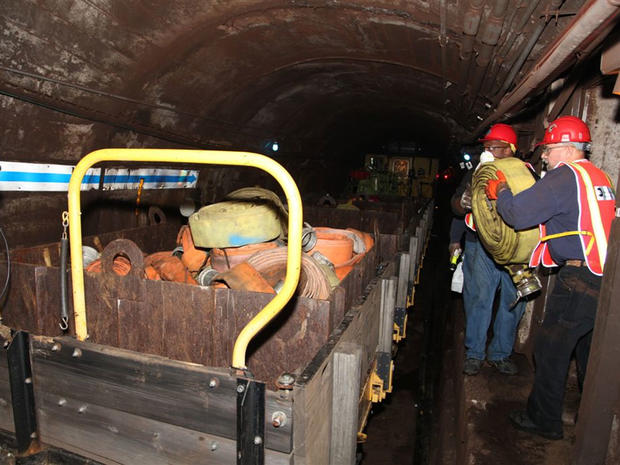
The pipe car of a pump train used to clear the water from superstorm Sandy from the Cranberry Street Tunnel, which carries the A and C trains between Brooklyn and Manhattan underneath the East River, on Nov. 2, 2012.
MTA New York City Transit/Leonard Wiggins
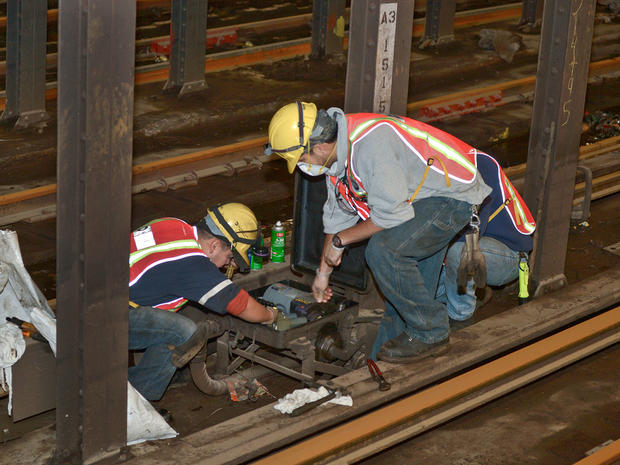
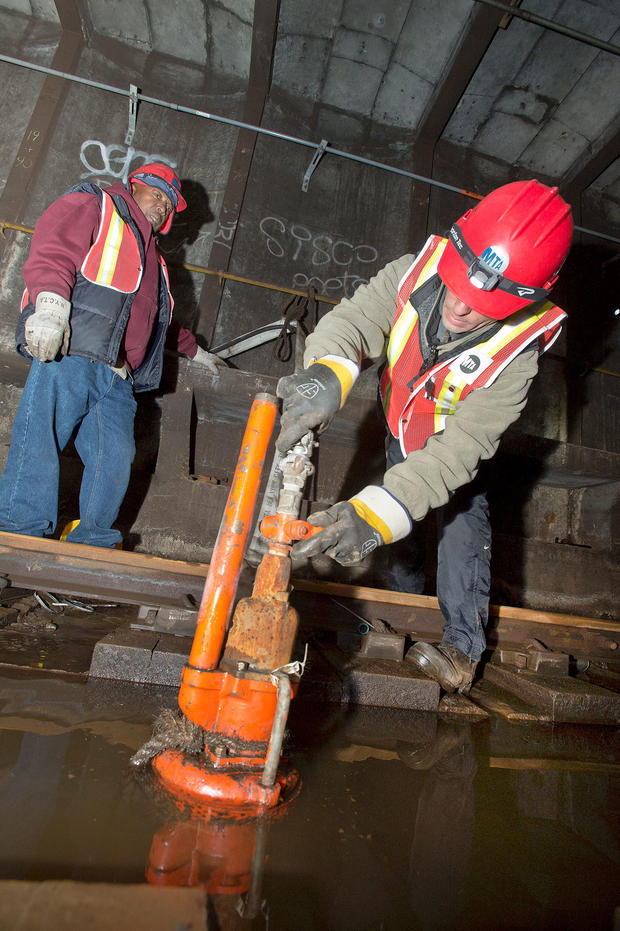
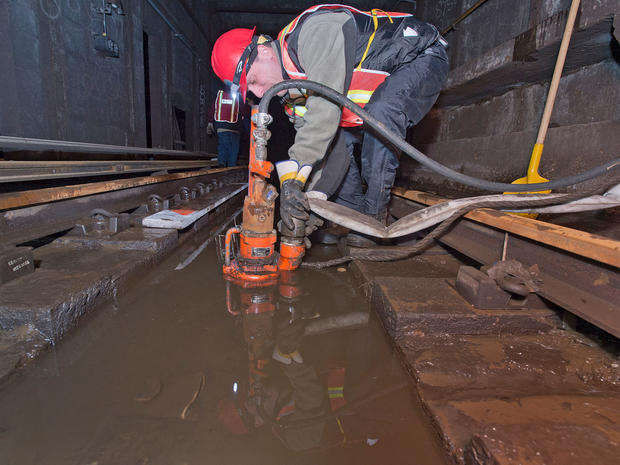
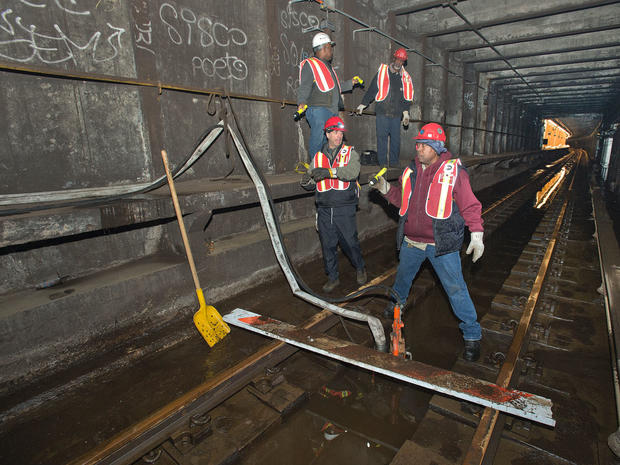
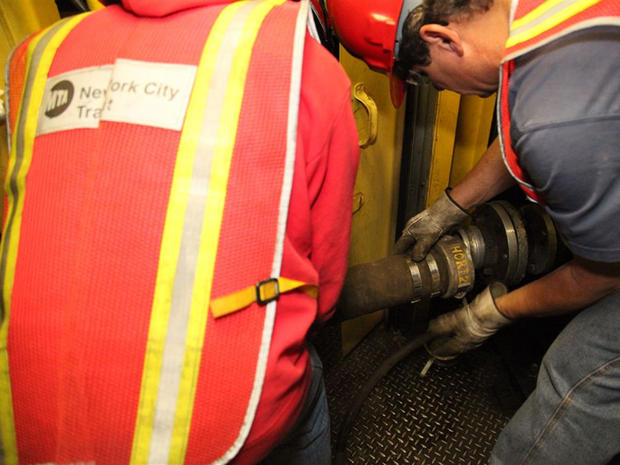
The hydraulics team hooks up submersible hose of a pump train to try and drain the Cranberry Street Tunnel from flood water brought by superstorm Sandy, on Nov. 2, 2012.
MTA New York City Transit/Leonard Wiggins
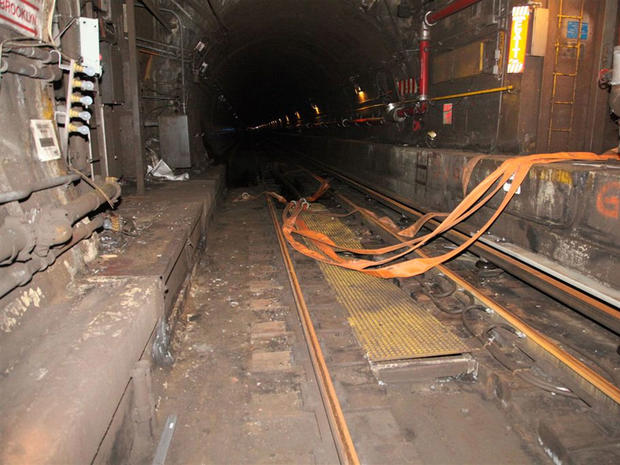
A pump train is siphoning out water from the Cranberry Street Tunnel, on Nov. 2, 2012. The subway tunnel was flooded during superstorm Sandy.
MTA New York City Transit/Leonard Wiggins
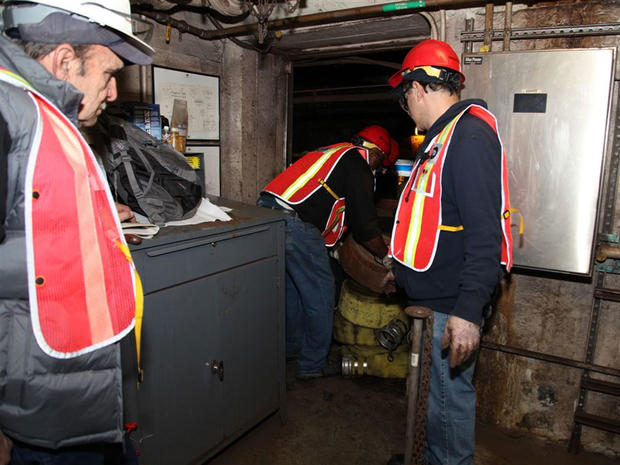
Hydraulics teams loads the water line pump into the 53rd Street Tunnel, which carries the E and M trains between Queens and Manhattan underneath the East River, on Nov. 2, 2012.
MTA New York City Transit/Leonard Wiggins
Hydraulics team loads the water line onto the pump train in the 53rd Street Tunnel on Nov. 2, 2012.