CBS Photo Archive
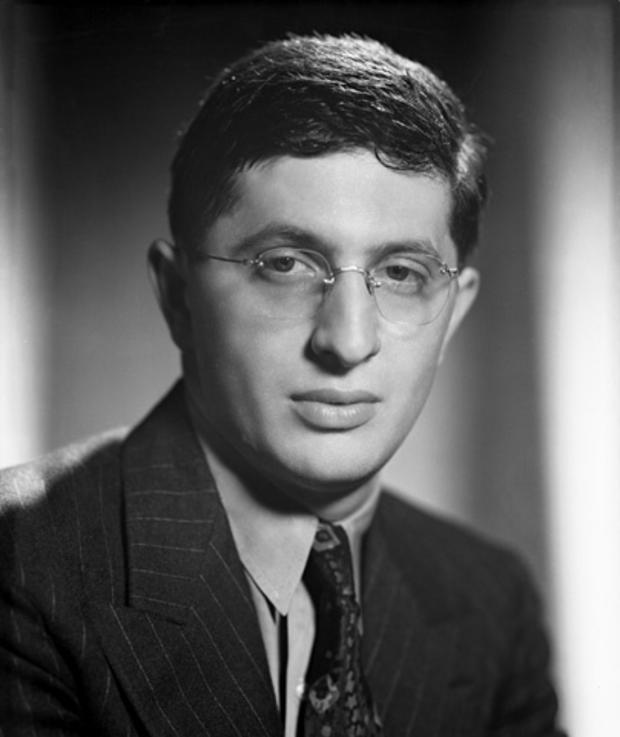
June 29, 2011 marks the centenary of the birth of Bernard Herrmann, one of America's most innovative and influential composers. Although he contributed substantially to radio drama and music broadcasts for nearly two decades at CBS, and composed well-regarded concert works (including a symphony and an opera), he is best known for his film scores for such classics as "Citizen Kane," "Vertigo," "Psycho" and "Taxi Driver" - music that forever changed the way we listen to movies.
His collaborations with Orson Welles, Alfred Hitchcock, Francois Truffaut, Brian De Palma and Martin Scorsese are landmarks in cinema, and while the fiery and temperamental artist became a pariah to many in the Hollywood film industry, his work is among the most imitated in films today.
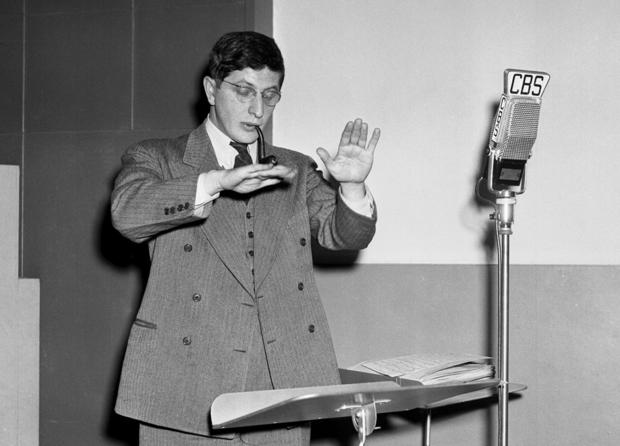
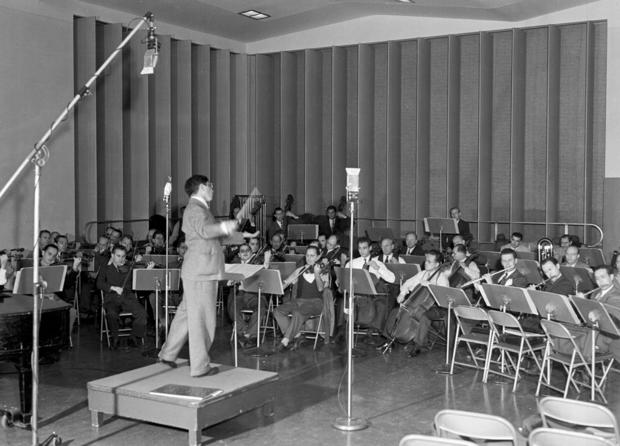
Pictured: Bernard Herrmann conducts a rehearsal of "The Free Company," a CBS radio drama, April 6, 1941.
by CBSNews.com producer David Morgan (author, "Knowing the Score")
Paramount Pictures
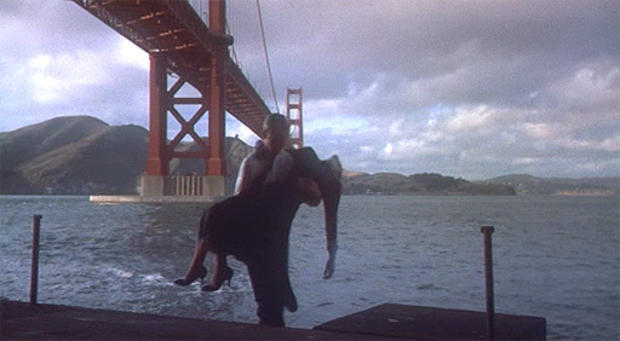
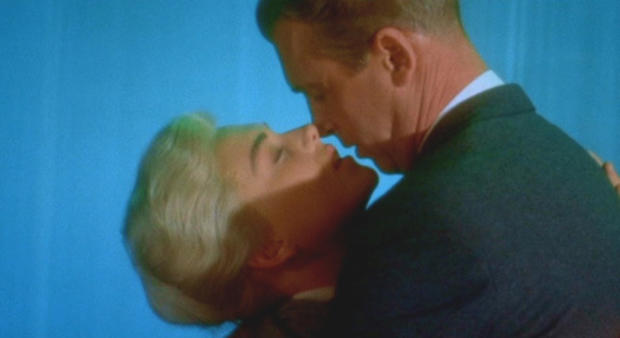
Pictured: James Stewart pulls Kim Novak from San Francisco Bay in "Vertigo" (1958).
In 1991 on the set of "Cape Fear," Martin Scorsese spoke of his appreciation of Herrmann's music: "'Psycho' of course is fantastic. 'The Ghost and Mrs. Muir' is very sad, beautiful. His music really got to me after 'Vertigo' and 'Marnie.' I think [that] was when I realized the sense of ruin, sadness, melancholy, fear and anxiety - and that was really terrific!"
CBS Photo Archive
Born in New York City in 1911, Herrmann studied at New York University and Juilliard, acquiring a reputation as an accomplished conductor and musicologist. His career at CBS Radio took off quickly in 1934 - programming, arranging and conducting music for countless radio programs, including "Music in the Modern Manner" and the dramatic series, "Columbia Workshop." He joined forces with Orson Welles for the "Mercury Theatre on the Air" (later renamed "Campbell Playhouse," after Campbell Soup became its sponsor), and composed scores for its classic radio dramas, including the infamous Halloween 1938 broadcast of "War of the Worlds," and adaptations of "Heart of Darkness," "Sherlock Holmes," and "Rebecca," as well as the original story "The Hitch-hiker," written by Lucille Fletcher (Herrmann's first wife).
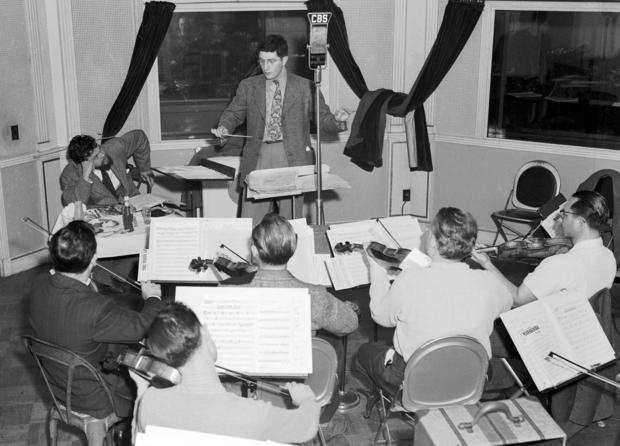
Pictured: Orson Welles (seated, left rear) partakes of an impromptu lunch while reviewing notes with Herrmann for a "Campbell Playhouse" production of "The Hurricane," at the Max Reinhardt Theater Studios in Hollywood, Calif., November 5, 1939.
RKO Pictures
When Welles signed a contract with RKO Radio Pictures for his first film, he demanded that Herrmann be brought on to write its score - and that he be paid as much as Hollywood's leading composer, Max Steiner ("Gone With the Wind").
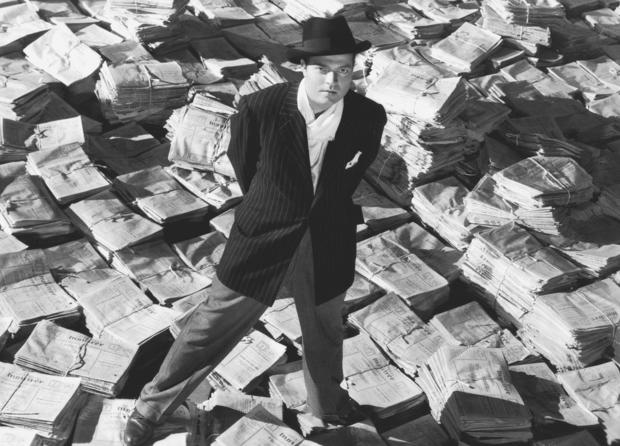
Herrmann's process for scoring "Kane" was highly unusual in an industry used to composers being assigned at the tail-end of production to add their music, almost as an adornment of what was created by others. Herrmann participated throughout the shooting and editing of "Kane," and insisted on doing all his own orchestrations - a rarity in a system where music production was highly mechanized to adhere to rigid scheduling, timing and performance practices.
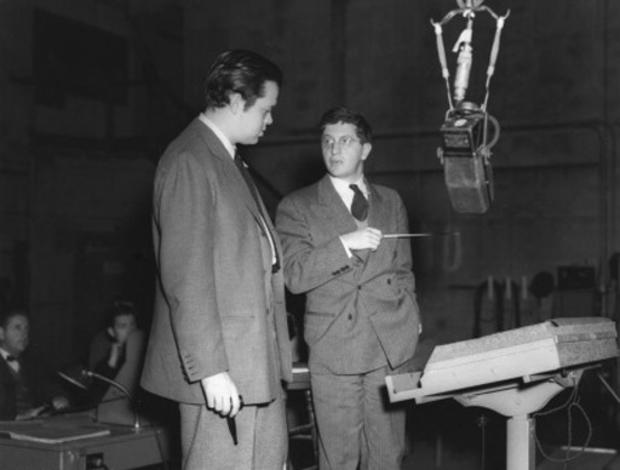
Pictured: Orson Welles and Bernard Herrmann at the recording sessions for "Citizen Kane."
RKO Pictures
Herrmann's score for "Kane" accomplished something rare in films: At a time when composers usually contributed wall-to-wall music that highlighted the action or setting, Herrmann's score portrayed the characters' psychology and inner turmoil. In the case of Charles Foster Kane, the score was one of bravado, ambition, hunger, isolation and despair - presented in a variety of period styles and filtered through the memories of the characters who recounted their experiences and memories of Kane.
In a 1945 letter to The New York Times (responding to one writer's attack on the validity of film music), Herrmann wrote, "Music on the screen can seek out and intensify the inner thoughts of the characters. It can invest a scene with terror, grandeur, gaeity, or misery. It can propel narrative swiftly forward, or slow it down. It often lifts mere dialogue into the realm of poetry. Finally, it is the communicating link between the screen and the audience, reaching out and enveloping all into one single experience."
RKO Pictures
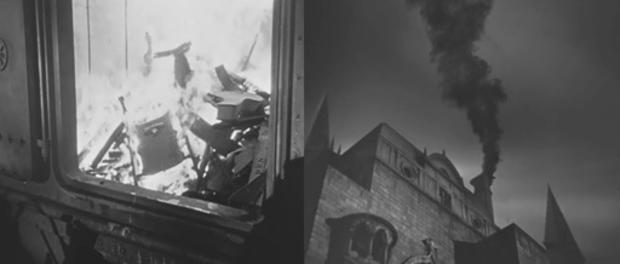
The conclusion of "Citizen Kane."
The camera's long tracking shot over the massive collection of Kane's possessions (much of it destined for the incinerator, including a certain sled) was filmed to playback of Herrmann's pre-recorded score - a practice rarely used at that time.
RKO Pictures
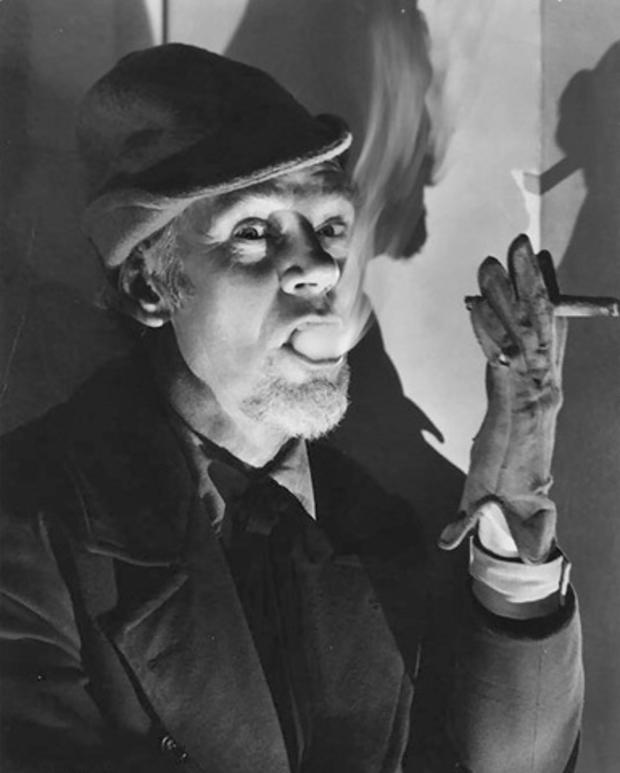
Walter Huston as Mr. Scratch in "The Devil and Daniel Webster" (1941). Herrmann's score was a playful mix of folk music fiddling and ominous Faustian soundscapes for this tale of Satan taking on the wrong New Englander. His radio experience allowed Herrmann to skillfully blend the score under and between the dialogue, allowing the music's narrative voice to be as important as the characters'. His opening merges two themes - one for Mr. Scratch, one for the New England farmers on whose souls he preys - in a lively dance.
He also used advanced electronic techniques (including overlapping violins in playback and recording tones over telephone wires) to make the Devil's music truly unreal.
Herrmann was nominated for two Academy Awards that year, for "Devil and Daniel Webster" and "Citizen Kane," and won for this fantasy - his only Oscar.
RKO Pictures
Welles' second film, an adaptation of "The Magnificent Ambersons," suffered from interference by the studio which - following a disastrous preview screening - took the director's version and drastically cut it, in the process replacing half of Herrmann's score with another composer's new work. Herrmann successfully sued to have his name removed from the credits of the final release.
While he championed the use (even the necessity) of music in films, Herrmann's experience with "Ambersons" colored his view of Hollywood and of having to collaborate with filmmakers whose musical tastes (or business ethics) he despised. He also hated being referred to as a "film composer," as if it were something beneath a "regular" composer.
CBS Photo Archive
Even as he embarked on a film career in Hollywood, Herrmann continued his role as principal conductor for the CBS Symphony throughout the 1940s, including his weekly series "Invitation to Music," in which the musicologist introduced American audiences to many unknown composers and previously unheard works. (He was a champion of Charles Ives, for one.) Herrmann also conducted some of his own concert work, including a cantata based on "Moby Dick" and his 1941 Symphony.
In his Herrmann biography, "A Heart at Fire's Center," Steven C. Smith recounts a typically brazen Herrmann retort to CBS head William Paley who had questioned his esoteric programming: "You're assuming the public is as ignorant about music as you are."
As Arturo Toscanini did at NBC, Herrmann dominated CBS' musical programming until 1951, when the CBS Symphony was disbanded - a victim of radio's death to television. The decision generated more Herrmann invective directed at Paley, who replied, "The trouble is, Benny, you're wearing the old school tie, and there's no old school anymore."
RKO Pictures
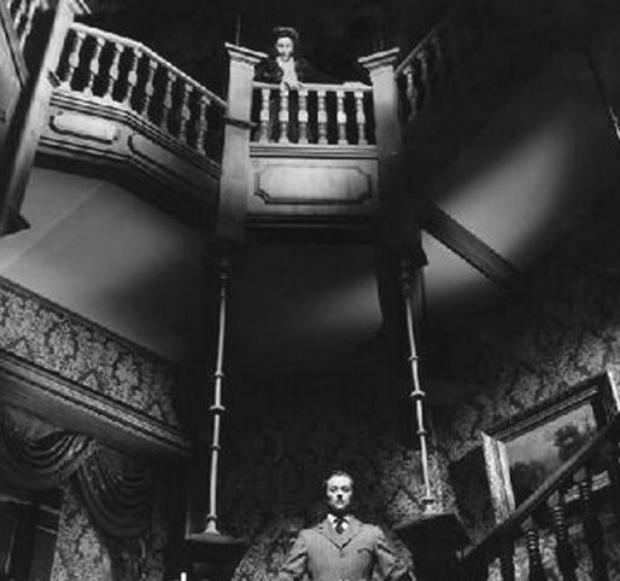
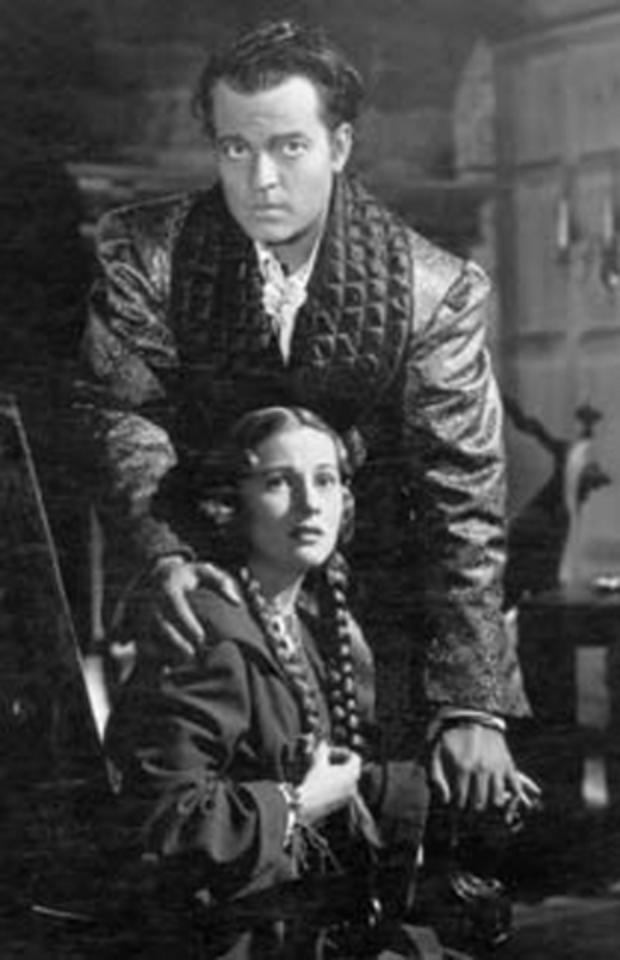
Orson Welles and Joan Fontaine in "Jane Eyre" (1944). Herrmann was hired by 20th Century Fox to write the score for this adaptation of Charlotte Bronte's Gothic romance (after talks with Igor Stravinsky collapsed). The material suited Herrmann's Anglophilic taste to a T - his music reveled in the psychological trappings of Eyre, Rochester, and the mysterious secret locked up in the chambers of Thornfield Hall.
Some themes from Herrmann's radio adaptation of Daphne du Maurier's "Rebecca" (a not-dissimilar melodrama) crept into the score for "Jane Eyre" - and the score itself spawned themes that Herrmann developed in his opera based on another Bronte sister's book, Emily Bronte's "Wuthering Heights." (The composer's unwillingness to trim that 3.5-hour magnum opus left it unstaged during his lifetime.)
20th Century Fox
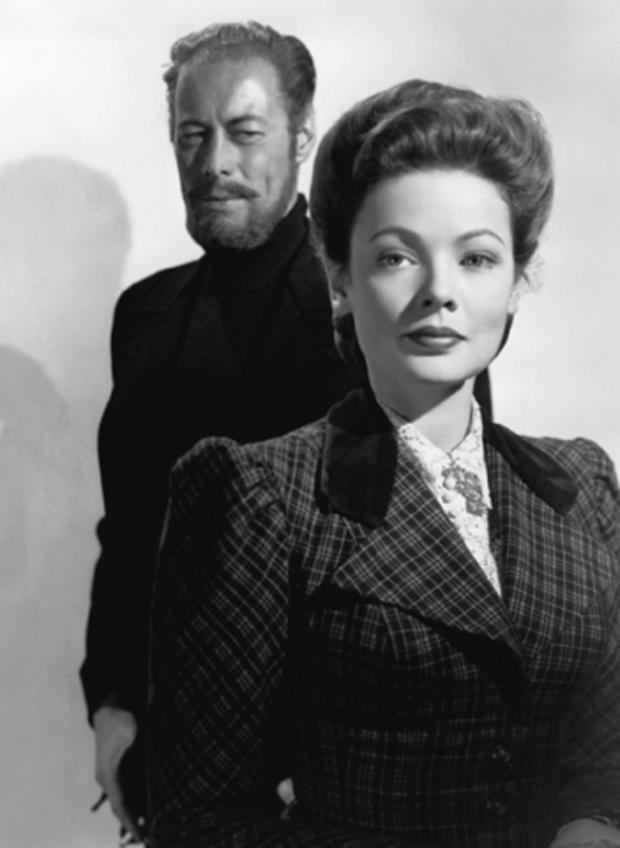
Gene Tierney and Rex Harrison in "The Ghost and Mrs. Muir" (1947).
Herrmann's favorite of all his film scores, an astral romance in which longing and separation are depicted between two lovers who can never quite consummate their relationship.
Other Herrmann scores of this period include "Hangover Square" (about a murderous pianist who played a "concerto macabre"), and "Anna and the King of Siam" (an unique blending of Western instrumentation and exotic Balinese and Siamese music that earned Herrmann an Oscar nomination).
20th Century Fox
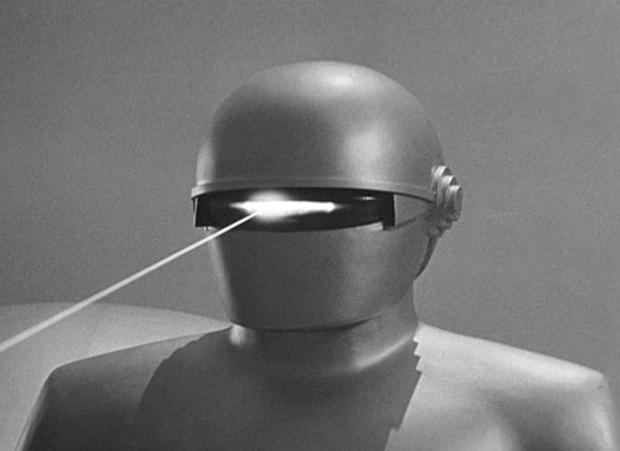
The Theremin - an electronic instrument played by manipulating the space around two antennae - had been used to tremendous effect in Miklos Rosza's score for "Spellbound," but its most dynamic film appearance was in Herrmann's score for the 1951 science fiction classic, "The Day the Earth Stood Still." Herrmann's music featured electronic basses, organ and percussion instruments, as well as over-dubbing and tape reversal, but the star was the Theremin, which captured the alien Klaatu and his robot companion Gort to great effect. When a character says Gort has the capacity to lay waste our planet, as scored by Herrmann, we believe it. Klaatu barada nikto!
20th Century Fox
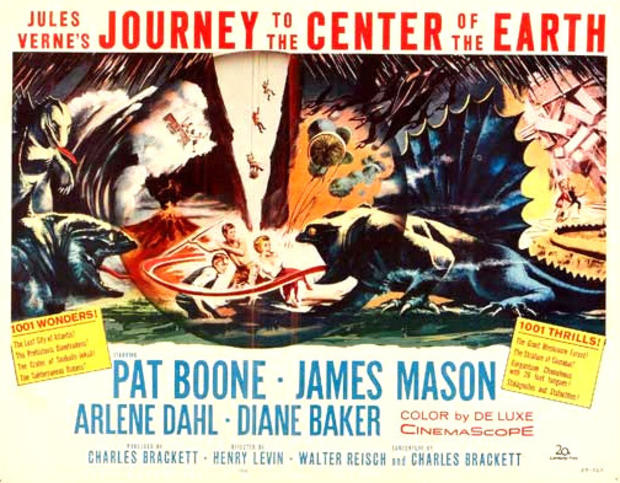
During his work at 20th Century Fox in the late 1940s through 1959, Herrmann contributed both to A-list dramas and B-list programmers. With the introduction of CinemaScope's stereophonic sound, the composer's unusual orchestral arrangements (such as "Beneath the 12-Mile Reef"'s nine harps or "Journey to the Center of the Earth"'s bevy of organs) were truly allowed a chance to shine.
"Bernard Herrmann especially was a master of very unusual combinations of instruments," recalled composer Jerry Goldsmith in the 1980s. "And it'd sound wonderful on paper, and it sounded rather interesting on the scoring stage. But by the time you get to picture, nobody's going to know you're using six clarinets and six bassoons and no flutes and oboes, or using twelve harps or something. It just doesn
Paramount Pictures
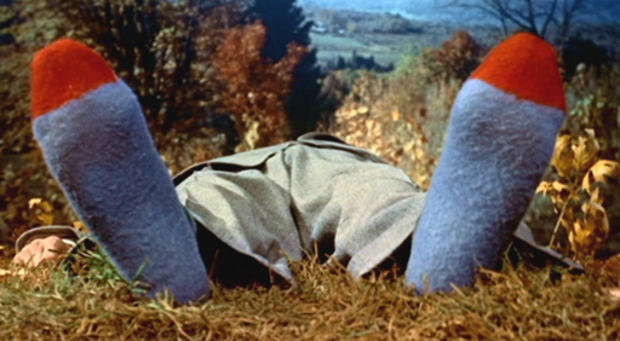
"The Trouble With Harry" (1955) was a watershed for Herrmann, marking his first collaboration with Alfred Hitchcock. Just as the subject matter was a departure for the director - a comic tale about having to deal with an unwanted corpse (OK, not THAT much of a departure) - the film's autumnal New England settings and humorous tone offered Herrmann the chance to contribute a pastoral, lyrical score - one that he later adapted into a suite he called "A Portrait of Hitch," reflecting the filmmaker's humor.
Warner Brothers
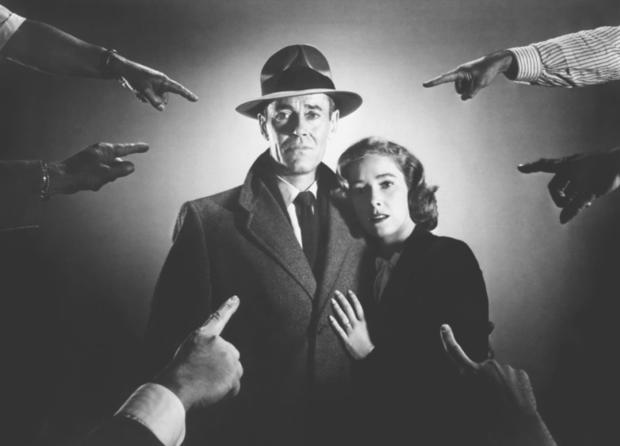
Henry Fonda and Vera Miles in "The Wrong Man" (1956), one of Hitchcock's bleakest films, in which an innocent man's life turns tragic after being falsely accused of armed robbery.
Herrmann's score is marked by an almost minimalist approach that predates minimalism. After opening with a vibrant pop piece set in New York's Stork Club (where Fonda's musician performs), the music delivers a stark, muted atmosphere - almost unrelentingly gloomy, with slow tempos and idiosyncratic orchestration - as we watch his character trapped in a downward spiral of arrest, incarceration and prosecution.
Paramount Pictures
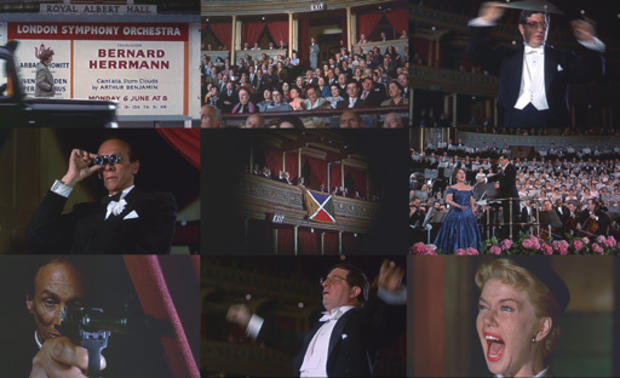
Hitchcock's 1956 remake of "The Man Who Knew to Much" (starring James Stewart and Doris Day) features a climax in which a murder is to be committed at the Royal Albert Hall, during the fortissimo crescendo of a concert work, the "Storm Clouds Cantata" by Arthur Benjamin (written for the original 1934 version of the film). The music was performed by the London Symphony Orchestra and Covent Garden Chorus conducted by - who else? - Bernard Herrmann, in his only screen cameo. To the relief of the intended murder victim, Day's opportune scream saves the day.
20th Century Fox
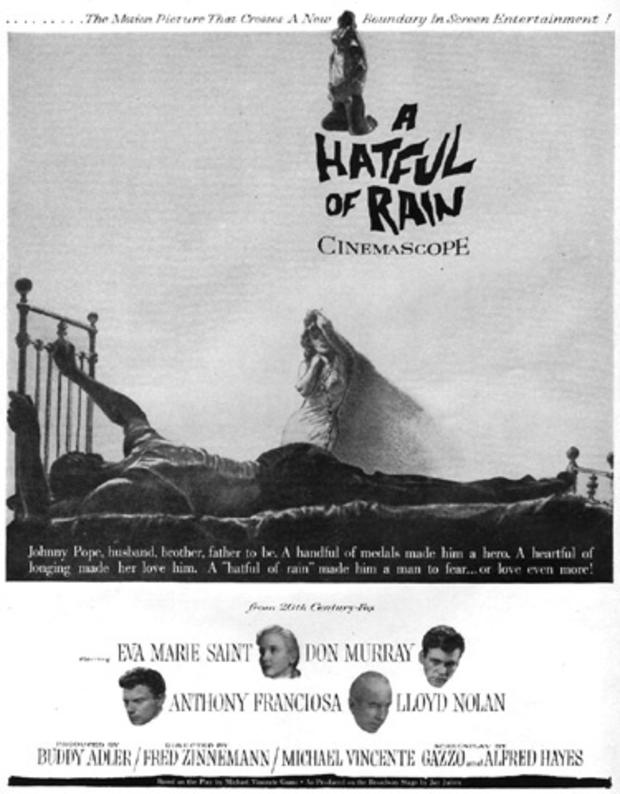
"A Hatful of Rain" (1957), adapted from a play by Michael V. Gazzo (best known as Frank Pentangeli in "The Godfather Part II"), was notable for its harrowing portrayal of a Korean War veteran's drug addiction. Herrmann's music was similarly harrowing - fierce and mounting tension for winds and strings.
Paramount PIctures
Hitchcock's "Vertigo" (1958) was a tale of a San Francisco detective who falls for the woman he is tailing only to watch helplessly as she commits suicide - and then discovers her double. One of Herrmann's most impassioned scores, the music captures the tortured psyche of James Stewart's Scotty as he tries to recreate his lost love Madeleine in the person of Judy (both played by Kim Novak).
Hitchcock was particularly sensitive to the use of music and to its ability to advance the narrative more economically (or more interestingly) than through dialogue. He allowed long passages of the film to go without ANY dialogue - only supported by Herrmann's music. The director would typically invite the composer to the set during shooting and ask if he thought music might be appropriate for the scene - and if told no, he'd ask the actors to act more quickly.
Paramount Pictures
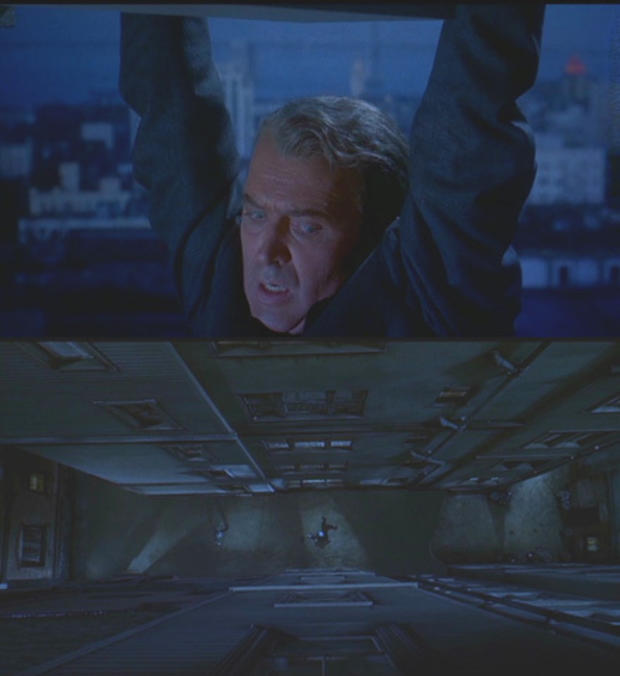
James Stewart in the perilous opening of "Vertigo."
Columbia Pictures
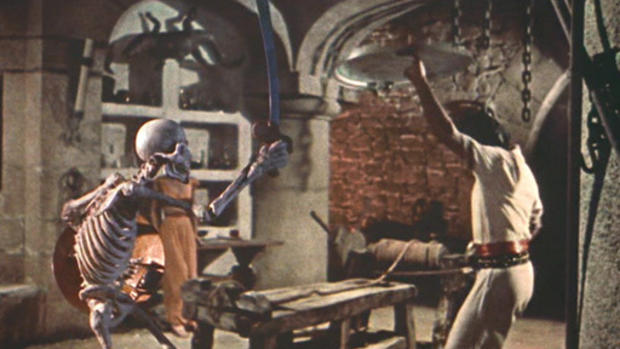
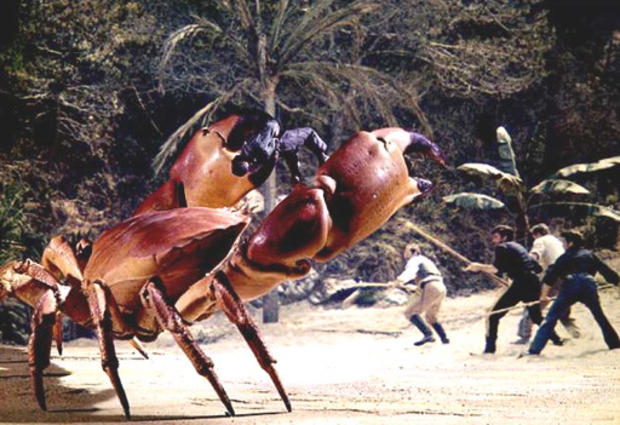
Herrmann's tongue was wisely in his cheek when scoring this Ray Harryhausen fantasy, which featured among its carnival of spectacles a sword fight between hero Kerwin Mathews and a skeleton - what else but a xylophone to capture an opponent composed of bones?
MGM
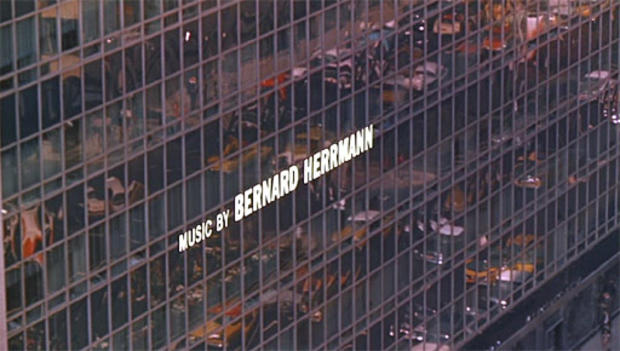
The quintessential Hitchcock thriller of an innocent man caught up in whirlwind of intrigue and murder, "North by Northwest" featured as its main theme a fandango in alternating 6/8 and 3/4 time - what Herrmann called a "dance of death."
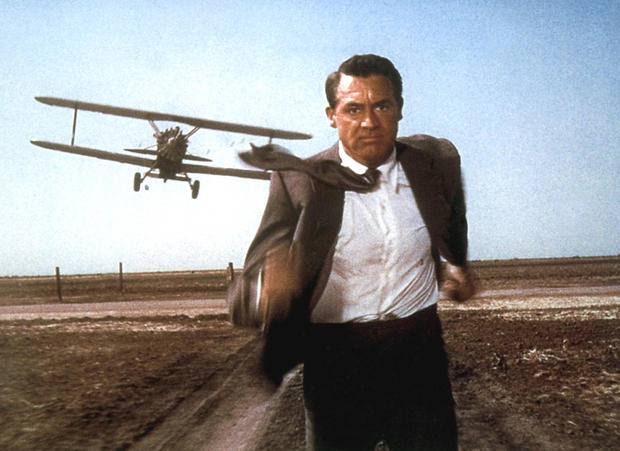
It's to Herrmann's credit that he not only knew when to place music, but also when not to - as in the infamous cropduster scene, in which ad executive Roger Thornhill (Cary Grant) is pitted against an airborne assassin. No music was used - only the stark stillness of the isolated protagonist's plight shattered by the sound of machine gun fire.
CBS/UCSB
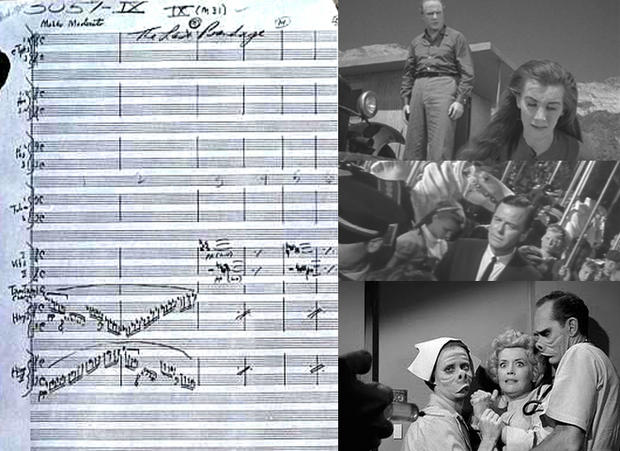
Herrmann also scored several television programs and specials, none more memorably than Rod Serling's CBS anthology series "The Twilight Zone." In addition to the original opening theme (which was later replaced by Marius Constant's more familiar tune), Herrmann scored several episodes, including "The Lonely" (with Jack Warden as a man marooned on an asteroid with a robot companion (Jean Marsh); "Walking Distance," in which an ad executive (Gig Young) tries to return to the summer of his youth; and the creepiest episode ever, "Eye of the Beholder," about a society where the viewer's idea of beauty is turned upside-down.
Universal Pictures
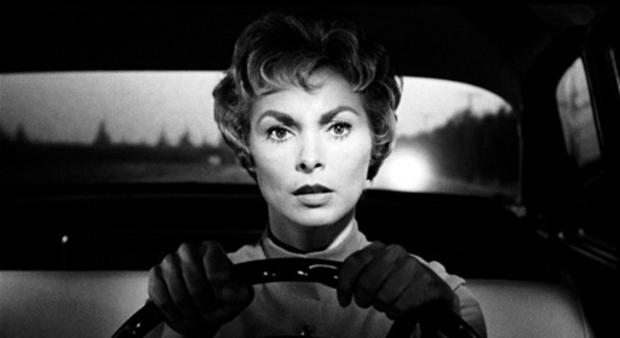
The deceptively mundane imagery of the opening scenes in "Psycho" (1960) - Janet Leigh driving, miles of Arizona highway slipping by - is given urgency and turmoil by Herrmann's pounding, propulsive score. The music is notable not only for its haunting, highly-charged rhythms but for its strings-only orchestra, ostensibly devised by Herrmann for monochromatic consistency (and just as likely owing to the film's limited budget).
The "Psycho" music is a landmark of narrative scoring, as Leigh's character - absconding with $40,000 from her real estate office - lands at a deserted and decrepit motel, and into cinema history.
Universal Pictures
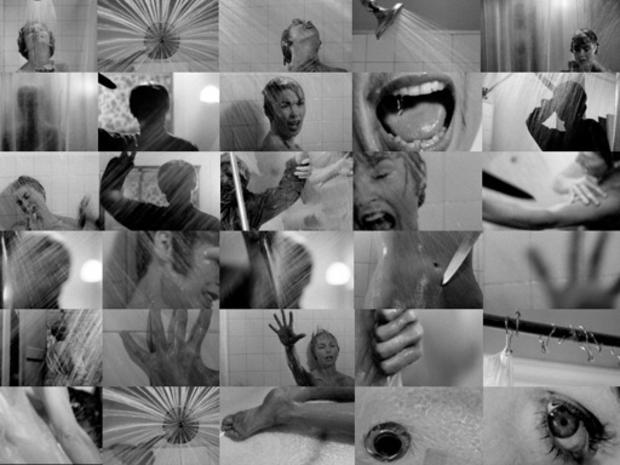
Herrmann's most recognizable musical phrase - the shrieking violins of the murder scene in "Psycho" (1960) - were almost never heard. When the director first discussed music for specific scenes, he told Herrmann that he wanted the murder of Janet Leigh's character at the Bates Motel to be dramatized without music. The composer felt this was wrong, and so showed Hitchcock the scenes with no music - and then again, with his stabbing strings playing. "Oh yes, we must use it," Hitchcock said. "But you didn't want music," Herrmann replied. "My boy, improper suggestion," the director responded.
Columbia Pictures
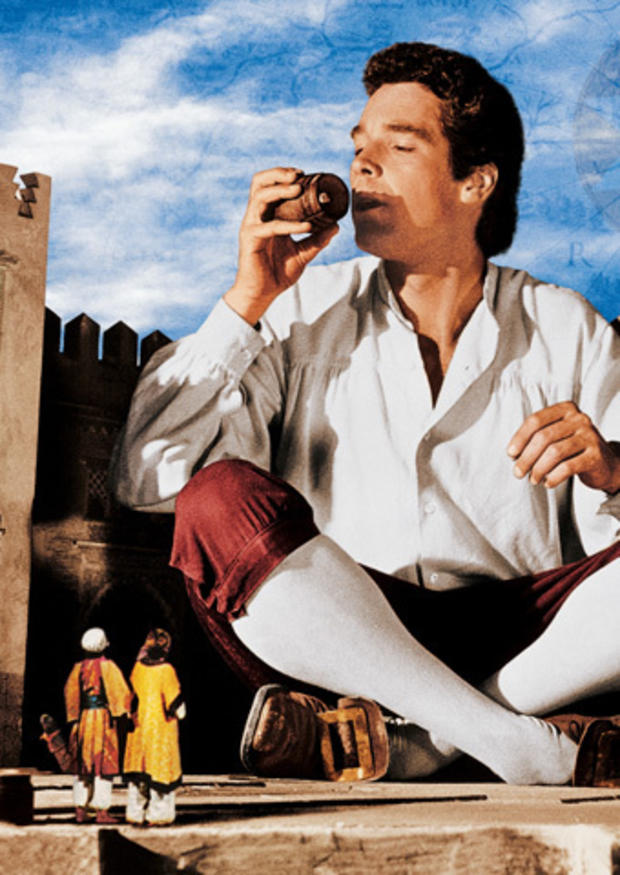
Kerwin Mathews in the effects-filled fantasy "The 3 Worlds of Gulliver." The film provided Herrmann with a rich, humorous tableau of British-sounding themes for Jonathan Swift's English hero as he finds himself by turn in lands of the diminutive (Lilliput) and the giant (Brobdingnag).
Universal Pictures
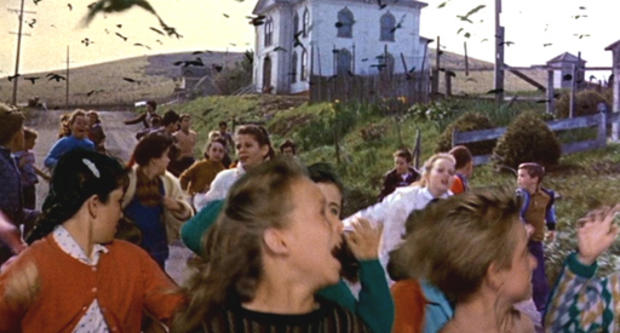
Alfred Hitchcock's "The Birds." Herrmann did not compose a music score per se, but did work with German avant garde composer Remi Gassmann and Oskar Sala, who created electronic sound representations of the birds, the placement and tempo of which Herrmann - as sound consultant - "orchestrated."
Universal Pictures
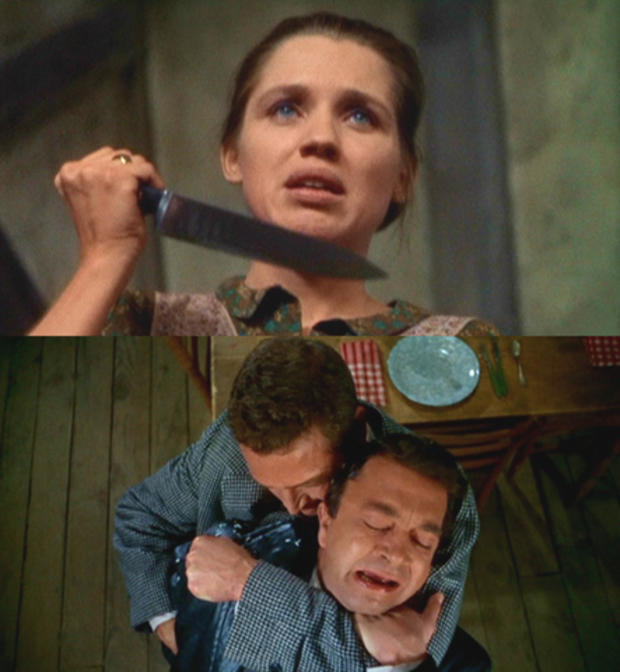
Paul Newman and Carolyn Conwell struggle to kill an East German agent (Wolfgang Kieling) in Alfred Hitchcock's Cold War thriller "Torn Curtain" (1966). Like some of Hitchcock's films, the relationship between the director and composer came to a tortured end - severed over Hitchcock's bowing to pressure from the studio to release his spy caper with what Herrmann described as "a popular and exploitable score." Pop music (and money-making hit records) being all the rage, Hitchcock asked Herrmann for a pop score to his tale of Cold War intrigue. Arriving on the scoring stage only to find Herrmann's typically atypical orchestral arrangement - 12 flutes, 16 horns, 9 trombones, 2 tubas, 8 cellos, 8 basses and 2 sets of timpani - and hearing the so un-pop music overture, Hitchcock fired Herrmann on the spot - ending what was up to then the most creative collaboration between director and composer Hollywood had known.
Herrmann's score for "Torn Curtain" languished until it was recorded in the 1970s by Elmer Bernstein - and fans could finally hear how much richer a film it would have been.
Bernstein would later appropriate the killing music for Martin Scorsese's remake of "Cape Fear" (1991), which incorporated Herrmann's music from the 1962 original.
Universal Pictures
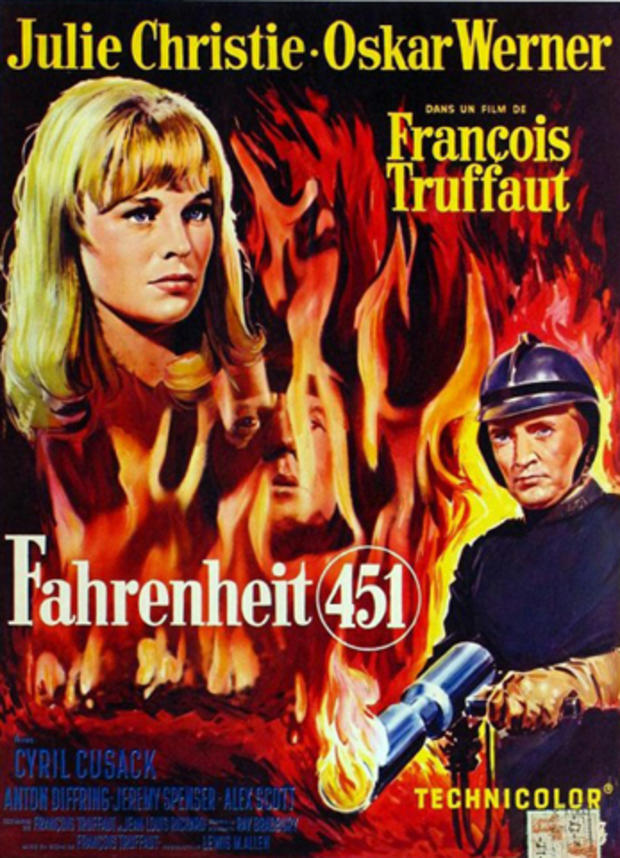
While Herrmann walked out on the Hollywood system, a younger generation of directors came calling, including a founding member of the French New Wave, Francois Truffaut. For his only English-language film, an adaptation of Ray Bradbury's sci-fi novel "Fahrenheit 451" (1966), Truffaut told Herrmann he wanted not "modern" music of the 20th century, but music of the 21st century. The composer created one of his most haunting, tender scores - exemplified by the finale, in which a community of outcasts walk, memorizing the books that have been outlawed by the government.
"In '451' the hero reads a book and the heroine makes love, and they are persecuted for it," Herrmann remarked. "Well, these things set to absolutely pure music became horrifying. But if the music was to have been nervous and excitable, it would not have worked."
MGM
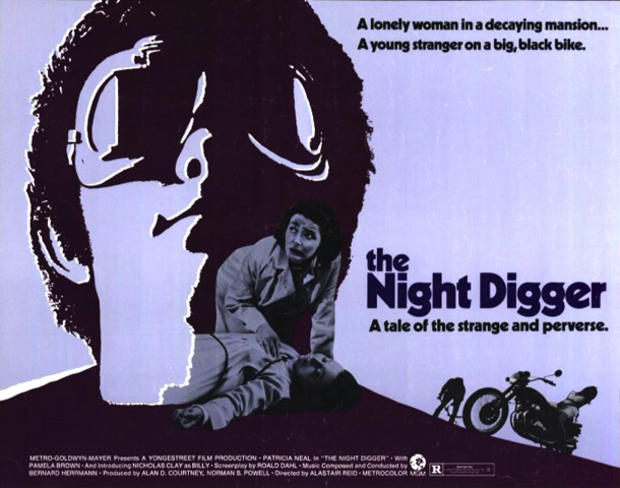
A British thriller from 1971, written by Roald Dahl for his wife, Patricia Neal, "The Night Digger" (a.k.a. "The Road Builder") featured a haunting score dominated by strings and a harmonica representing the troubled young man (played by Nicholas Clay) who can't seem to help killing young women and burying them.
AIP
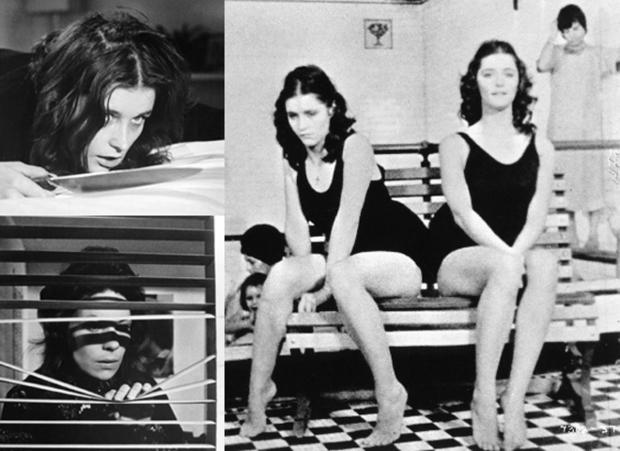
Margot Kidder and Jennifer Salt in Brian De Palma's "Sisters" (1973). Hitchcock's influences were undeniable (the film tipped its hat to "Rear Window," among others) in this psychological thriller about Siamese twins and a witness to murder. Herrmann's strange, electronically-tinged score (the themes alternated between a child-like glockenspiel and wailing Mood synthesizers) was from the get-go a blaze of tortured nerves.
Columbia Pictures
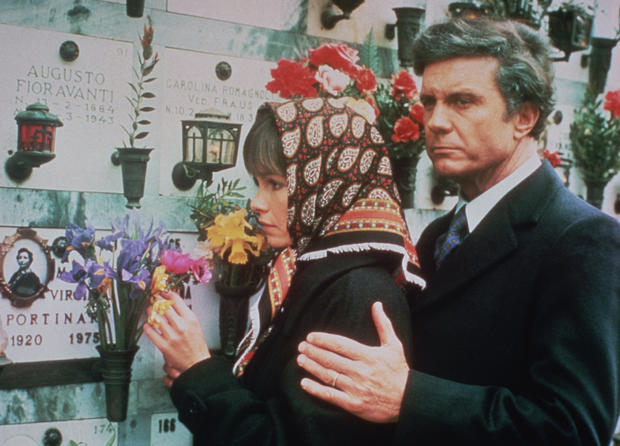
Genevieve Bujold and Cliff Robertson in "Obsession" (1976). The passions and longings (and criminal double-dealings) of "Vertigo" were magnified in Brian De Palma's homage to Hitchcock's film. Herrmann - who pushed through composing and conducting chores despite his declining health- created a score that was heedlessly evocative of loss, nostalgia and swooning romance, complete with wordless chorus and church organs.
Bujold (whose picture Herrmann took to carrying in his wallet) visited the scoring sessions and thanked the composer for making love to her with his music.
Columbia PIctures
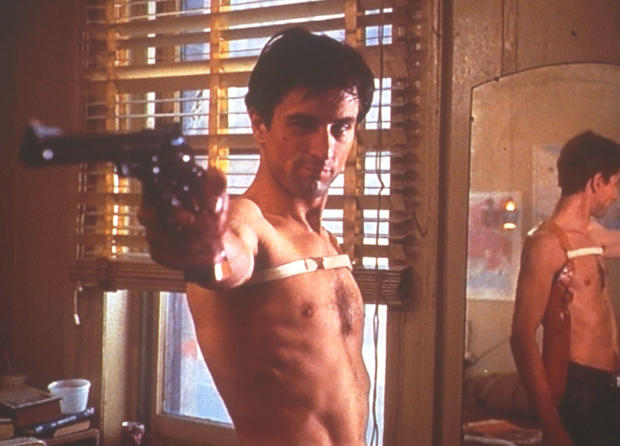
Herrmann's last score was for "Taxi Driver" (1976). Library music of Herrmann's had been used in a low-budget exploitation film, "Obsessions" (1969), that was co-written by Martin Scorsese; when asked to score the young director's new film Herrmann agreed (even though he protested to know nothing about taxi drivers).
The dark and sinister streets of New York City, and the brooding, explosive performance of Robert De Niro, were perfectly captured in Herrmann's music that depicts the broiling character of Travis Bickle and his incitement to violence - first as an agent of assassination and then as the savior of a trapped child. The hallucinatory vision of the city is perfectly captured by angry percussion and bursts of muted horns and rhythmic basses. Also used was a haunting, wistful jazz theme played by sax, piano, bass and vibraphone. The effect was one of loneliness, isolation, danger and madness.
Herrmann traveled to Los Angeles in December 1975 to record "Taxi Driver," and following the sessions he returned to his hotel, went to sleep, and never awakened.
CBS
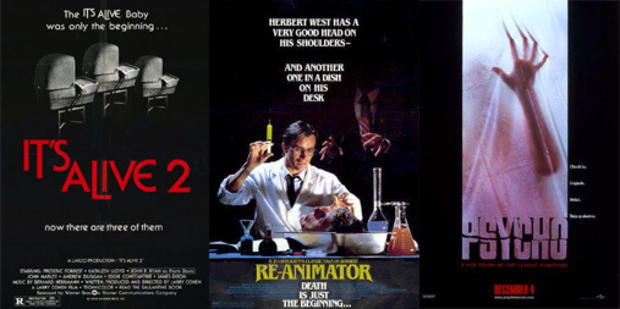
After Herrmann's death - and two posthumous Academy Award nominations, for "Obsession" and "Taxi Driver" - he continued to have an impact on film music. His score for "It's Alive" was reworked and reused by Laurie Johnson for the sequel, "It Lives Again!" Quentin Tarantino had Daryl Hannah's assassin character whistle Herrmann's "Twisted Nerve" theme in "Kill Bill Vol. 1." And the makers of "Re-Animator" gleefully stole the opening theme of "Psycho" for their score. (Herrmann's music was also resurrected for the 1998 shot-for-shot color remake.)
Universal Pictures
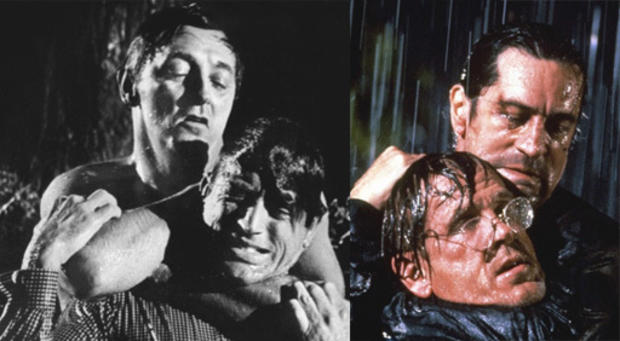
But the most vibrant posthumous use of Herrmann material was for Martin Scorsese's 1991 remake of "Cape Fear," about the cat-and-mouse game between a released convict and the lawyer responsible for his incarceration. Elmer Bernstein took Herrmann's striking score from the original 1962 film (which starred Robert Mitchum and Gregory Peck) and shaped it to the new version's working of the story's themes - the guilt of a defense attorney (Nick Nolte) who failed to honor his client (Robert De Niro) - into a powerful ode to paranoia, corruption, stricken conscience and innocence lost. Herrmann's score for "Cape Fear" reinforces the remake's interpretation of Max Cady as a spiritual figure, trying to teach his unenlightened prey a lesson about the true lessons of life.
"The only reason the Herrmann thing worked is, in a curious way - don't ask me why - the score that Benny wrote is much more appropriate for this film," said Bernstein. "I think he was the best creator on that [earlier] project, and he saw something in the film that wasn't there - but it's there now!"
CBS Photo Archive
In an interview with biographer Steven C. Smith, the composer's daughter, Dorothy Herrmann, said, "You sensed he felt he had not achieved what he wanted for himself. There was always more - the Romantic dream. I think one reason for his unhappiness throughout his life was his restlessness. It was part of his nature to never be entirely satisfied."
Herrmann did not live to see a resurgence of interest in his music - including countless new recordings of his classic scores - as well as his influence on today's composers, as heard in the works of Howard Shore, Danny Elfman, Elliot Goldenthal and John Adams.
Herrmann could be incredibly pessimistic about the performance and popular understanding of music (including its dramatic possibilities). He once bemoaned, "I'll probably only be remembered for a few lousy movies." Hardly.
by CBSNews.com producer David Morgan (author, "Knowing the Score")
Music and soundtrack samples courtesy of:
The Criterion Collection
Fox Home Video
London/Polygram Records
Label X Records
MCA/Universal Home Video
Mercury Records
MGM Home Video
Sony Home Entertainment
Soundstage Records
Southern Cross Records
Unicorn Records
Varese Sarabande Records
Warner Bros. Records
Warner Home Video